Sodium-Ion Battery for Tugboats: Harbour Power Without the Fuel Bill
Sodium-Ion Battery for Tugboats: Harbour Power Without the Fuel Bill
Harbour tugs spend much of their shift idling or running at low load, then deliver a few minutes of enormous bollard pull. That duty cycle is the worst case for a diesel engine and close to ideal for a battery, which can sit charged and dump power on demand. A sodium ion battery bank is attracting attention in this segment because it is cheaper per kilowatt-hour than lithium, tolerant of cold-water operation, and free of the supply constraints that worry fleet owners ordering large lithium packs.
Why Tug Duty Suits Batteries
Tugs are rated by bollard pull, not top speed, and they spend long periods waiting for the next berthing. Diesel burns fuel during that wait while producing nothing, and the repeated load steps are hard on engines and gearboxes. An electric or hybrid drive removes the idle burn entirely and gives instant torque for the push. For a fleet, the maintenance saving on engine hours often rivals the fuel saving.
Where Sodium-Ion Fits
Sodium-ion cells currently deliver roughly 120–160 Wh/kg against 160–250 Wh/kg for LiFePO4 and NMC, so a sodium bank is bulkier for the same energy. On a tug that is usually acceptable, because harbour craft are ballasted and space-constrained far less than road vehicles. In exchange the chemistry charges at low temperature, uses abundant raw materials, and has a flatter cost curve — which matters for a 1–3 MWh vessel bank.
Sizing a Hybrid Tug Bank
Most operators start hybrid rather than fully electric: a 500 kWh to 2 MWh bank covers hotel loads, bow thruster and low-speed manoeuvring, with diesel retained for long transits and peak pull. Sizing comes from a port-day profile — number of berthings, minutes of full pull, and hours of standby — plus a reserve margin for a missed charge window. Fast opportunity charging at the berth can cut the required capacity substantially.
Marine Tug Battery Comparison
| Attribute | Sodium-ion | LiFePO4 | Lead-Acid | Diesel only |
|---|---|---|---|---|
| Energy density | Medium | High | Low | N/A |
| Cold charging | Excellent | Poor below 0 °C | Fair | N/A |
| Cycle life | 3000–5000 | 3000–6000 | 500–1200 | N/A |
| Cost per kWh | Low | Medium | Low | N/A |
| Idle emissions | None | None | None | High |
| Refuelling time | 1–3 h | 1–3 h | 6–10 h | Minutes |
Classification and Safety
Any large marine battery must satisfy class society rules — DNV, LR, ABS or CCS depending on flag — covering cell testing, thermal propagation, gas detection and firefighting. Sodium-ion is not yet uniformly addressed in class rules, so engage the society early and budget for a design-by-analysis route. Salt-water duty also means IP67 enclosures, corrosion-resistant busbars, and a segregated battery room with dedicated ventilation and wet-agent suppression.
What to Ask a Supplier
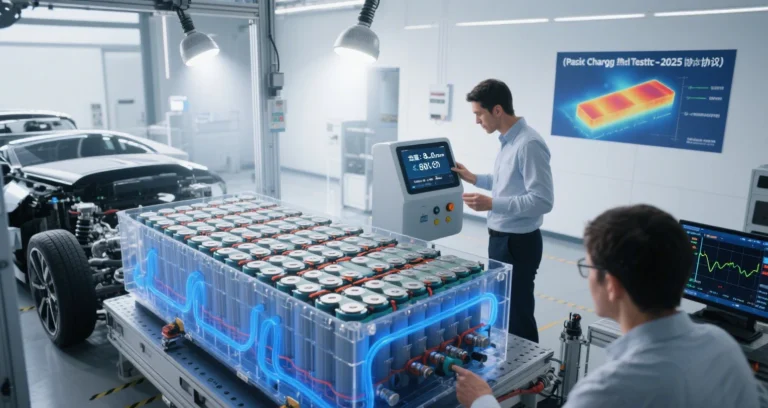
Request cell-level test data to IEC 62660 or equivalent, a thermal-propagation report, and a stated cycle life at the depth of discharge the vessel will actually see. Confirm shipyard support for integration, class approval documentation, and the availability of spare modules for a 15–20 year hull life, since cell formats change faster than hulls do.
People Also Ask
Can a tug run fully electric? Yes for short-range harbour work with reliable berth charging. Long transits or extended standby still favour a hybrid with diesel reserve.
How large is a tug battery bank? Hybrid conversions typically carry 500 kWh to 2 MWh. Full-electric harbour tugs with opportunity charging can run on less.
Is sodium-ion safe on a vessel? It is thermally stable and does not rely on scarce cobalt or nickel, but class approval and a ventilated battery room are still mandatory.
What is the payback? Fuel and maintenance savings usually repay the bank in 4–8 years for high-utilisation harbour tugs, faster where port emissions rules apply.
Written by Karl at China Battery Technology. Request a quote.