Sodium Ion Battery for Pipeline Cathodic Protection: Remote Site Power
Sodium Ion Battery for Pipeline Cathodic Protection: Remote Site Power
An impressed current cathodic protection station is the least glamorous asset on a pipeline and one of the most consequential. It pushes a few amps of DC into a groundbed to hold the steel at protective potential, and if it stops, corrosion resumes silently until an inspection or a leak finds it. These stations sit hundreds of kilometres from a grid connection, in deserts, steppe and tundra, which makes the energy store the weakest link. The sodium ion battery suits this duty because it tolerates the exact conditions that shorten the life of every other chemistry deployed there.
What the Station Actually Draws
A typical ICCP rectifier runs continuously at 10–50 W of output, sometimes up to a few hundred watts on badly coated or high-resistivity ground. Add remote monitoring — potential logging, a cellular or satellite modem, occasionally a flow or pressure transmitter — and the site load is 30–250 W around the clock. That is 0.7–6 kWh per day, every day, with no tolerance for interruption because protection lost is corrosion gained.
The Autonomy Problem
Solar sizing on these sites is dominated by the worst month, not the average. High-latitude pipeline corridors can see a week of overcast or panel-covering snow; desert sites lose output to dust films between cleaning visits. Designers therefore specify five to seven days of battery autonomy. At 3 kWh/day that is 15–21 kWh of usable storage sitting in a roadside cabinet through every seasonal extreme the corridor delivers.
Where Sodium-Ion Fits
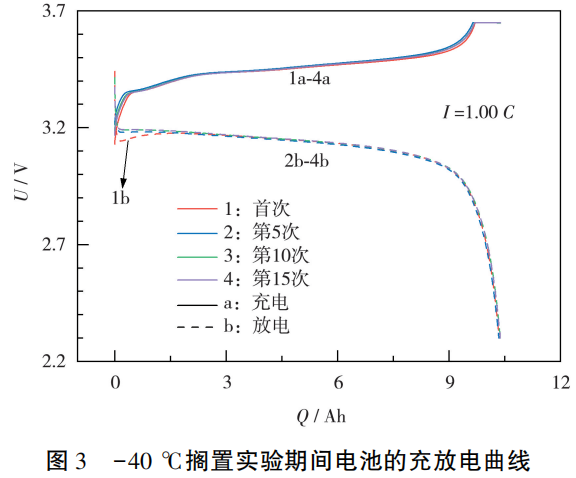
Three properties matter here. First, cold performance: sodium-ion retains roughly 85–90% of rated capacity at −30 °C and accepts charge without a heater, so the pack still absorbs a brief winter sun window instead of refusing it. Second, calendar behaviour at partial state of charge: unlike lead-acid, it does not sulfate when it sits at 60% for weeks after a cloudy spell. Third, transport and storage: cells ship safely at 0 V, so spares can be trucked to a remote depot without lithium-class paperwork and commissioned a year later.
Chemistry Comparison for Remote CP Stations
| Attribute | Sodium-Ion | LiFePO4 | OPzV Lead-Acid |
|---|---|---|---|
| Usable capacity at -30 C | 85–90% | 60–70% | 50–55% |
| Charging below 0 C | No heater needed | Heater required | Accepts, low efficiency |
| Tolerance of partial charge | Excellent | Excellent | Poor, sulfation |
| Cycle life at 80% DoD | 3000–5000 | 4000–6000 | 1200–1500 |
| Ship and store at 0 V | Yes | No | No |
| Thermal runaway risk | Very low | Low | None |
| Scrap theft appeal | Low | Moderate | High |
Designing the Solar-Battery Pair
Size the array on worst-month irradiance with a generation-to-load ratio of 1.5 or better, then size the pack for the outage window rather than for daily cycling. A station drawing 3 kWh/day in a corridor with 2.5 worst-month peak sun hours needs around 1.8 kW of panel and 18 kWh of usable storage. Use an MPPT controller that lets you set the sodium-ion charge profile explicitly; a controller locked to lead-acid presets will chronically undercharge the bank and mask the problem behind a healthy-looking float voltage.
Monitoring Is Not Optional
The economics of remote sites are dominated by truck rolls. A BMS reporting state of charge, cell voltage spread, temperature and cycle count over the same modem that carries pipe-to-soil potential turns a two-day inspection drive into a dashboard check. Set alarms on capacity fade and on rising cell imbalance — both appear months before the station actually drops protection, which is exactly the warning a corrosion engineer needs.
Cabinet and Enclosure Practicalities
Specify at least IP54, and IP65 in sandy or coastal corridors. Mount the pack off the cabinet floor to survive flash flooding, shade the enclosure or use a double-skin roof to keep summer internal temperatures below 55 °C, and make sure the terminals are reachable by a technician wearing arctic gloves. Small ergonomic details decide whether a scheduled maintenance visit takes twenty minutes or half a day.
People Also Ask
Is sodium-ion energy density a problem for pipeline sites? No. These are fixed cabinets where footprint and mass are cheap; the constraints are temperature range, calendar life and logistics, all of which favour sodium-ion.
Can sodium-ion replace an existing lead-acid bank directly? Usually, but the charge controller must be reconfigured to the correct voltage window. Reusing a lead-acid profile is the most common commissioning error on retrofits.
How long should a sodium-ion bank last on a CP station? With shallow daily cycling and occasional deep discharges, expect 10–15 years of service against three to four lead-acid replacements over the same period.
Written by Karl at China Battery Technology. Request a quote.
Related reading: Sodium-Ion Battery for Offshore Platforms: Safer Remote Power