Sodium-Ion Battery for Container Terminal: Cold-Weather Storage for Non-Stop Ports
Sodium-Ion Battery for Container Terminal: Cold-Weather Storage for Non-Stop Ports
A container terminal is a factory that never closes. Ship-to-shore cranes draw megawatts in short bursts, reefer plugs keep thousands of refrigerated boxes alive, and gate systems, yard lighting and the terminal operating system all sit behind the same supply. A single voltage dip can stall a berth for hours. A correctly specified sodium ion battery gives a terminal seconds-level ride-through, absorbs crane regeneration and keeps the cold chain intact without burning diesel in a salt-laden, sub-zero environment.

Why Terminals Need On-Site Storage
Port loads are spiky rather than large on average. A ship-to-shore crane hoisting a 40-tonne box draws a sharp multi-megawatt pulse for perhaps twenty seconds, then regenerates almost as much on the way down. Sizing the grid connection for that peak is expensive; sizing it for the average and letting a battery cover the peak is not. Storage also earns on the demand-charge line of the electricity bill, which at industrial port tariffs is often a third of the total.
Why Sodium-Ion Suits a Terminal
Two properties matter at the quayside. First, cold: northern terminals run at minus 20 degrees Celsius in winter, and a sodium-ion cell charges and discharges usefully at temperatures where a lithium pack needs preheating. Second, logistics: sodium-ion cells can be shipped and stored at zero volts, which removes a class of dangerous-goods paperwork and lets a terminal hold spares without a charged-storage regime. Cycle life of 2500 to 4000 cycles is lower than lithium iron phosphate, but on a peak-shaving duty of one or two cycles a day that still means a decade.
Terminal Storage Comparison
| Attribute | LiFePO4 | Sodium-Ion | Lead-Acid |
|---|---|---|---|
| Charge below 0 °C | Needs preheat | Good to −20 °C | Poor |
| Usable cycles | 4000–6000 | 2500–4000 | 400–800 |
| Pulse power capability | High | High | Moderate |
| Storage & transport | 30% SoC, regulated | Safe at 0 V | Charged |
| Footprint per MWh | Compact | Moderate | Large |
| 10-year cost | Low | Low–medium | High |
Reefer Plugs and the Cold Chain
Refrigerated containers are the least forgiving load on a terminal. A 40-foot reefer draws 3 to 7 kW continuously, and a bank of several hundred represents a firm baseload that cannot be interrupted for more than a few minutes before cargo temperature drifts out of contract. Splitting the reefer yard into priority groups and backing them with storage lets the terminal shed non-essential loads in a controlled order instead of losing the whole yard at once. Specify the inverter for the simultaneous starting current of the reefer bank, not its running current, because compressor starts overlap.
Peak Shaving and Crane Regeneration
Hoist regeneration is free energy that older terminals dump into resistor banks as heat. A battery with a fast bidirectional converter captures part of it and returns it on the next lift, which typically cuts the net peak by 20 to 35 percent. The control strategy matters more than the cells: the energy management system must read the crane controller’s power forecast, not merely react to measured current, because a hoist pulse is over before a reactive controller finishes sampling.
Siting in a Marine Environment
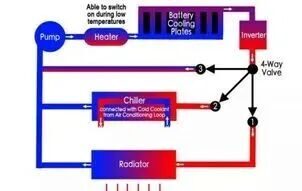
Salt aerosol and humidity dictate the enclosure. Minimum IP65, stainless or tin-plated busbars, downward-facing vent paths with a drain, and a coated cabinet on any unit within a few hundred metres of the water. Put the containers inland of the quay on a raised plinth above the surge line, and keep the DC runs short so voltage drop does not force an oversized array. In a coastal winter, add a small heater on a thermostat so the cabinet interior stays above the dew point.
Lifecycle, Compliance and Handover
Require the cell-level cycle-life warranty in writing, with the depth of discharge and temperature window stated, not just a calendar term. Confirm fire detection, gas extraction and the local authority’s separation distances before the foundation is poured, because retrofitting a fire wall is far dearer than designing one in. Commission with a full-load transfer test and a measured black-start, and hand over the event log as part of the acceptance pack.
What to Ask a Supplier
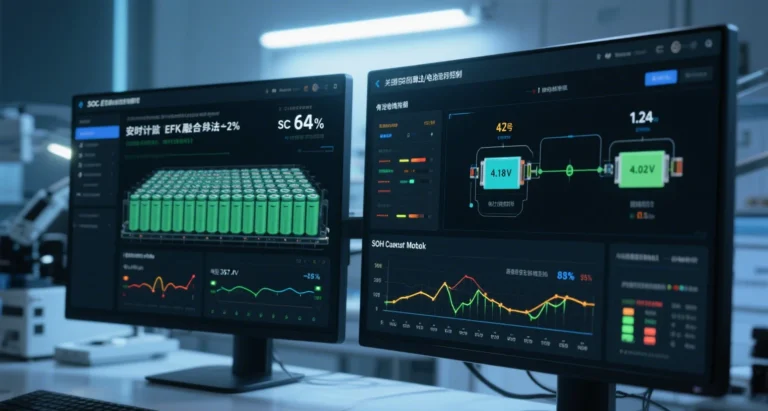
Ask for the pulse-power curve at minus 20 degrees Celsius, the salt-spray test report on the enclosure, and a written statement of the transport state of charge. Confirm the BMS speaks a standard industrial protocol so the terminal’s own SCADA can read it, and check that spares are quoted at a fixed price for ten years.
People Also Ask
Can a battery really start a ship-to-shore crane? It does not start the crane from cold; it covers the hoist pulse on top of a live supply. That still removes most of the peak from the grid connection and is the usual justification for the project.
How long can storage run a reefer yard? With a dedicated feed, 30 to 60 minutes is typical for a 5 to 10 MWh installation, which is enough to start standby generation or clear a fault without losing cargo.
Is sodium-ion safe next to salt water? The chemistry is not the risk; the enclosure is. Specify IP65 with plated conductors and a drain path, and the marine environment is managed rather than feared.
Does the lower cycle life matter? Only if you cycle it hard. On one or two peak-shaving cycles a day the pack outlasts its financial payback comfortably.
Written by Karl at China Battery Technology. Request a quote.