Lithium Battery for Forklift: Retrofit, Sizing and Total Cost of Ownership
Lithium Battery for Forklift: Retrofit, Sizing and Total Cost of Ownership
Replacing lead-acid traction batteries with a lithium battery manufacturer-built LFP pack is the highest-ROI upgrade in most warehouses. The pitch is simple: opportunity charging, zero watering, and two-to-three times the cycle life. But a clean retrofit requires correct voltage, BMS and connector matching—not just dropping in cells.
Why lithium wins on the floor
Lead-acid must be charged in long windows and watered weekly; lithium accepts opportunity charging during breaks, so one pack runs multiple shifts. Eliminating battery-change rooms frees floor space and removes a major injury source. For a battery application solutions rollout across a fleet, the labor and infrastructure savings often exceed the pack premium within a year. The change also ends the “battery room” ventilation and acid-spill compliance burden that lead-acid imposes on every facility.
Sizing by shift throughput
| Duty profile | Typical pack | Charging model |
|---|---|---|
| Single shift, light | 24 V / 200–300 Ah | Overnight full charge |
| Double shift | 48 V / 400–600 Ah | Opportunity top-up |
| 24/7 intensive | 80 V / 600–1000 Ah | Multi-bay swap or fast charge |
Size to throughput (Ah moved per shift), not just truck nameplate—real loads include attachments and ramp grades that spike current well above the nameplate. A truck rated for 500 Ah lead-acid often needs a 600–700 Ah LFP pack once you account for the flatter discharge curve and no capacity reservation. Lead-acid hides a 20% “reserve” you stop using at end of shift; lithium gives you all of it, so you can often downsize nameplate while gaining usable capacity.
Retrofit considerations
- Voltage class: match 24/36/48/80 V exactly; a BMS set for the wrong string will fault.
- Connector & CAN: reuse the truck’s Anderson/connector and, where present, its CANbus so the dash reads state-of-charge.
- Thermal & IP: battery compartments get hot and dirty—spec IP54+ and a vented enclosure.
- Charger: use a lithium-profile charger; a lead-acid charger will under- or over-charge and damage cells.
Charger and BMS interplay
The charger must speak the same voltage and termination the BMS expects. A lithium charger ramps to a constant-voltage cutoff (e.g., 58.4 V for 48 V LFP) and stops; a lead-acid unit kept topping forever will overcharge and swell cells. Specify a charger with temperature compensation disabled for LFP and a CAN or 0–5 V analog signal the BMS can monitor. For multi-shift sites, opportunity chargers at each break station beat one big bay. A smart charger that talks to the BMS can also log each pack’s health, turning the charger into a fleet diagnostic tool.
Battery management display and telematics
Because LFP has a flat voltage curve, the dash fuel gauge must read from the BMS coulomb counter, not battery voltage. Retrofit a display or gateway that surfaces state-of-charge and cell balance to the operator and the fleet manager. Operators who can see real SoC stop “just in case” battery swaps and squeeze more shifts per charge—a behavioural gain on top of the chemistry gain.
Total cost of ownership
A lithium pack costs more upfront but lasts 3,000–6,000 cycles versus ~1,500 for lead-acid, removes watering labor and battery-swap infrastructure, and holds voltage flatter under load so the truck performs better at end-of-shift. For fleets running two or more shifts, payback commonly lands inside 12–24 months. A simple TCO model: (pack price ÷ expected cycles) + (labor + charger + floor-space savings per cycle) beats lead-acid on every high-cycling line. The labor line is the sleeper—watering and swapping lead-acid is paid hours every single week.
A worked fleet example
A 10-truck, double-shift operation replacing 1.5 lead-acid sets per truck per year (≈15 sets, $4k each = $60k/yr) with LFP packs rated 4,000 cycles (≈4–5 years) at $7k each ($70k total, ~$14k/yr amortized) eliminates battery-change labor and floor space while improving uptime. Even before productivity gains, the lithium path is competitive and gets better with each extra shift. Add the avoided injury and acid-spill risk, and the decision is rarely close.
Operator training and SOP
Lithium changes the routine: no watering, no acid PPE, but a new rule—never leave a pack at 0% over a weekend. Train operators to plug in during breaks (opportunity charging) rather than waiting for a full swap. Post a one-page SOP: charge at 20% SoC, never deep-discharge, report a pack that won’t reach 80% within its slot. Good training converts the chemistry advantage into uptime; skipped training leaves trucks stranded at shift end.
Phased fleet rollout plan
- Pilot: convert 2–3 highest-cycling trucks first; measure downtime and labor savings for one quarter.
- Standardize: lock one pack platform (voltage, BMS, connector) across the pilot models.
- Scale: roll to the rest of the fleet as lead-acid sets retire—do not rip out healthy lead-acid early.
- Monitor: use BMS telematics to track per-pack health and predict replacement.
Safety, certification and warranty
Specify IEC 62619 for stationary/industrial cells and UN38.3 for transport; in North America target UL 1973. The BMS must carry short-circuit and thermal protection rated for the truck’s peak current, and the enclosure should resist the inevitable bump and fluid spill. Demand warranty in cycles at 80% DoD, not just months; “24 months” can mask a 300-cycle pack behind a calendar that outlasts the cells. Train operators on the one real lithium hazard—thermal event response—and keep a Class D extinguisher nearby.
Second life and recycling
When a forklift pack retires from heavy duty, it often still holds 70–80% capacity—enough for a stationary buffer or solar bank. Plan a second-life path rather than scrapping; it improves both economics and your ESG story. A written take-back agreement with the lithium battery manufacturer turns end-of-life from a cost into a managed line item.
Frequently asked questions
Will it fit the existing compartment? Usually yes—LFP’s higher usable DoD means a smaller nameplate than the lead-acid it replaces, often with room to spare.
Can I keep my old charger? Only if it has a true lithium/LFP profile; otherwise budget for a new charger, which is cheap insurance against early failure.
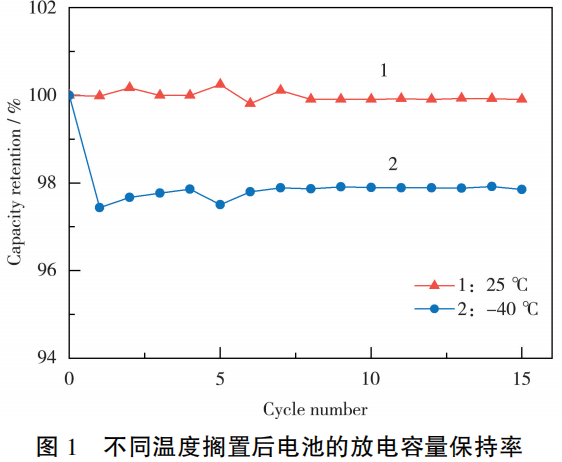
What about cold stores? Low temperatures cut charge acceptance; specify low-temp charging protection or a warmed compartment.
How do I prove ROI to finance? Build the TCO model above with your own labor rate and cycle count; the payback line usually lands at 12–24 months on multi-shift fleets.
Written by Karl at China Battery Technology. Share your truck model and shift pattern and we will size the pack—request a quote.
Pairing retired packs with a home energy storage buffer
When a forklift pack retires from heavy duty it often still holds 70–80% capacity—enough to serve as a home energy storage system buffer or a solar bank on the company site. Planning this second-life path at purchase time, rather than scrapping, turns end-of-life from a cost into a managed asset and strengthens your ESG reporting. The BMS may need reconfiguration for a stationary duty cycle, but the cells themselves are perfectly usable; the only loser is the landfill, and a documented reuse path also smooths regulatory pressure on battery waste.
Where semi-solid and sodium batteries fit the floor
Two chemistries are worth watching for material-handling. A semi-solid-state battery could let a truck run longer per charge in weight-sensitive applications, while a sodium-ion battery may cut cell cost for indoor, temperature-controlled fleets where energy density is irrelevant. Neither is a drop-in today—both need chargers and BMS logic matched to their voltage and thermal model—but specifying with an eye to them prevents a redesign when the economics cross over. Talk to your lithium battery manufacturer about roadmap support before you lock a five-year fleet standard, so a future chemistry swap does not strand your tooling.
Fleet energy accounting and incentive capture
Track per-truck kWh throughput via the BMS so you can prove the carbon and cost savings to finance and to any green-logistics incentive program. Many regional schemes now credit electric material-handling equipment; the data your telematics already collects is the evidence packet. Pair the battery rollout with a simple dashboard showing diesel or lead-acid avoided, and the payback story writes itself for the next budget cycle, turning a maintenance upgrade into a board-level win.
Charger infrastructure planning
Opportunity charging only pays off if the bays exist. Map break locations and install a charger at each, plus one fast bay for the inevitable deadline rescue. Size the electrical feed for the combined peak of simultaneous charges, not a single charger, or you trip the panel during the morning break when every truck plugs in at once. A cheap feeder upgrade during the pilot beats a frantic rewire once the whole fleet depends on it, and a labelled, cooled charge room also keeps the packs inside their happy temperature band.
Related Reading
- custom lithium battery manufacturer
- LiFePO4 Battery Manufacturer in China: How to Vet a Factory
- Lithium Ion Battery Cells Wholesale: Grades, MOQ and Pricing