Sodium-Ion Battery for Offshore Platforms: Safer Remote Power
Sodium-Ion Battery for Offshore Platforms: Safer Remote Power
Offshore oil, gas, and wind platforms sit far from the grid, exposed to salt spray, vibration, and temperature swings, with logistics measured in helicopter flights and supply boats. Reliable storage backs up safety systems, bridges generation gaps, and shaves diesel runtime. A sodium ion battery is emerging as a pragmatic choice for these harsh, remote sites because its chemistry is safer, colder-tolerant, and built from abundant materials.
Why Offshore Platforms Need Storage
Platforms cannot tolerate a blackout on life-saving or process-critical loads. Batteries ride through generator start delays, support dynamic positioning thrusters during transients, and let operators curtail diesel during low-demand windows. Space and weight are at a premium, but so is uptime — a battery that fails in a storm is not an option, which raises the value of intrinsic safety over raw energy density.
Sodium-Ion Advantages Offshore
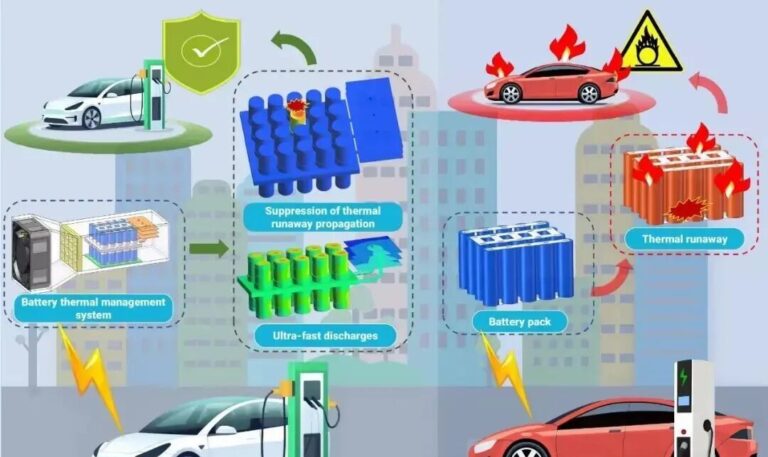
Sodium-ion cells use no lithium, nickel, or cobalt, removing critical-material supply risk and export-control headaches for multinational operators. They retain capacity at low temperatures without heaters, a real plus for North Sea and Arctic sites. Most importantly, sodium’s higher thermal-runaway threshold and no dendritic lithium simplify enclosure and fire-suppression design inside confined platform modules.
Sodium-Ion vs Lithium for Marine Duty
| Attribute | Sodium-Ion | LFP (LiFePO4) |
|---|---|---|
| Intrinsic safety | Very high | High |
| Cold performance | Excellent unheated | Good (needs heat) |
| Material supply risk | Low | Medium |
| Energy density | Lower | Medium |
| Footprint at sea | Larger | Smaller |
Sizing and Integration
Define the duty first: is the bank for blackout bridging (power-focused, short duration), peak shaving of diesel (energy-focused, hours), or smoothing of renewable auxiliary loads? Size to the worst-case simultaneous safety load plus the autonomy window mandated by class rules. Pair the container with a marine-grade PCS and redundant isolation, and plan cable runs that survive constant motion and corrosion.
Safety and Certification
Offshore units must meet marine and ATEX/IECEx expectations for hazardous areas, with ingress protection against spray, passive thermal isolation, and gas-detection integration. Sodium’s stability reduces but does not remove the need for monitoring — specify a BMS reporting cell voltage, temperature, and state-of-health to the platform control system, and confirm the module rating for the relevant zone.
Finally, document the duty cycle honestly with your supplier; a pack sized on nameplate rather than real depth-of-discharge will underperform exactly when the platform can least afford it.
Choosing the Right Supplier
Prioritize suppliers with marine or harsh-environment references, not just land projects. Require documented cycle life at your depth-of-discharge, corrosion-rated enclosures, and a service plan that works with your supply-boat schedule. Ask how the pack behaves during a communications loss and what fail-safe state it defaults to — on a platform, graceful degradation matters more than peak specs.
Cost and Logistics Considerations
On a platform, a battery’s true cost includes the helicopter weight to fly it out and the boat window to service it. Sodium’s lower material cost helps, but the larger footprint means you trade deck space for safety and supply security. Build the business case on avoided diesel runtime, reduced hazardous-material handling, and resilience during supply gaps rather than on energy density alone.
People Also Ask
Is sodium-ion ready for offshore duty? Early commercial marine and grid containers are operating today; for platforms, pilot deployments are increasing as the chemistry matures to marine certification.
When would I still choose lithium offshore? When deck space is the hard constraint and you can manage the thermal and supply risks — LFP remains the denser option for compact installations.
Does sodium need special fire systems? Its higher stability simplifies design, but you still install detection and isolation per class rules; the difference is a smaller, simpler envelope than equivalent lithium installations.
Written by Karl at China Battery Technology. Request a quote.
Related reading: Sodium-Ion Battery for Radar Station: Reliable Off-Grid Power
Related reading: Sodium-Ion Battery for Marine Buoys: Maintenance-Free Offshore Power