Sodium-Ion Battery for Fertilizer Plant: Storage for a Corrosive Site
Sodium-Ion Battery for Fertilizer Plant: Storage for a Corrosive Site
A fertilizer plant is a hard place to put electronics. Ammonia, urea dust and nitrate fines are corrosive, the process runs continuously, and many sites sit far enough from a strong grid connection that they pay peak demand charges or run captive generation. Storage is attractive here for peak shaving, for ride-through on process controls, and for smoothing captive solar. A sodium ion battery is worth a serious look for this duty because it gives up some energy density in exchange for lower cell cost, wide temperature tolerance and a simpler thermal story on a site where cooling water and air handling are already stretched.

Where Storage Earns Money in a Fertilizer Plant
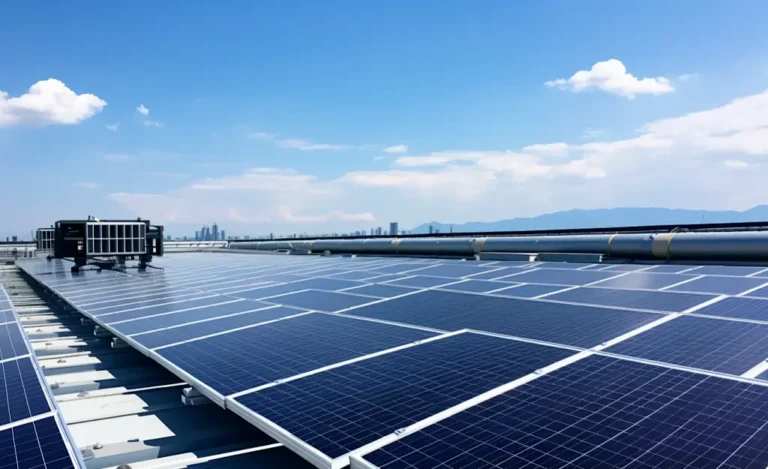
Three applications dominate. Peak shaving is the most common: the plant charges overnight at the off-peak tariff and discharges during the two or three hours of the day when the grid demand charge is set. Ride-through covers the distributed control system, ammonia shutdown valves and emergency lighting so a grid dip does not trip the plant. Solar smoothing absorbs the output of a captive array that would otherwise be curtailed when a cloud passes over the digestion or granulation line.
Why Sodium Fits This Duty
Sodium-ion cells use abundant raw materials, which keeps the cost per kilowatt-hour competitive for bulk stationary storage where volume matters more than weight. They tolerate deep discharge without the capacity loss that punishes lead-acid, they charge acceptably at low temperatures where a lithium bank would need heating, and they ship and store at zero volts, which simplifies transport to remote sites. Energy density is roughly 120 to 160 Wh/kg, well below lithium, but a fixed installation on a concrete pad does not care.
Storage Chemistry for Process Plants
| Attribute | Sodium-Ion | LiFePO4 | VRLA Lead-Acid |
|---|---|---|---|
| Cycle life (80 % DoD) | 3,000–5,000 | 4,000–6,000 | 500–1,000 |
| Energy density | 120–160 Wh/kg | 140–180 Wh/kg | 30–50 Wh/kg |
| Low-temperature charge | Good | Needs heating below 0 °C | Poor |
| Transport state | 0 V, no charge | ~30 % SoC | Charged |
| Raw material exposure | Low | Lithium, phosphate | Lead |
Corrosion Is the Real Design Constraint
Specify the enclosure and the air path before you compare cell warranties. Ammonia and nitrate dust attack copper and silver-plated contacts, so look for an enclosure rated IP55 or better with a corrosive-gas rating on the electronics, stainless or marine-coated hardware, tinned copper busbars, and positive-pressure filtered ventilation drawing clean air from outside the process area. Anything with an unprotected copper contact is a maintenance problem within two years.
Sizing for Demand Charge Reduction
Work from twelve months of interval data, not a rule of thumb. Pull the load profile, find the single highest fifteen or thirty-minute demand peak in each billing month, and size the bank to shave the difference between that peak and the level you want to hold. Most plants find the economic sweet spot sits between one and three hours of storage; beyond that the incremental peak reduction stops paying for itself. Model it at end-of-life capacity, not nameplate.
Integration With Captive Generation
Many fertilizer plants run gas turbines or steam turbine generators. Storage changes the economics by letting those machines run at their efficient setpoint instead of following load, with the battery absorbing and covering the swings. That requires a controller that talks to both the plant DCS and the generator governors, so confirm Modbus TCP or IEC 60870-5-104 support early rather than discovering the gap during commissioning.
Safety and Compliance
Sodium-ion has no thermal runaway propagation profile comparable to a damaged high-nickel lithium cell, which simplifies spacing and fire strategy, but a megawatt-scale container still needs gas detection, deflagration venting, a clear separation distance and a documented emergency response plan. Confirm the design against IEC 62485 for stationary batteries and the local fire code, and require the supplier to provide the thermal and gas test data behind those claims.
People Also Ask
How long do sodium-ion cells last in daily cycling? Current products are warranted for 3,000 to 5,000 cycles at 80 % depth of discharge, which is six to ten years of daily peak shaving before capacity falls to 80 % of nominal.
Does ammonia in the air damage the battery? Not the cells, but it attacks copper contacts and printed circuit boards. A sealed IP55 enclosure with filtered positive-pressure ventilation and tinned or coated conductors is essential on this site.
Can sodium-ion charge in cold weather? Yes, better than lithium. Sodium-ion cells accept charge well below 0 °C, which removes the heater load a lithium bank would need on an unheated winter site.
Is storage worth it without a demand charge? Sometimes. If the plant runs captive generation, storage still pays by letting the generators hold an efficient setpoint instead of following a swinging load.
Evaluating storage for a process plant? Request a quote with twelve months of interval load data and your tariff structure.
Written by Karl at China Battery Technology. Request a quote.