Semi-Solid State Battery for E-Readers: Thin Cells, Long Run Time
An e-reader is an unusual device to power. It draws almost nothing for hours while a page sits on the screen, then asks for a short burst every time the display refreshes, and buyers judge the whole product on whether it lasts three weeks or six between charges. Weight matters as much as capacity because the device is held in one hand for an hour at a time. A semi solid state battery is interesting here for two reasons: higher energy density per gram allows a thinner shell at the same run time, and the reduced liquid electrolyte content improves the safety margin in a device people read in bed.

What the Duty Cycle Actually Looks Like
E-ink is bistable, meaning the display only draws current when it changes. A typical reader spends 97 % of its time in a deep sleep measured in tens of microamps, punctuated by page-turn refreshes that pull a few hundred milliamps for a fraction of a second, plus a short front-light load in the evening and a Wi-Fi or cellular burst during a sync. Average consumption is therefore tiny, but the pack has to deliver short pulses cleanly and hold charge for months on a shelf. Peak current capability matters far less than self-discharge and long-term stability.
Where Semi-Solid State Helps
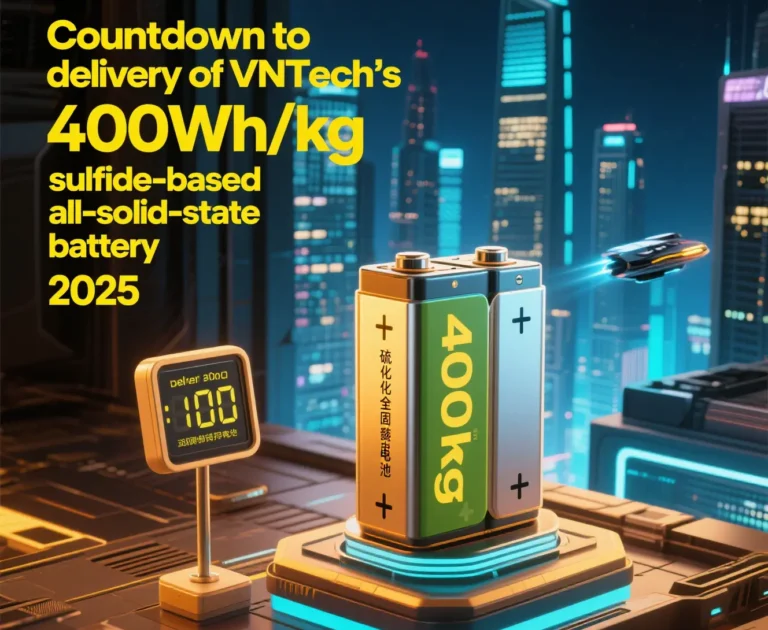
Semi-solid-state cells replace most of the free liquid electrolyte with a gel or highly viscous medium, which allows a denser electrode stack and thinner packaging. In practice that means cell-level energy density in the 300 to 400 Wh/kg range against 250 to 300 for a comparable lithium-polymer pouch, so a designer can either cut thickness by roughly 15 % at the same capacity or add run time in the same envelope. The reduced electrolyte also raises the thermal runaway threshold and lowers the risk of swelling, which is the failure mode that ruins e-reader shells.
Chemistry Options for an E-Reader
| Attribute | Semi-Solid State | Li-Polymer | LiFePO4 |
|---|---|---|---|
| Cell energy density | 300–400 Wh/kg | 250–300 Wh/kg | 120–160 Wh/kg |
| Swelling risk over 3 years | Low | Moderate | Very low |
| Pulse delivery at low SoC | Strong | Strong | Moderate |
| Self-discharge per month | 1–2 % | 2–3 % | 1–2 % |
| Current unit cost | High | Low | Low |
The Standby Problem Nobody Talks About
In a device that sleeps for days at a time, self-discharge and protection-circuit quiescent current dominate real-world run time. A cell that loses 2 % a month is fine; a protection board that leaks 30 microamps continuously is not, because over a month that alone consumes more than a hundred hours of sleep budget. Specify the whole pack by measured standby drain, not just cell capacity, and require the supplier to quote the fuel-gauge and protection quiescent figures alongside the amp-hour rating.
Thin Envelope, Real Constraints
A sub-8 mm shell leaves little tolerance for cell growth. Semi-solid-state pouches swell less than conventional lithium-polymer, but they still need a defined expansion gap, a rigid backing plate behind the display, and adhesive mounting that does not load the pouch edges. Insist on dimensional data at both beginning and end of life, and run a 60 °C storage test on early samples to see how much the pouch actually grows before committing the tooling.
Charging and Longevity
E-reader packs should charge conservatively. Limit the charge voltage, avoid holding the pack at 100 % for weeks while the device sits on a dock, and store at roughly 50 % state of charge if a unit will be warehoused. Those three habits matter more to a five-year service life than the cell chemistry, and they should be written into the firmware charging profile rather than left to the user.
People Also Ask
Will a semi-solid-state pack really give longer run time? At the same thickness, yes, typically 15 to 25 % more capacity. In practice most makers spend part of that gain on a thinner, lighter shell instead.
Does it help with the swelling that ruins old e-readers? It reduces the risk. Less free electrolyte means less gas generation as the cell ages, though a pouch still needs a defined expansion gap in the mechanical design.
Is the extra cost worth it in a consumer device? For premium readers where weight and thickness are the review criteria, yes. For a budget model competing on price, conventional lithium-polymer still wins.
How should a reader be stored long term? Around 50 % state of charge in a cool room, topped up every six months. Storage at full charge and high temperature ages any lithium pack quickly.
Designing a thin device and want the capacity numbers? Request a quote with your envelope dimensions and target run time.
Written by Karl at China Battery Technology. Request a quote.