Stackable vs Wall-Mounted Home Battery: Which Layout Wins?
Stackable vs Wall-Mounted Home Battery: Which Layout Wins?
Most buyers choose a home energy storage system on capacity alone, then discover two years later that the cabinet format was the decision that mattered. A stackable floor cabinet and a wall-mounted unit can both hold the same usable kilowatt-hours, but they behave very differently once you look at how much floor you are willing to give up, whether the garage gets hot in summer, how a technician replaces one module in year eight, and how much extra capacity the house will actually take when the roof gets re-panelled. This comparison is written for a household comparing the two layouts before an installer quotes, and it leans on real service experience rather than marketing figures.

Floor Space and Where the Unit Lives
A stackable cabinet stands on the floor and grows upward, so capacity is added by climbing: a 5 kWh block goes to 10 kWh and then 15 kWh in the same footprint. It suits a garage, a basement utility room, or a detached shed where vertical space is free. A wall-mounted unit puts the weight onto structural fixings, which is the real constraint — most brick or stud walls will not take a fully charged 10 kWh box without significant reinforcement, so units above roughly 8 kWh are usually being bolted to a concrete garage wall or a purpose-built timber frame. If the only free wall in the house is inside a hallway, the wall-mounted option quietly becomes impossible.
Thermal Behaviour in the Garage
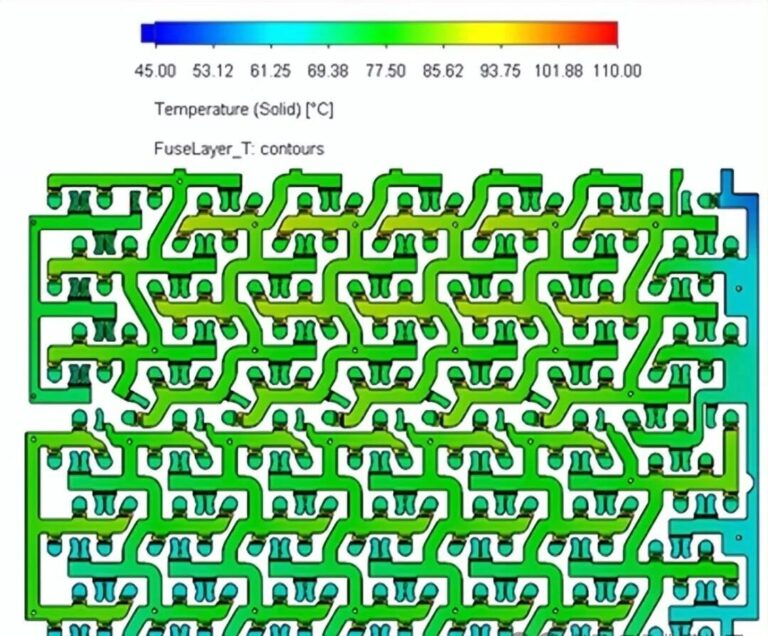
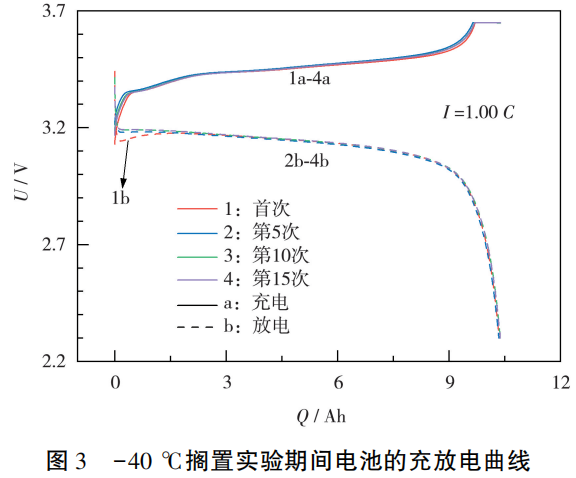
Batteries that dislike heat more than anything else. A stackable cabinet usually has room around it for airflow and can be sited away from the water heater or the compressor; the taller the stack, the more the upper modules run warmer, which is worth asking about in the specification. A wall-mounted unit is closer to the building envelope, so in a garage that swings to 40 °C in summer and 5 °C in winter the cabinet sees the outside temperature directly. Manufacturers handle this with active cooling and, in cold climates, self-heating packs; both add cost and both are why two units with the same cell rating can have very different usable capacity in February.
Serviceability Over a Fifteen-Year Life
This is where the formats separate. In a stackable cabinet the technician usually lifts a cover and can pull a module from the top without touching the lower ones, and a failed block is swapped hot, leaving the rest of capacity working. In a wall-mounted unit the module behind the panel is often the only module there, so a single bad cell means a whole-unit replacement or an awkward surgery through the case. Ask any installer which layout they would rather fault-find on a wet Tuesday; the answer is rarely the pretty wall one.
Expansion Path and Resale
If you expect to add a heat pump, an induction hob, or a second electric vehicle within a decade, the stackable layout is far more forgiving: capacity steps up in known increments and the inverter and EMS usually already know about it. A wall-mounted unit expands by adding a second unit on the adjacent wall, which reintroduces the fixing problem. For resale, a purpose-installed floor cabinet in a locked utility area reads as plant equipment; a wall unit in the living space may put a buyer off. Neither hurts a sale if it is installed properly and documented, but the wall one has to be genuinely tidy to reach that neutral position.
| Attribute | Stackable floor cabinet | Wall-mounted unit | Built-in / integral |
|---|---|---|---|
| Capacity range | 5–30 kWh per cabinet | 5–13 kWh per unit | Limited by cabinet |
| Floor area for 15 kWh | Approx. 0.3 m² | Zero floor, wall only | Zero floor |
| Wall loading | None | Heavy, needs structural fixings | None |
| Module service access | Individual, top access | Whole-unit operation | Front panel |
| Effective cooling | Good, free air around | Variable with envelope | Designed in |
| Outdoor rated | Yes, many models | Some, fewer | Rare |
| Expansion later | Straightforward | Needs a second fixing | Close to impossible |
| Install labour | Moderate | High (fixings, lifts) | High |
How to Decide
Measure first. If you have a dry garage or utility space with a flat floor and no restriction on height, the stackable cabinet is the safer engineering choice and it will take whatever capacity the house grows into. If the only viable location is a wall in a room you will never use again — a half-converted loft, a workshop corner — then a wall-mounted unit is fine, provided the wall will take the load and the unit is not sitting in the direct line of a sunny window or a radiator. Either way, ask the installer for the operating temperature range of the specific unit, the usable depth of discharge, and what a single-module replacement costs, because those three numbers predict satisfaction far better than the headline capacity.
People Also Ask
Which layout works best for whole-house backup? A stackable cabinet in a garage is the usual answer, because it can be sited next to the main distribution board and generator inlet while keeping ten-odd cubic feet of floor free.
Can I install a wall battery in a bedroom or living room? Technically yes, but the fire service guidance in most markets expects a combusible-surface clearance and a clearly labeled location, and a battery behind a bed or sofa is not a sensible place for it.
Do stackable cabinets get unreliable when a module fails? Good BMS architecture isolates the fault, so the household drops that block’s capacity but keeps running; ask whether the unit is designed for hot-swap modules before you commit.
Written by Karl at China Battery Technology. Request a quote.