Home Energy Storage for EV Charging Load Management
Home Energy Storage for EV Charging Load Management
Adding an electric vehicle to a home with an older service panel often exposes a hard limit: the house load plus a 7 kW charger can exceed the main breaker, and the utility will not approve a bigger connection without costly upgrades. A home energy storage system solves this elegantly by buffering the charge current, so the EV fills up overnight without ever pushing the service past its rating.

The Load-Management Problem
A typical single-phase home has a 60–100 A main. Air conditioning, cooking, and water heating already use much of it. A Level 2 charger demands another 30–50 A. Rather than upgrading the service, a managed battery discharges to supply the charger while the grid draw stays capped. The BMS and charger talk over the home energy gateway to keep total import under the setpoint.
How Storage Smooths the Peak
The battery charges from solar or cheap off-peak grid when house demand is low, then feeds the EV during the charging window. Because the battery, not the grid, covers the spike, the main breaker sees a flat, manageable load. Homeowners with solar also avoid exporting midday surplus at a low feed-in rate and instead use it to charge the car directly.
Load-Management Options Comparison
| Approach | Upfront cost | EV charge speed | Grid upgrade needed |
|---|---|---|---|
| Service upgrade | High | Full | Yes |
| Charger-only load shed | Low | Throttled | No |
| Battery buffer (storage) | Medium | Full | No |
| Vehicle-to-home | Medium | Shared | No |
Sizing the Buffer
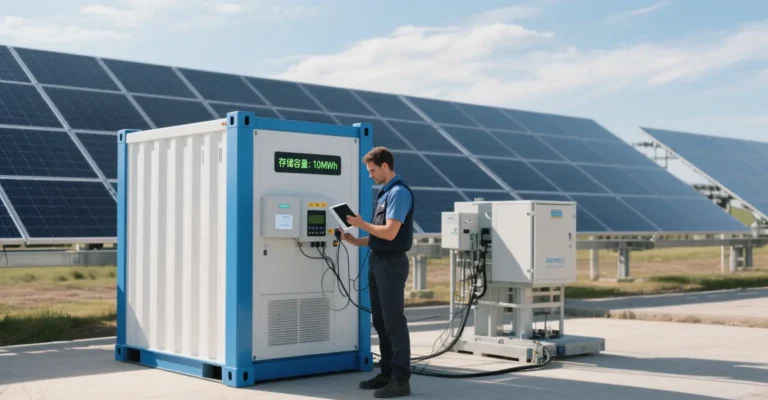
Size the battery to cover the gap between your main-breaker limit and the charger’s draw for the hours you typically charge. A 10–15 kWh all-in-one unit is enough for most overnight sessions, while a 20–30 kWh pack also absorbs solar and time-of-use arbitrage. Put the EV and heavy appliances on a managed sub-panel so the gateway can orchestrate them as one system rather than fighting for current.
People Also Ask
Do I still need a service upgrade? Often no. A storage-buffered setup keeps total import under the existing main, which is why many installers recommend it before quoting a panel upgrade.
Can the same battery power the house during an outage? Yes — an all-in-one home energy storage system that manages EV charging usually also backs up essential loads, so one investment serves both goals.
Written by Karl at China Battery Technology. Request a quote.