Sodium Ion Battery for Snowmaking Pump Stations
Sodium Ion Battery for Snowmaking Pump Stations
A snowmaking pump station is one of the least forgiving places to put a battery. The site sits on a mountain flank, the air is routinely below minus fifteen degrees in the hours when the snow guns must run, the grid feed is often a long radial line that sags in winter, and the load arrives as a hard electrical kick: a pump motor that draws five to seven times rated current for the two or three seconds before it spins up. Pair that with a maintenance crew that visits monthly at best, and the usual lead-acid or generic lithium pack starts to look like a liability. This is the application where a sodium ion battery makes more engineering sense than a headline-spec lithium pack, and the reason is temperature rather than chemistry trivia.

Cold Is the Whole Problem
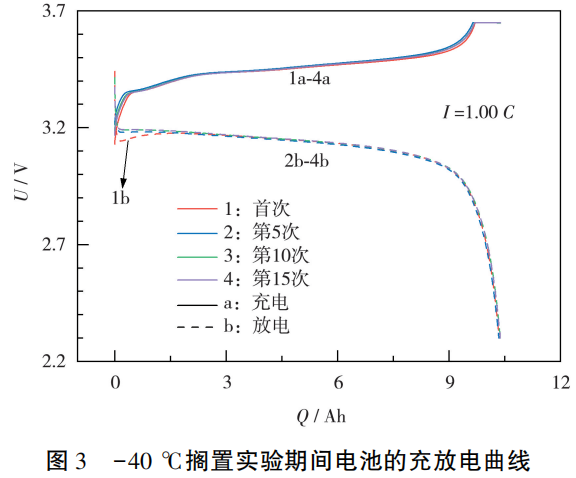
Below about zero degrees, lithium iron phosphate loses usable capacity and, more importantly, refuses to accept charge. Charging a lithium cell under freezing conditions plates metal on the anode, which is permanently damaging and is the root cause of most cold-weather lithium warranty claims. Manufacturers solve it by heating the pack before charging, and every watt spent on that heater is a watt not available to the pump. A sodium-ion cell with a hard-carbon anode keeps a far larger share of its room-temperature capacity in the cold and will accept charge at lower temperatures without a heater, which removes a whole failure path from a remote site that nobody visits often.
A Snowmaking Load, Described Honestly
Treat the station as three separate jobs. The first is the pump and compressor start, a high surge for two to four seconds, repeated sometimes a hundred times on a cold night. The second is the steady run of fan guns, pumps, and the defroster in the control cabinet for hours. The third is the small always-on layer: the controls, the temperature and humidity sensors, the visibility posts, and the radio link to the resort. Only the third needs hours of autonomy. The first and second are about peak capability and about not tripping the feeder. Sizing a battery for all three with a single number is the mistake that leaves stations with a bank that cannot start the pump on the very night it is needed.
Battery Comparison for Cold Mountain Sites
| Attribute | Sodium-ion | LiFePO4 | Lead-acid |
|---|---|---|---|
| Capacity retained at −10 °C | Approx. 85–90% | Approx. 60–70% | Approx. 50% |
| Minimum charge temperature | Down to about −20 °C | 0 °C without heater | About −10 °C |
| Peak start capability | Good for 3C pulses | Very good | Poor, voltage sag |
| Cycle life (80% DoD) | 3000–6000 | 3000–6000 | 500–800 deep |
| Energy density by weight | Lower than Li-ion | High | Very low |
| Thermal runaway risk | Very low, water-based | Low, needs management | Low |
| Cost per kWh today | Competitive with LFP | Best value benchmark | Cheapest to buy, costliest to run |
Siting, Enclosure and Protection
The pack does not need to be warm — it needs to be dry, ventilated, and protected from vibration. A heated enclosure is still worth specifying if the station is unattended for days, but as insulation rather than as a charger. Since sodium-ion chemistry is water-based and far more forgiving if the enclosure is breached, a thin ice layer on the outside of a cabinet is a maintenance note, not an incident. Specify IP65 for a tented or open-skirt pump house, uplift the cabling for the temperature range of the site, and fit a DC isolator that the crew can reach without opening the cabinet. Where the grid is unstable, a hybrid inverter with a sodium-ion bank will ride through the momentary drop that would otherwise drop the whole start sequence.
What to Ask Before Ordering
Four questions settle the specification. What is the rated discharge temperature range and does the pack self-heat at all — if it does, ask how many watts that draws over a night. What is the continuous C-rate and the permitted pulse, because the pump start is the binding constraint even though the energy is small. What is the autonomy actually intended to cover, and is it truthfully a few hours for controls or a full snowmaking night. And what does the BMS do on a cold morning when the state-of-charge reading is taken after the pack has sat at minus eighteen overnight — sodium-ion answers that differently from lithium, and the answer matters more than the datasheet capacity figure.
People Also Ask
Will a sodium-ion battery start a snowmaking pump in winter? Yes, if it is sized for the motor’s locked-rotor current rather than its running current. The chemistry handles the pulse well; the mistake is sizing on the nameplate energy alone.
Is sodium-ion better than lithium for cold climates generally? For stationary cold-site storage it is the sounder choice because charging below freezing does not need to be prevented. For weight-sensitive mobile use, lithium still holds the advantage on energy density.
How long will such a bank last on a mountain site? With shallow daily cycles and no corrosive electrolyte, eight to twelve years is realistic, and the pack will usually outlast the compressors it supports.
Written by Karl at China Battery Technology. Request a quote.