Sodium-Ion Battery for Remote School Power
Sodium-Ion Battery for Remote School Power
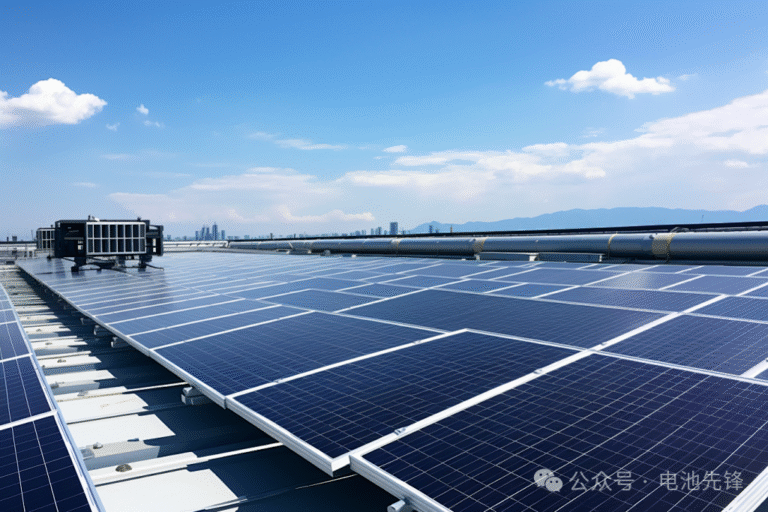
Rural and off-grid schools often sit at the end of a long, unreliable distribution line, where a single fallen tree can cancel a day of lessons. Communities are pairing rooftop solar with stationary storage to keep lights, projectors, and servers running. For campuses where budget is tight and winters are hard, a sodium ion battery is becoming the pragmatic alternative to lithium — cheaper per kilowatt-hour, safer indoors, and far better in the cold.
Why Sodium Fits Remote Campuses
Sodium-ion cells use abundant aluminum, iron, and manganese instead of lithium, nickel, and cobalt, so material cost stays low and supply chains are local. For a school-sized system measured in tens of kilowatt-hours, that cost gap funds more panels and longer backup. Cycle life of 3000–5000 at 80–90% depth suits a daily solar-charge, evening-discharge pattern.
Cold-Climate Advantage
Many remote schools operate through sub-zero months. Sodium-ion keeps more than 90% of its capacity at −20 °C without heaters, whereas lithium needs active warming that eats into the very energy it stores. That means a smaller, cheaper thermal envelope and reliable power on the coldest school day.
Storage Chemistry Comparison
| Attribute | Sodium-Ion | LFP (LiFePO4) |
|---|---|---|
| Material cost | Lower | Medium |
| Cold performance | Excellent | Good (needs heat) |
| Indoor safety | Very high | High |
| Energy density | Low–Medium | Medium |
| Cycle life | 3000–5000 | 4000–7000 |
Sizing a School System
Start from the essential loads — lighting, the server and router, a projector, and a small fridge for meals or vaccines — then add evening study-hour draw. A 20–40 kWh bank paired with 10–20 kWp of roof solar covers a full school day plus overnight, and a modest generator handles multi-day stretches of bad weather. Choose an all-in-one unit with remote monitoring so a distant maintenance team can see state-of-charge at a glance.
Maintenance and Monitoring
Because the system sits far from town, remote visibility matters. Cloud monitoring reports state-of-charge, solar yield, and fault alerts to the district office, so a drained or faulted bank is caught before it interrupts class. Sodium-ion’s stability means fewer thermal interventions than lithium in the same cold site, and the sealed cabinet needs only an annual visual and terminal check rather than the watering and equalization lead-acid would demand.
Funding and Scalability
Sodium-ion’s lower material cost makes phased rollout realistic: start with one classroom block and a small battery, prove the savings and reliability, then extend to the dormitory and kitchen as budget allows. The same cabinet format scales by adding parallel strings, so a village school and a larger campus can share one maintenance playbook and one spare-parts list. Grants for rural electrification and clean-energy education often view sodium-ion favorably because of its domestic supply chain.
People Also Ask (Extra)
What happens during a week of rain? Size the battery for two to three cloudy days and keep a small generator or grid tie as backstop; most remote-school designs assume solar-plus-storage covers the majority of days with a modest fossil backstop for the rest.
People Also Ask
Is sodium-ion ready for a real school installation? Yes — containerized and cabinet sodium-ion systems are in field use across Asia and Europe as of 2025–2026, and they are certified for indoor stationary use.
When would I still choose lithium? When footprint is severely limited or you need maximum energy per cubic meter; LFP remains the better pick for compact, space-constrained sites.
Written by Karl at China Battery Technology. Request a quote.
Related reading: Sodium-Ion Battery for Offshore Platforms: Safer Remote Power