Semi-Solid Battery for Agricultural Drones: More Flight, Less Risk
Semi-Solid Battery for Agricultural Drones: More Flight, Less Risk
Agricultural drones — crop-spraying, seeding, and multispectral mapping — fly heavy payloads in heat, dust, and remote fields where a battery failure means a crashed rig and lost yield data. A semi solid state battery gives these aircraft higher energy density than conventional lithium-polymer while cutting the flammable liquid electrolyte that makes a hard landing so dangerous.
Why Drones Need Semi-Solid Cells
Flight time is everything. Every extra minute of endurance means more hectares sprayed per battery swap and fewer ground crews waiting. Semi-solid cells pack more watt-hours into the same mass as LiPo, extending flight time 10–20% without enlarging the airframe. The reduced free electrolyte also lowers the chance of thermal runaway if a cell is punctured by a branch or rough landing.
Thermal and Field Reality
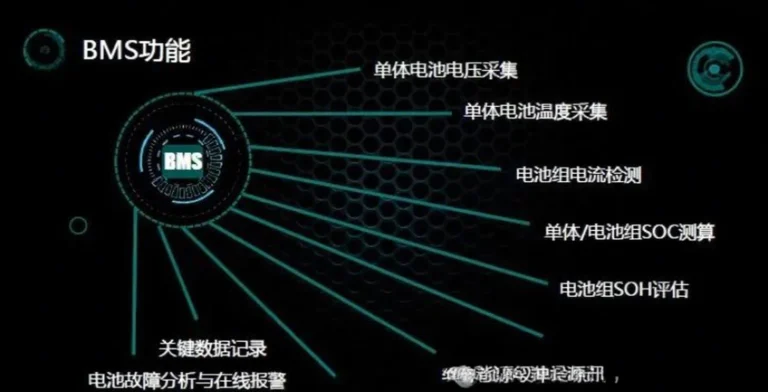
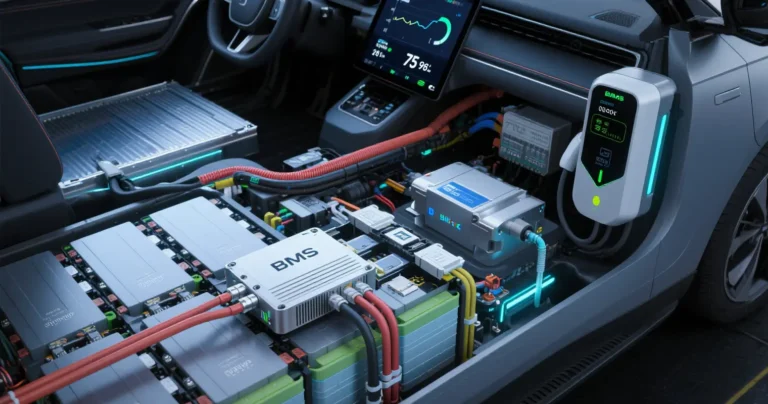
Spraying happens in summer heat, often at 40 °C in direct sun. Semi-solid chemistry tolerates higher cell temperatures than standard LiPo before degradation, and its softer electrode layer absorbs vibration from the motors better. Combined with a field-grade BMS that logs per-cell voltage, operators get predictable endurance across a long day of cycles.
Drone Power Comparison
| Attribute | Semi-Solid | LiPo | Li-ion (18650) |
|---|---|---|---|
| Energy density | High | Medium | Medium |
| Crash safety | High | Low | Medium |
| Cycle life | 800–1200 | 300–500 | 500–800 |
| Cost | Medium–High | Low | Medium |
| Vibration tolerance | Good | Poor | Fair |
Sizing and Operations
Match the pack to the aircraft’s rated voltage (commonly 6S–12S) and maximum discharge C-rate; agricultural rotors demand high burst current at takeoff. Carry two to three packs per drone and use a fast field charger between sorties. Store at ~60% charge in a cool case, and retire any pack that drops below 80% capacity to protect expensive spray hardware.
Battery Health Monitoring in the Field
Treat each pack as a tracked asset. Log cycle count, internal resistance, and end-of-charge voltage after every sortie so a weak cell shows up as a trend rather than a sudden failure mid-flight. Most field-grade BMS units export this data over the drone’s telemetry link, letting the operator bench a pack the moment its capacity curve dips. Agronomists who map the same fields daily get the most value from disciplined rotation: keep three packs per aircraft cycling evenly instead of burning one favorite pack to death while two sit idle.
Regulations and Transport
Spray drones and their packs cross borders and job sites, so keep transport rules in mind: lithium and semi-solid cells above certain watt-hour ratings face stricter air and road shipping classes than lead-acid. Semi-solid’s reduced free electrolyte often qualifies it for more lenient handling than conventional LiPo, but you should still label packs, carry UN38.3 test summaries, and ship in certified cases. Check the destination rules before moving a fleet internationally, because enforcement varies by country and carrier.
People Also Ask
Are semi-solid drone batteries available today? Yes — several aerial-work and agriculture operators are already flying semi-solid packs in 2025–2026 for the endurance and safety gains.
When will full solid-state drones arrive? Full solid-state is still scaling for aviation; semi-solid is the practical, available step that already improves flight time and crash safety.
Written by Karl at China Battery Technology. Request a quote.
Related reading: Semi-Solid State Battery for VR Headsets: Lighter, Safer Immersion