Prismatic vs Cylindrical vs Pouch Cells: A Buyer’s Comparison
Prismatic vs Cylindrical vs Pouch Cells: A Buyer’s Comparison
Every lithium pack starts as a cell in one of three form factors: prismatic, cylindrical or pouch. The choice is not cosmetic—it drives pack cost, manufacturing yield, thermal behavior, energy density and how the pack fails. Buyers who pick a form factor on price alone often pay later in assembly cost or warranty claims. This guide compares the three head-to-head so you can match the format to the duty, and tells you what a real lithium battery manufacturer weighs when it chooses.

The three form factors at a glance
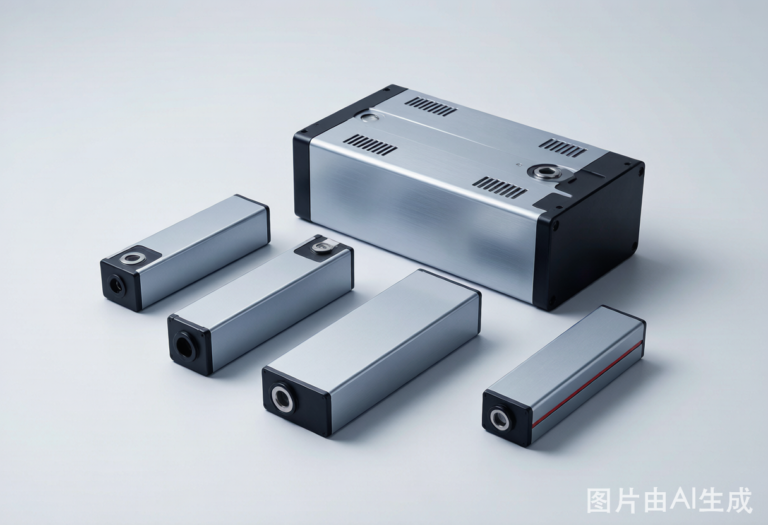
Prismatic cells are large, rectangular hard-cased cells, common in stationary storage and EVs where volume efficiency and simple stacking matter. Cylindrical cells are the familiar 18650, 21700 and 4680 cans, individually small and mechanically robust, favored where standard automation and replaceability win. Pouch cells are flat, soft-cased laminates that maximize energy density per weight and volume but need external compression and careful handling. Each is a tool, and the duty picks the tool.
Manufacturing and assembly cost
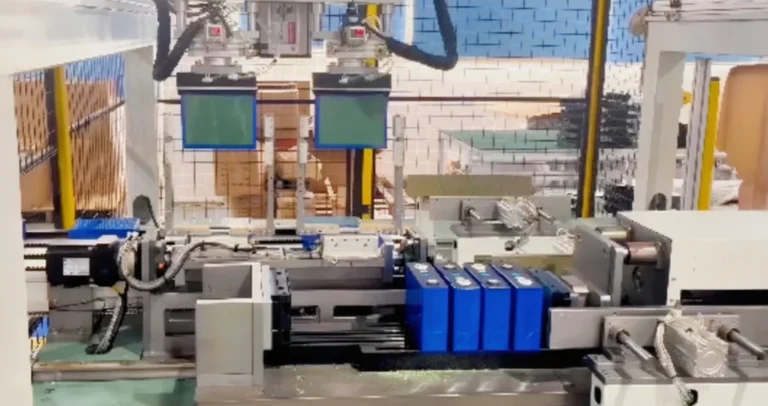
Cylindrical cells benefit from decades of standardized, highly automated production, so the cell itself is cheap and the supply base is deep; the cost shifts to pack assembly, where you wire hundreds of cells and many spot welds. Prismatic cells invert that: fewer, larger cells mean simpler packs but pricier individual cells and stricter case-tooling. Pouch cells are cheap to make but unforgiving in assembly—they need precise compression fixtures and careful sealing, and scrap rates punish sloppy lines. For a battery application solutions program, the total landed cost, not the cell price, should decide, and that total includes your own assembly yield.
Thermal behavior and safety
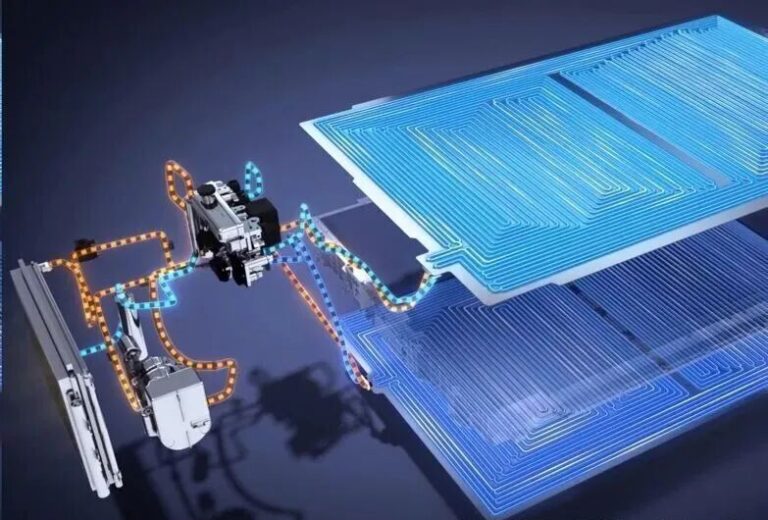
Cylindrical cells dissipate heat well because each small can has a high surface-to-volume ratio and is isolated from its neighbors, which limits thermal propagation; that isolation is why they dominate safety-critical vehicles. Prismatic cells concentrate more energy in one block, so cooling plates and spacing matter more, but their rigid case makes mechanical integration straightforward. Pouch cells are the thermal riskiest: soft cases swell, and without uniform compression a cell can delaminate or enter thermal runaway that spreads through the stack. A semi-solid-state battery reduces flammable electrolyte and eases this, but the form-factor discipline does not disappear.
Energy density comparison
| Form factor | Wh/kg (typical) | Wh/L (typical) | Notes |
|---|---|---|---|
| Cylindrical | 200–280 | 450–750 | Lower pack density due to gaps |
| Prismatic | 160–250 | 300–500 | High pack-level volume use |
| Pouch | 220–300 | 500–800 | Best weight/volume, needs compression |
The table highlights the trade: pouch wins on raw density but loses on handling, cylindrical wins on robustness but wastes pack volume, prismatic sits in the middle with the simplest large-format stacking. Density at the cell level is not density at the pack level, and the pack is what you ship, so compare finished-pack numbers, not cell brochures.
Mechanical integration
Prismatic cells bolt into modules with predictable dimensions, which simplifies enclosure design and service—a failed module swaps as a unit. Cylindrical packs need holders, busbars and spot-welded nickel strips, more parts but more redundancy: one bad weld rarely kills the pack. Pouch cells need a compression frame and end-plates to counter swell, adding mechanical parts you must design and validate. For a home energy storage system where the pack sits still for a decade, prismatic’s simple stack and serviceability usually beat pouch’s density that the cabinet does not need.
Cycle life and aging
Form factor affects aging through mechanical stress more than chemistry. Cylindrical cells tolerate expansion well because the can contains it. Prismatic cells are stable but a weak weld or case dent propagates. Pouch cells swell with age and, if the compression frame is wrong, the swell accelerates capacity loss and can rupture the seal. A sodium-ion battery is largely prismatic or cylindrical today because its young supply chain favors rigid, proven formats over delicate pouches. Match the format to your life target and your ability to apply correct mechanical design.
Failure modes by format
- Cylindrical: spot-weld fatigue and individual cell rattle; isolated, rarely catastrophic.
- Prismatic: case dent or weld failure; module-level, serviceable by swap.
- Pouch: swell, delamination, seal breach; pack-level if compression is wrong.
Understanding these modes lets you specify the right mitigation: weld inspection and vibration testing for cylindrical, case protection for prismatic, and a validated compression frame plus swell budget for pouch. The failure mode you ignore is the one that ends the warranty.
Cost model for the buyer
Build the comparison on total cost, not cell price. Take the cell cost, add assembly labor and scrap, add the enclosure and compression hardware, add the test and qualification burden, and add expected warranty returns. A pouch cell that is $0.02/Ah cheaper can lose on a compression frame and higher scrap, while a cylindrical cell that is dearer per Ah can win on automated, low-scrap assembly at volume. The rational buyer models all five terms at the forecast volume, because the ranking flips as volume changes and as your own line matures.
Choosing for your application
Pick cylindrical for safety-critical, high-vibration, serviceable products where standardized cells and redundancy matter—power tools, vehicles, some medical. Pick prismatic for large stationary and EV packs where stacking simplicity and module swap beat raw density. Pick pouch only where weight and volume are the product—drones, thin portable gear—and only if you can engineer the compression and handle the scrap. The form factor is a design decision made with the pack, not a line item chosen on price after the fact.
A buyer’s qualification shortlist
- Request finished-pack energy density, not cell-level density, for your actual enclosure.
- Ask for scrap and yield data at your volume for the chosen format.
- Require the mechanical integration spec: compression frame for pouch, holders for cylindrical.
- Review failure-mode testing relevant to the format (weld, dent, swell).
- Confirm the supplier has shipped the format at your scale with reference customers.
Pouch swell and the compression budget
Pouch cells grow slightly with every cycle, and over thousands of cycles that swell becomes a real mechanical load. If the compression frame is too loose the cell delaminates and loses capacity; if too tight it stresses the seal and risks breach. The right design applies a constant preload through a spring or gel pad and budgets for the end-of-life thickness in the enclosure. This is why pouch is rarely the right call for a buyer who cannot control the mechanical stack. The density win is real but the engineering overhead is ongoing, not a one-time cost. Validate the swell budget with the supplier’s aging data, not a generic number, because the rate depends on depth-of-discharge and temperature your duty sets, and a wrong budget quietly shortens pack life.
Form factor and shipping and certification
The format also changes logistics. Cylindrical cells ship as familiar, well-understood Hazard Class 9 units with mature handling; prismatic and pouch large cells trigger different packaging and state-of-charge rules for air freight, where carriers cap the charge level and count the watt-hours carefully. A pouch pack with no rigid case also needs more protective packaging, adding weight and cost that eat into its density advantage. On certification, prismatic and cylindrical have deeper test histories, while novel large pouch formats may need more of your own qualification testing. Factor packaging, freight class and qualification burden into the total-cost comparison, because the cell price is the smallest part of what a pouch program actually costs to land and certify, and ignoring it is how budget packs blow the project margin.
When to switch formats mid-product
Format changes are expensive, so choose once and commit. The trigger to revisit is a shift in the binding constraint: if weight suddenly dominates a product that was stationary, pouch may replace prismatic; if serviceability becomes urgent on a cylindrical line, prismatic modules may help. But each switch requalifies the pack, the BMS enclosure and often the cert set, so only switch when the new constraint is durable, not a one-off project. Document the reason in the spec so the next engineer does not reverse it on a hunch. Most programs are better served by picking the format that fits the modal duty and accepting a small penalty on edge cases than by chasing the perfect format for every variant and never stabilizing the line, because instability is what drives scrap and field returns.
Supplier questions that reveal readiness
Finally, the format choice is only as good as the supplier’s execution. Ask for scrap and yield data at your volume, for reference customers shipping the exact format, and for the mechanical integration drawing. Holders for cylindrical, compression frame for pouch, mounting for prismatic. A supplier who hesitates on yield or cannot show a shipped program at your scale is a risk regardless of how good the cell looks on paper. The format decision and the supplier decision are the same decision seen from two sides, and both must clear before you commit volume, because a perfect format from an unproven line is worse than a good format from a reliable one.
Frequently asked questions
Which form factor is safest? Cylindrical isolates cells best and limits propagation; pouch is riskiest without correct compression.
Which has the best density? Pouch leads on cell and pack weight density, but only if you engineer the compression frame.
Is prismatic easier to service? Yes—large modules swap as units, which suits stationary and EV maintenance.
Does format change chemistry choice? No, but sodium and semi-solid currently favor rigid formats over delicate pouches.
Written by Karl at China Battery Technology. Tell us the duty and volume and we will pick the form factor—request a quote for a total-cost comparison.
Related Reading
- battery application solutions hub
- Lithium Battery Nominal Voltage: Cells, Modules and Packs
- Lithium Battery Energy Density: Why It Drives Design