LiFePO4 vs NMC: How to Choose the Right Lithium Chemistry
LiFePO4 vs NMC: How to Choose the Right Lithium Chemistry
Choosing between lithium iron phosphate (LFP / LiFePO4) and nickel manganese cobalt (NMC) is the single most consequential decision in any lithium battery manufacturer program. Both are lithium-ion, but they trade off safety, energy density, cost and lifespan in opposite directions. This comparison gives B2B buyers a decision framework rather than a slogan, and it covers where sodium-ion now fits.
Chemistry at a glance
| Property | LiFePO4 (LFP) | NMC |
|---|---|---|
| Nominal cell voltage | 3.2 V | 3.6–3.7 V |
| Energy density | 90–160 Wh/kg | 150–250 Wh/kg |
| Thermal runaway onset | ~270 °C | ~150–210 °C |
| Cycle life @80% DoD | 3,000–6,000+ | 1,000–2,000 |
| Relative cost | Lower $/kWh | Higher $/kWh |
| Best fit | Stationary, industrial, fleet | Weight-sensitive, high-energy |
Safety and thermal stability
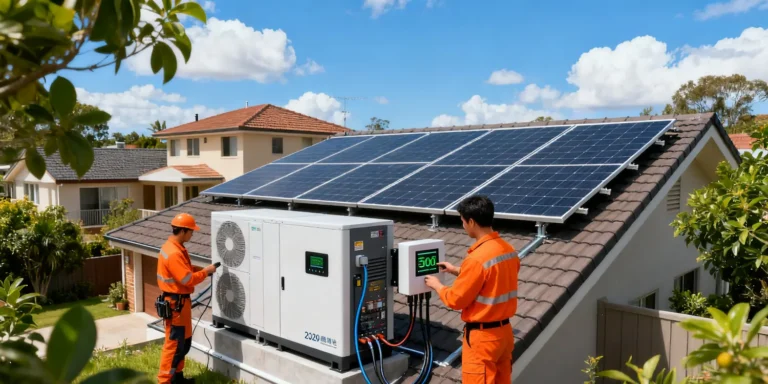
LFP’s olivine structure is intrinsically stable; it resists thermal runaway even under abuse, which is why it dominates home energy storage system and motive-power applications where packs sit in occupied spaces. NMC packs are safe when engineered well, but the chemistry carries more thermal risk and demands stricter BMS and cooling margins. In practice, LFP lets you sleep at night in a bedroom-adjacent solar bank; NMC demands respect. The 2020s recall history across the industry skews toward high-nickel NMC in thermally stressed enclosures, which is why conservative designers default to LFP for anything human-occupied.
Voltage and capacity behaviour
LFP has a very flat discharge curve—voltage stays near 3.2 V for most of the cycle—so state-of-charge estimation needs coulomb counting, not just voltage lookup. NMC’s sloping curve makes voltage-based SoC easier but means voltage sags more visibly under load. Both need a competent BMS; neither is “plug and guess.” If your host firmware only reads voltage, NMC is the more forgiving choice; if you can afford a coulomb-counter, LFP’s flat curve is actually an advantage for stable output.
Cycle life and total cost of ownership
For a forklift or solar bank cycled daily, LFP’s 3,000–6,000 cycles versus NMC’s 1,000–2,000 can mean replacing the pack two to three times less often. On a $/cycle basis LFP usually wins despite similar upfront cell prices. NMC’s edge is weight and volume, not longevity. For a battery application solutions fleet running two shifts, LFP’s TCO advantage typically pays back inside two years, after which the LFP pack keeps earning while an NMC pack would already be on its second replacement.
Energy density and weight
When every kilogram counts—drones, e-bikes, portable medical gear—NMC’s higher Wh/kg lets you hit range or runtime targets in a smaller pack. That is the trade you accept for shorter life and tighter thermal design. If weight is irrelevant (a floor-mounted solar bank), LFP wins on every other axis. A rule of thumb: if the pack is carried by a human or lifted by a motor you pay for, lean NMC; if it is bolted to a wall or a chassis, lean LFP.
Temperature performance
Both chemistries lose capacity in the cold, but NMC generally keeps more of its capacity down to −10 °C, while LFP needs low-temp charging protection below 0 °C to avoid plating. For cold-climate home energy storage system duty, specify low-temp charge limiting or a warmed enclosure regardless of chemistry. In desert heat, both suffer accelerated aging, but LFP’s higher thermal ceiling gives more design margin before forced derating.
Cost per kWh reality
| View | LFP | NMC |
|---|---|---|
| Upfront $/kWh (cell) | Lower | Higher (nickel/cobalt) |
| $/cycle (lifetime) | Lowest | 2–3× higher |
| Recycling value | Modest (iron/phosphate) | Higher (Ni/Co recovery) |
How each chemistry ages
LFP ages mostly by gradual capacity loss with very little internal-resistance growth, so it stays usable almost to the end. NMC tends to grow internal resistance faster, which manifests as reduced power before capacity fully fades—a pack that “holds charge but feels weak.” For applications where sustained power matters (power tools, starters), that resistance growth is the real failure mode, tilting further toward LFP. Plan your end-of-life trigger on the metric that fails first for your use case.
Recycling and second life
NMC’s nickel and cobalt carry higher reclaim value, which improves end-of-life economics and ESG reporting. LFP is cheaper to recycle into new LFP (closed loop) but has lower scrap value. Either way, specify a take-back plan; EU battery regulation and growing US state laws make producer responsibility a procurement checkbox, not a nice-to-have. A documented recycling path also strengthens tender responses for public-sector buyers.
Application vignettes
- Residential solar bank: LFP, 48 V, 10 kWh, wall-mounted—safety and 6,000 cycles win.
- Commuter e-bike: NMC, 36 V, 10 Ah, under-seat—weight decides range.
- Portable infusion pump: NMC or LCO, small, light, certified to IEC 62133—energy density is clinical.
How to read a datasheet for each chemistry
For LFP, focus on cycle-life at 80% DoD and the max continuous C-rate; the voltage window is narrow and predictable. For NMC, scrutinize the thermal limits and the calendar-life note, because that is where NMC surprises buyers. Always compare at the same depth-of-discharge—vendor A quoting 2,000 cycles at 100% DoD is worse than vendor B quoting 3,000 at 80% DoD. Normalize the test condition before you compare numbers.
Myths about LFP and NMC
- “NMC is always better because it’s newer.” No—newer is not safer; LFP is the conservative choice for occupied spaces.
- “LFP has no cooling needs.” False—it tolerates heat better but still ages faster when hot.
- “You can swap them in the same BMS.” Never—voltage, charge cutoff and thermal model differ.
When sodium-ion enters the picture
For stationary and cold-climate duty where weight is irrelevant, sodium-ion battery is emerging as a lower-cost, abundantly sourced alternative to LFP, though with lower energy density and a younger supply chain. It is worth a look for large stationary banks, not for portable gear. Meanwhile, semi-solid-state battery technology promises higher density than LFP with better safety than NMC, but remains premium-priced for now—reserve it for applications where the $/Wh premium buys a real product advantage.
Decision rule of thumb
- Fixed or heavy application, daily cycling, occupied space → LFP.
- Weight- or volume-limited, energy-hungry, less frequent cycling → NMC.
- Large stationary, cost-first, cold performance valued → evaluate sodium-ion.
Frequently asked questions
Is LFP really safer? Yes in intrinsic thermal terms, but “safe” still requires a proper BMS, fusing and enclosure. Chemistry is necessary, not sufficient.
Can I mix chemistries in one product line? Avoid it—different voltages, BMS logic and handling rules multiply engineering and support cost.
Does LFP need less cooling? It tolerates higher temperatures, but you should still size for the application’s ambient and C-rate; skimping on thermal design erodes the cycle-life advantage.
Which is better for resale value? NMC’s recyclate value is higher, but LFP’s longer life usually dominates total economics before scrap is even considered.
How do I compare vendor cycle claims fairly? Normalize to the same DoD and temperature; a 6,000-cycle LFP at 80% DoD beats a 2,000-cycle NMC at 100% DoD even if the raw number looks smaller.
Written by Karl at China Battery Technology. Tell us your voltage, capacity and duty cycle and we will recommend a chemistry—request a quote to start.
Field failure modes by chemistry
Knowing how each chemistry tends to fail helps you specify the right protection. LFP degrades gently: capacity fades and the pack simply stores a little less each year, almost never a safety event. NMC more often fails through a thermal event when a cell is abused, a BMS channel dies, or cooling is blocked; the early signs—slight swelling, local heat—are easy to miss until the situation is serious. For any program shipping NMC into enclosed or occupied products, require redundant temperature sensing and a documented thermal-escalation procedure, not just a single BMS trip point.
Procurement checklist before you commit
Before issuing the purchase order, confirm four things in writing: the cycle-life test condition (depth-of-discharge, temperature, C-rate), the BMS topology and communication bus, the enclosure IP rating and thermal path, and the certification list mapped to your destination market. Ask for a graded-cell sorting report and a per-batch test summary. A short engineering review call prevents the most expensive failure—discovering the chemistry you bought cannot actually meet your duty cycle after the first field returns. Where possible, standardize on one chemistry per product line so spares, training and support stay simple.
Validating a vendor’s claims independently
Do not trust the spec sheet alone. Request a three-cell sample and run your own partial-discharge check to confirm capacity, plus a thermal-camera spot-check under load. A supplier confident in its cell grading welcomes independent verification; one that hedges is telling you something. For programs where the battery is the product’s reputation, this validation step is non-negotiable—one field failure can erase a year of marketing effort, and the cost of a single recall dwarfs the price of a sample test.
Related Reading
- battery application solutions hub
- How to Size a Lithium Battery for Solar Energy Storage
- UN38.3 and Lithium Battery Shipping: A B2B Compliance Checklist