How to Size a Lithium Battery for Solar Energy Storage
How to Size a Lithium Battery for Solar Energy Storage
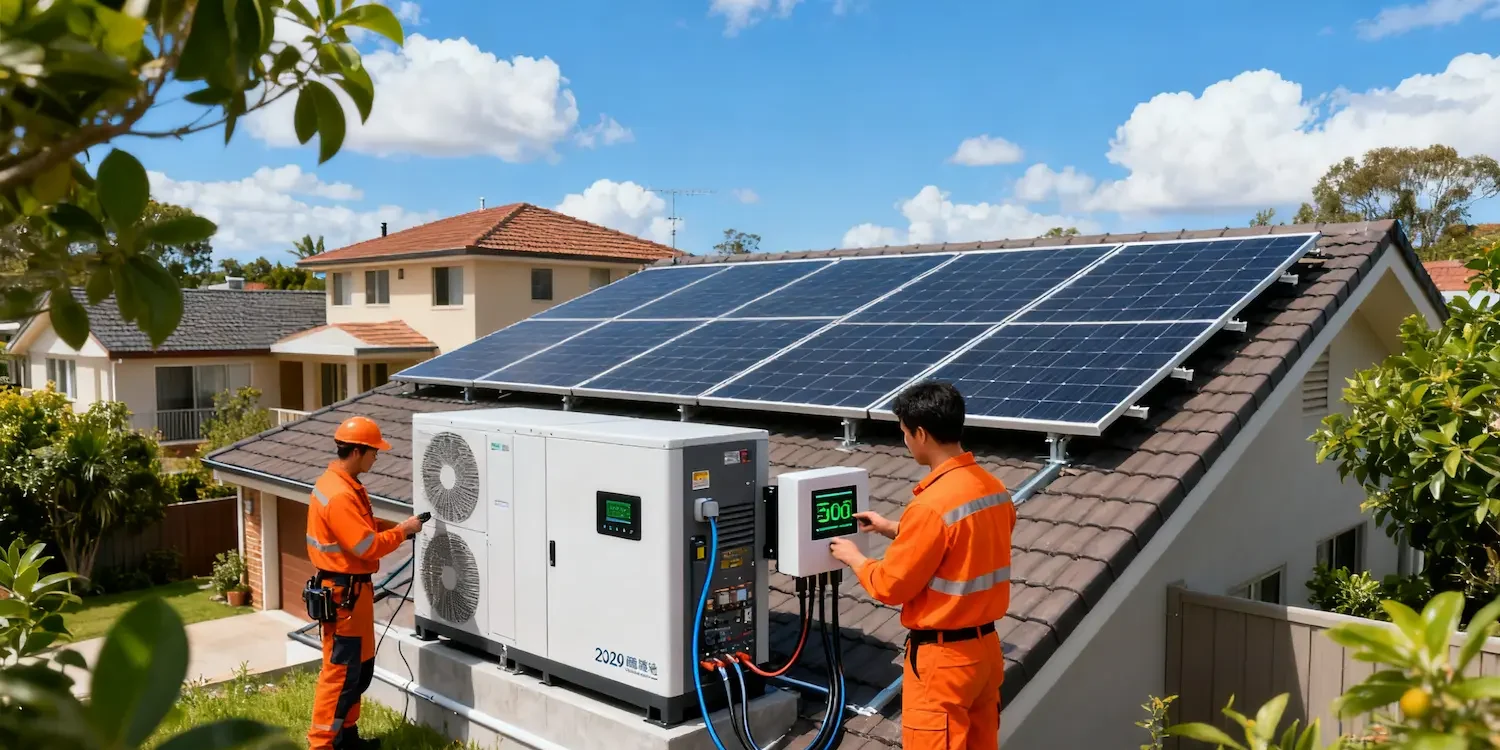
Sizing a solar battery bank looks simple until the first winter, when the array underproduces and the load drains the bank below its safe floor. The fix is not a bigger battery bought blind—it is a sizing method that starts from your load, your sun and your autonomy target. This guide walks through the arithmetic a procurement manager can run before talking to any supplier, so the quote you get matches the duty instead of a catalog default. For a lithium battery manufacturer, a correct load profile is the first input to a pack that actually lasts.
Start with the daily load in watt-hours
Everything begins with the load. List every device the bank must run, its watts and its daily hours, and sum to a daily watt-hour figure. A cabin with a 60 W fridge at 24 h (1,440 Wh), 20 W lighting at 5 h (100 Wh), a 100 W pump at 1 h (100 Wh) and a 50 W router at 24 h (1,200 Wh) totals about 2,840 Wh/day. Round up and add 15% for losses in wiring and inversion, giving roughly 3,270 Wh/day. This daily energy figure, not the panel size, sets the battery. Buyers who skip this step and size from panel wattage alone end up with a bank that cannot carry the real load through a cloudy stretch, which is the most common solar-storage failure.
Convert to amp-hours at your bank voltage
Battery capacity is usually stated in amp-hours at a system voltage, so divide daily watt-hours by the bank voltage. At 48 V, 3,270 Wh/day is about 68 Ah/day; at 24 V it is about 136 Ah/day; at 12 V about 272 Ah/day. Higher voltage means lower current, thinner cabling and less loss, which is why stationary banks favor 48 V. The amp-hour number is what you compare against a cell’s rated Ah, but remember the rated Ah is at a test rate—confirm it at your gentle 0.2C solar duty where capacity is near nameplate. Getting the voltage right early saves copper and avoids a BMS rated for the wrong current later.
Decide days of autonomy
Autonomy is how many sunless days the bank must cover without the array. One cloudy day needs one day of storage; a rainy region wants two to three. Multiply daily Ah by autonomy days: 68 Ah/day at 48 V with three days of autonomy is 204 Ah. Add a depth-of-discharge cap—lithium is safely used to 80% DoD, so divide by 0.8 to get the nameplate bank: 204 / 0.8 = 255 Ah at 48 V. That 255 Ah pack is the real minimum. A home energy storage system in a sunny climate may need only one day of autonomy; an off-grid cabin in a long-winter region needs three, and the bank size swings threefold on that single choice.
Worked sizing example
| Step | Value | Note |
|---|---|---|
| Daily load | 3,270 Wh | after 15% losses |
| Bank voltage | 48 V | lower current, less copper |
| Daily Ah | 68 Ah | 3,270 / 48 |
| Autonomy | 3 days | cloudy-season cover |
| Raw Ah | 204 Ah | 68 x 3 |
| Nameplate (80% DoD) | 255 Ah | 204 / 0.8 |
The table is the whole method on one screen. Change the autonomy from one to three days and the bank nearly triples; that is why a buyer must defend the autonomy number with local solar data, not a guess. The nameplate figure is what you put in the RFQ, and any supplier quoting a smaller pack for this duty is either assuming more sun or a deeper discharge than lithium should take, both of which shorten life.
Match the battery to the chemistry and duty
For a daily-cycling stationary bank, LFP is the default: long life, safe, cheap per cycle. A sodium-ion battery is worth considering where cold and cost dominate and weight is irrelevant, because it tolerates low temperature without heater mats. The chemistry choice barely moves the sizing math—both deliver near nameplate at the gentle 0.2C solar rate—but it moves the enclosure and the bill. Do not size a sodium bank smaller to chase density; stationary banks do not care about density, so size for the same usable kWh and let sodium win on cost and cold, not on a smaller footprint you do not need.
C-rate and the inverter limit
Solar banks rarely exceed 0.2–0.5C, so C-rate is rarely the binding constraint—but the inverter’s surge does matter. A motor or pump can draw several times its running current at startup, and the BMS and connector must ride that surge without tripping. Size the bank for daily throughput at the gentle rate, then confirm the BMS continuous and peak current ratings clear your real loads with margin. A battery application solutions spec that lists only the daily Ah and forgets the startup surge will trip the first time the well pump kicks in, which is a classic “meets the datasheet, fails in the field” outcome that correct sizing prevents up front.
Temperature and enclosure
Lithium loses capacity and charges poorly below 0 °C, so an unheated outbuilding needs either a warmed enclosure or a sodium bank that shrugs off the cold. Even at mild temperatures, keeping the bank between 15 and 35 °C adds years of life, because heat is what ages cells. Size the enclosure for airflow and place the BMS temperature sensor where the cells actually are, not in dead air. A bank sized perfectly but cooked in a sealed box will fall short of its rated cycles, so the enclosure is part of the sizing, not an afterthought. The thermal path is as load-bearing as the amp-hours.
BMS and protection you must specify
The BMS enforces the DoD floor and the surge limit that make the sizing real. Require over- and under-voltage cutoff, over-current and short protection, temperature shutdown, and active balancing for a bank this size so cells age evenly. A passive 50 mA balancer on a 255 Ah bank is cosmetic; ask for a real balancing current. The BMS also gives you the SoH telemetry to confirm the bank is delivering the Ah you paid for, which is how you catch a weak cell before it strands the load. Spec the BMS as a line item, because a bare protector quietly voids the life the sizing promised, and the cheapest component on the bill is the one most often cheapened.
Common sizing errors
- Sizing from panel watts instead of the daily load.
- Assuming full 100% DoD and halving the bank.
- Picking autonomy from a guess, not local solar data.
- Forgetting the startup surge that trips the BMS.
- Ignoring temperature so the bank ages early.
A practical procurement spec
Hand the supplier one page: daily load in Wh, system voltage, autonomy days, target DoD (80%), operating temperature range, and peak surge current. Ask for a pack rated at your real C-rate with margin and a BMS that reports SoH. Reject any quote that does not map your numbers to a nameplate Ah and a cycle-life claim at 80% DoD. A semi-solid-state battery is rarely the right call here—its density premium pays only where weight matters, and a fixed solar bank pays for life and cost instead. The spec forces the supplier onto your duty, so the bank you receive is sized for your sun, not a catalog default that disappoints in February.
Verify the bank after install
Sizing is not finished at purchase. Log the first month of throughput through the BMS and compare delivered Ah against the nameplate; a bank that delivers 80% of rated at your duty is a smaller pack in practice, and you should flag it under warranty while the claim is live. Track capacity quarterly—a steady drop signals a weak cell or a too-deep discharge the BMS is allowing. The discipline of measuring what you sized for is what separates a bank that lasts a decade from one that surprises you in year three, and it costs nothing beyond reading the telemetry you already paid for.
Frequently asked questions
How many days of autonomy do I need? One in sunny, grid-backed sites; two to three in off-grid or long-winter regions—defend it with local solar data.
Why only 80% depth of discharge? Capping DoD at 80% roughly doubles cycle life versus draining to empty.
Does chemistry change the size? Barely at the gentle solar rate; LFP is default, sodium wins on cold and cost where weight is free.
Is C-rate a constraint for solar? Usually no at 0.2–0.5C, but the inverter startup surge must clear the BMS peak rating.
Written by Karl at China Battery Technology. Give us your load and sun data and we will size the bank—request a quote for a duty-matched pack.
Related Reading
- battery application solutions hub
- How to Calculate Battery Capacity: Ah to kWh Converter Guide
- How to Choose a BMS: Topology, Comms and Protection