Lithium Battery for Solar Street Light: Set-and-Forget Units
Lithium Battery for Solar Street Light: Set-and-Forget Units
A solar street light is the closest thing the battery industry has to a perfect application. It charges from a free, predictable source during the day, discharges on a fixed schedule at night, and sits unattended for years. The whole value proposition is “set-and-forget,” and that promise lives or dies on the battery. Get the chemistry wrong and the light goes dark in eighteen months; get it right and it runs a decade with no service visit. For any municipality or OEM specifying these units, a lithium battery manufacturer who designs for the outdoor duty cycle is the difference between a reliable installation and a truck-roll every winter.
Why street lights are the ideal lithium application
Street lighting is a shallow, daily, temperature-swinging cycle — exactly what lithium handles better than anything else. The load is constant (a fixed-wattage LED), the charge is regular (six to eight sun hours), and the autonomy requirement is known (three to five cloudy days). That predictability lets you size tightly and trust the bank. Contrast this with a mobile tool pack, where the load is chaotic; here the engineer controls every variable, so the battery can be optimized rather than over-specified. The result is a system where lithium’s advantages — long life, low self-discharge, no maintenance — pay back immediately.
LFP vs lead-acid for outdoor duty
The legacy choice was a sealed lead-acid or gel battery in the pole base. It was cheap up front and awful in service: 300–500 cycles, only 50% usable, and a nasty tendency to sulphate if it sat partially charged through a cloudy week. LFP delivers 2,000–6,000 cycles, 90% usable, and shrugs off partial-state charging. For a battery application solutions program covering a city’s lighting, the service-cost saving alone justifies the cell premium, before you count the longer life and the absence of acid spills to remediate.
Sizing the bank for a set-and-forget duty cycle
For a 40 W LED luminaire running 10 hours a night, the nightly draw is 400 Wh. To survive five cloudy days you need 2,000 Wh of usable capacity, so spec about 2,400 Wh of LFP nameplate (allowing 80% usable and a margin). The solar panel must replace that 400 Wh plus losses in roughly six sun hours, so a 100 W panel is comfortable. Sizing tables like the one below keep the design honest:
| Luminaire | Nightly Wh | 5-day bank (Wh) | Panel (W) |
|---|---|---|---|
| 20 W LED | 200 | 1,200 | 60 |
| 40 W LED | 400 | 2,400 | 100 |
| 80 W LED | 800 | 4,800 | 200 |
| 120 W LED | 1,200 | 7,200 | 300 |
Notice the bank scales linearly with the luminaire while the panel tracks the daily replacement need. The most common design error is under-sizing the autonomy bank to save cost, then watching the light blink out every rainy week — which is precisely when reliable lighting matters most for public safety.
The solar charge controller and BMS handshake
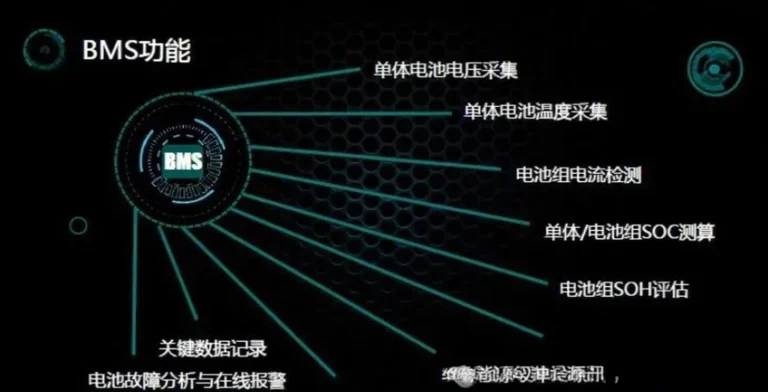
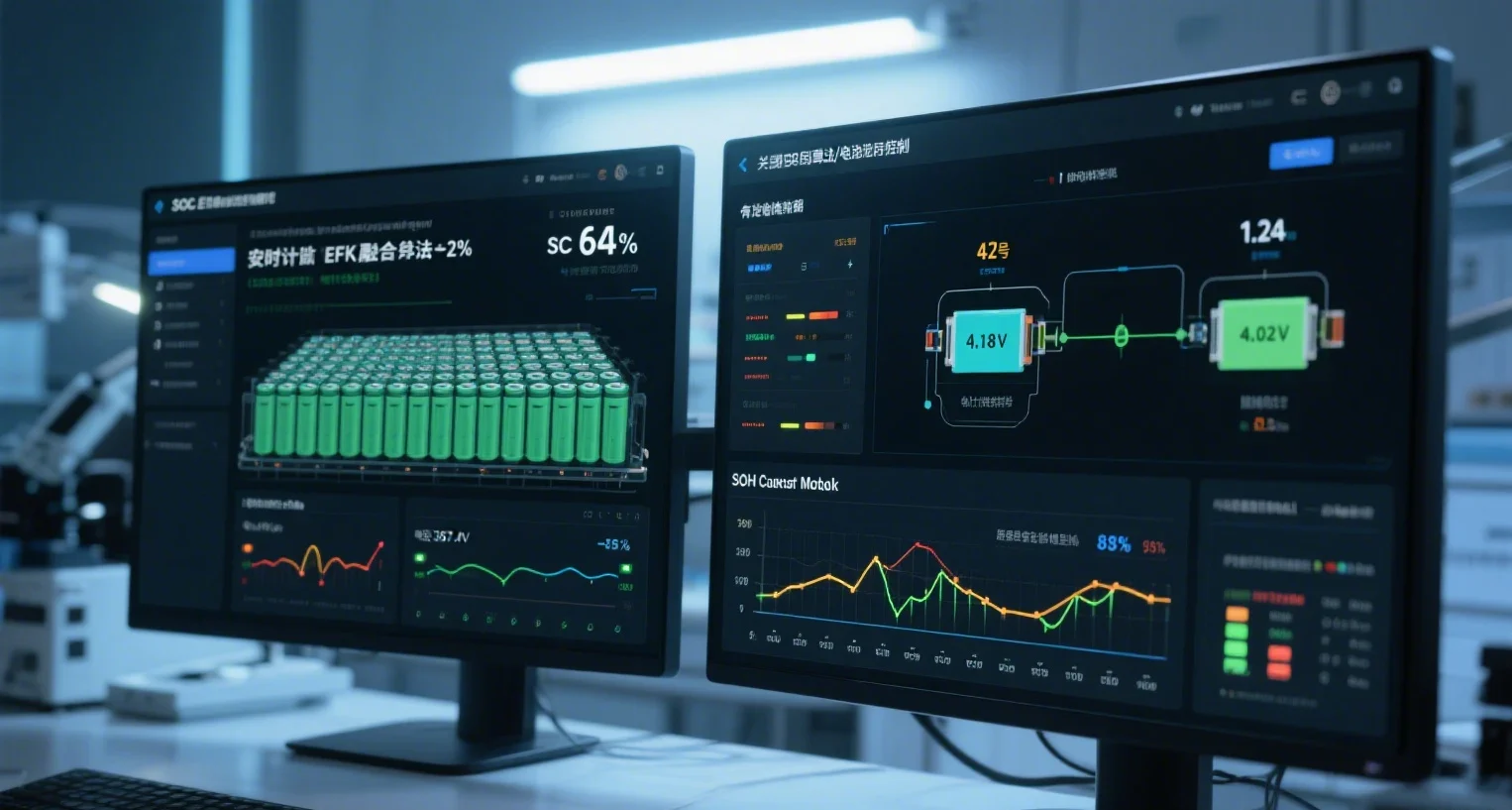
A street light needs two brains that must agree: the solar charge controller (MPPT preferred) and the battery BMS. The controller should speak the LFP charge profile — bulk, absorption, and a float that respects the cell’s upper voltage — and the BMS must enforce its own cutoff as a backstop. If the two disagree, the BMS trips and the light dies even on a full battery. Specify a controller that is LFP-aware and confirm the communication path so the system reports state-of-charge to a central dashboard instead of failing silently at the pole.
Temperature and the cold-charge problem
Pole-mounted batteries see the full climate: -20 °C winters and +50 °C summers in the same year. A home energy storage system lives indoors; a street-light battery does not, so it needs a low-temperature charge cutoff to avoid plating lithium during a cold-but-sunny morning. The enclosure should provide some thermal buffering — a insulated, vented base cabinet — so the cells spend less time at the temperature extremes. Ask the supplier for the cold-charge threshold and verify it, because a battery that charges while frozen is a battery you will replace within a season.
Enclosure, IP rating and thermal management
The battery enclosure is as important as the cells. It must be IP65 or better against rain and dust, resist UV so the plastic does not embrittle, and include a thermal path that keeps cells within their band without active heating. A sealed, unvented box in the desert will cook the bank; a well-insulated one in the arctic will ride through the night. The enclosure also deters tampering, which matters because a street-light battery is exposed and valuable. Treat the cabinet as a battery subsystem, not a bucket, and the life numbers on the datasheet will actually hold in the field.
Cycle life: 5-10 years unattended
A well-specified LFP street-light bank does 2,000–4,000 cycles, which at one cycle per day is five to eleven years. That is the entire economic case: you install once and forget. Lead-acid would need two or three replacements in the same window, each a truck, a cherry-picker, and a crew. When you write the business case, count the service visits, not just the cells — the lithium premium is tiny next to a decade of avoided labor. Request cycle life at your actual depth-of-discharge (typically 20–40% nightly, which is gentle and extends life further).
Anti-theft and remote monitoring
Because poles are public and accessible, batteries get stolen. Two defenses help: physically lock the cabinet to the pole, and put the valuable cells in a less obvious location than the obvious base box. Remote monitoring over LoRa, NB-IoT or cellular lets you spot a failing or removed unit before a citizen reports a dark street. The BMS telemetry — per-cell voltage, temperature, state-of-charge — becomes the early-warning system. For a city rolling out thousands of units, that monitoring turns a maintenance headache into a dashboard, and it is cheapest to specify at purchase rather than retrofit.
Chemistry choices: lithium, sodium and semi-solid
LFP is the default, but a sodium-ion battery is genuinely interesting here: street lights are weight-irrelevant and space-abundant, so sodium’s lower energy density is no penalty, while its lower material cost and strong cold behaviour suit an outdoor, unattended bank. A semi-solid-state battery is the wrong fit — its density premium buys nothing when the cabinet has room to spare. For high-volume municipal tenders where cost dominates and weight is free, sodium deserves a pilot; for most buyers today, proven LFP remains the safe call with the deepest field data.
A specification checklist
| Item | Requirement |
|---|---|
| Chemistry | LFP (pilot sodium for cost) |
| Usable DoD | ≥80%, autonomy 3–5 days |
| Controller | MPPT, LFP-aware, cold cutoff |
| Enclosure | IP65, UV-stable, insulated |
| Monitoring | SoC + cell data to dashboard |
| Cycle warranty | ≥2000 cycles @ stated DoD |
Hand this list to every bidder and the quotes become comparable. The vendor who cannot fill every row is telling you where the failure will occur; the one who can is the one you can leave on a pole and forget, which is the entire point of the product.
Battery cell format and separator choices
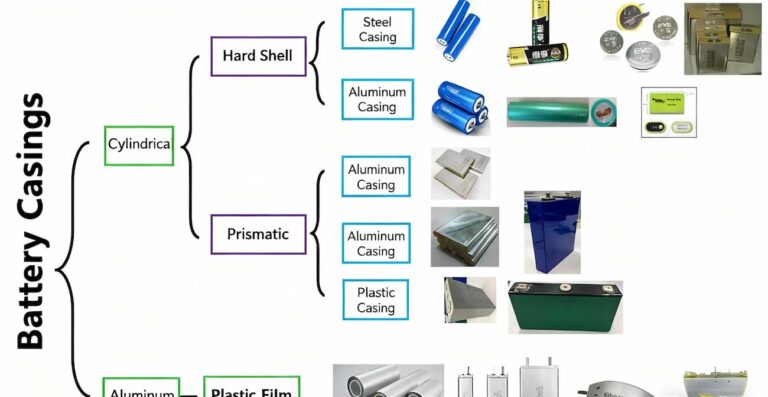
Most street-light banks use prismatic LFP cells in a 12.8 V or 25.6 V configuration, because the larger format delivers the lowest cost per Wh and the cabinet is space-rich. Cylindrical cells are rare here — their cost premium buys nothing in a box with room to spare. The separator quality matters more than the brand: a ceramic-coated separator resists thermal runaway and extends life in a thermally stressed outdoor enclosure. Ask the supplier which cell format and separator they use, and whether the cells are grade-A or B-grade; B-grade cells are the silent cause of early capacity fade in cheap tender wins, and on a decade-long outdoor duty they surface as a city-wide dimming complaint no one can localize.
Lighting control and dimming to stretch autonomy
The cheapest way to extend battery life is to reduce the load, not the cells. Adaptive lighting — full brightness at dusk, dimmed to 30% in the quiet small hours, brightening on motion — can cut nightly consumption by half, which lets you specify a smaller bank or extend autonomy for the same cost. The battery and the luminaire controller should coordinate so the dimming schedule respects the available state-of-charge; a smart unit that dims before a cloudy-day shortfall keeps the light on when it matters most. This system-level thinking beats brute-forcing capacity every time, and it pays back on every unit in the rollout rather than just the ones sized conservatively.
Commissioning and acceptance testing
A street-light battery should be acceptance-tested before the truck leaves the depot, not discovered failing on the pole a year later. Require a capacity test at your climate band, a verification of the cold-charge cutoff, and a logged full discharge to confirm the rated autonomy. For a municipal rollout, sample-test a percentage of the batch and quarantine the lot if the sample fails. This ten-minute-per-unit discipline prevents a city-wide darkout from a bad cell batch, and it is far cheaper than a recall of thousands of poles that each need a cherry-picker to reach.
End-of-life and second-life for street-light banks
At end of rated life an LFP bank typically still holds 70–80% capacity — plenty for a less demanding second use, or simply several more years at reduced autonomy. Plan the handoff: document cycle count and temperature history via the BMS so the pack has a resale or recycling value rather than becoming waste. Tightening battery-waste rules make this a compliance item, not a nicety. A bank you can prove was operated within rating is an asset at removal; one with no history is a liability you pay to dispose of, and on a municipal scale that liability is multiplied across every pole in the contract.
Frequently asked questions
How long will a lithium street-light battery last? 5–10 years, or 2,000–4,000 cycles, versus 1–2 years for lead-acid — the service saving is the real win.
What autonomy should I specify? Three to five cloudy days so the light stays on through bad weather when safety matters most.
Do I need a heated enclosure? Not usually; an insulated, vented cabinet plus a cold-charge cutoff handles most climates without active heat.
Is sodium worth considering? Yes for cost-first municipal tenders where weight is irrelevant, though LFP still has the deeper field record.
Written by Karl at China Battery Technology. Tell us your luminaire wattage and local sun hours and we will size the bank — request a quote for a set-and-forget unit.
Related Reading
- custom lithium battery manufacturer
- Lithium Battery for Vending Machine: Uptime in Remote Spots
- Lithium Battery for Surveillance and CCTV: Always-On Security