Lithium Battery for Portable Power Station: Camping and Job Site
Lithium Battery for Portable Power Station: Camping and Job Site
A portable power station lives or dies by its battery. The box around it — inverter, sockets, screen, fan — is largely commodity hardware that any factory can assemble. The cell chemistry, the battery management system and the thermal design are what decide whether a unit quietly powers a campsite for a weekend or strands a crew when a deadline is on the line. If you are sourcing these units, or specifying cells for a private-label line, the single most important decision is the lithium chemistry inside, and a lithium battery manufacturer who understands portable duty will save you more trouble than any feature printed on the spec sheet.
What a portable power station actually demands from its battery
Unlike a fixed solar bank that discharges gently through the night, a portable unit sees a chaotic, abusive load. A camper runs a fridge at a few amps, then a kettle at a few hundred watts, then a phone at two watts. A job site runs a compressor with a brutal startup inrush, a circular saw, and a jobsite radio. The battery must deliver steady current, survive repeated high-current bursts, charge from mismatched sources, and do all of it while being dropped in a boot, baked on a dashboard, and frozen in a tent. Very few battery jobs are this punishing, which is exactly why chemistry choice dominates every other decision here.
This abuse profile also means the pack is judged on usable energy, not nameplate. A chemistry that only lets you use half the rated capacity is a non-starter when every watt-hour is carried by hand. The unit is also expected to just work for a non-technical user, so the protection and indication have to be foolproof. That shifts engineering weight onto the BMS and firmware far more than on a stationary bank watched by an engineer.
Why lithium displaced lead-acid in this role
Ten years ago these units ran on sealed lead-acid, and they were terrible: half the rated capacity was unusable without killing the battery, they weighed as much as a cinder block, and they charged slowly while sulphating if left flat. Lithium iron phosphate (LFP) flipped the equation. You can use 80–90% of nameplate capacity instead of 50%, the pack weighs a third as much, and it accepts a fast charge from a car alternator or solar panel without damage. For a buyer building a battery application solutions portfolio, LFP is the default for portable power because the weight and usable-capacity wins are not marginal — they change what the product physically can be.
The second reason is lifespan. A lead-acid unit might survive 300–500 cycles before it crumbles; an LFP unit does 2,000–4,000. For a rental fleet or a consumer who expects the thing to work next season, that gap is the difference between a repeat customer and a warranty claim. The apparent cell-cost premium of lithium is paid back inside the first year of real use.
Sizing capacity and runtime: worked examples
The mistake most buyers make is comparing amp-hours at the wrong rate and ignoring inverter loss. Below is a realistic runtime table for a 1,000 Wh (about 80 Ah at 12.8 V) LFP pack, using actual inverter losses of roughly 10–12%:
| Load | Draw | Realistic runtime |
|---|---|---|
| LED camp lights | 10 W | ~85 hours |
| 12 V fridge | 45 W average | ~20 hours |
| Laptop | 60 W | ~15 hours |
| Electric kettle (burst) | 1,200 W | ~45 min total |
| Jobsite circular saw | 1,400 W peak | ~25 min total |
| CPAP machine | 35 W | ~26 hours |
The table tells you two things. First, low-wattage camping loads are trivially served, so a small pack is fine for recreation. Second, any tool or heating load burns the bank in minutes, so for job-site duty you size up hard or you accept that the unit is a top-up, not a primary supply. Always divide your daily watt-hours by 0.8 to account for inverter loss before quoting capacity, and add a 20% margin so the pack is not flat exactly when you need it.
Peak loads and C-rate: tools and inverter inrush
A compressor or refrigerator motor can draw three to seven times its running current for a second or two at startup. The battery and BMS must survive that surge without tripping, and the inverter must be rated for it. A pack that is perfect for a laptop will fold the moment a jobsite compressor kicks on. When you specify, ask the supplier for the continuous and peak C-rate separately — a “1,000 W” rating that is really a 500 W continuous / 1,000 W two-second peak is a different product from one rated 1,000 W continuous. Match the peak to your worst motor, not your average load, and verify the BMS shunt is sized for the surge.
Temperature: cold campsite and hot job site
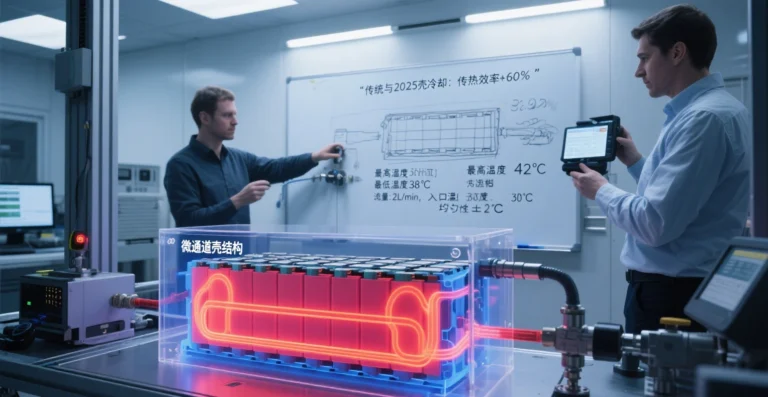
LFP tolerates heat better than lead-acid but still ages faster above 45 °C, and it must not be charged below 0 °C or it plates lithium and permanently damages the cell. A home energy storage system sits in a climate-controlled room, but your portable unit does not — it sits in a freezing tent or a 60 °C car boot. Good portable packs add a low-temperature charge cutoff and a temperature sensor on the BMS; cheap ones omit it and fail in the field. If you sell into four-season markets, the cold-charge cutoff is not optional, and you should verify it with a test, not trust a datasheet line.
Heat is the quiet killer on the other end. A dashboard solar panel in full sun can push the enclosure to 55 °C, and at that temperature every charge cycle costs extra life. The thermal path — vent placement, cell spacing, and the cutoff that throttles charge when hot — is part of the design, not an afterthought. Ask the supplier how the pack behaves at 50 °C continuous, because that is where your customers actually run it.
The BMS is the real safety device
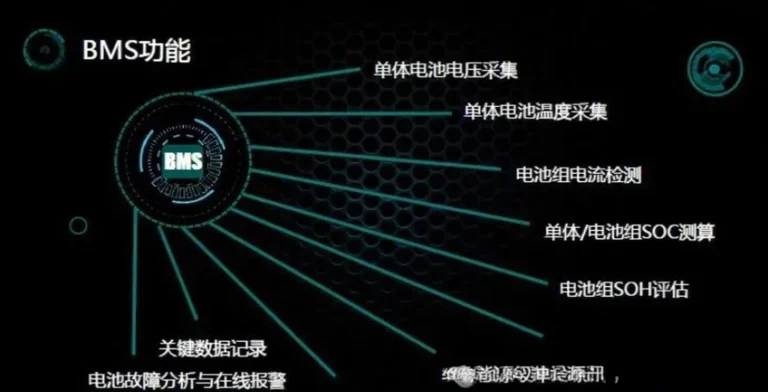
The cells are inert without a brain. The battery management system provides over-voltage, under-voltage, over-current, short-circuit and over-temperature protection, plus cell balancing so the pack ages evenly. For a portable unit that gets knocked around and charged from unknown sources, the BMS is doing the heavy lifting. Specify active balancing for packs above 100 Ah, confirm the protection thresholds, and insist the BMS reports state-of-charge over a real bus (not a vague fuel-gauge LED) so the user is not surprised by a sudden shutoff. A unit that lies about remaining capacity is worse than one that honestly shows 10%.
Charging on the move: solar, car, wall
Part of the appeal is topping up anywhere. A 100–200 W solar input recovers a modest bank over a day of sun; a car alternator via a 12 V socket or Anderson connector recovers it in an hour of driving; a wall charger does it fastest. The battery must accept all three without a special adapter, and the charge profile must respect the cold cutoff. Note that a window-mounted solar panel in full sun can push the enclosure to 55 °C, so thermal margin in the charge path matters as much as the input wattage. Validate the real solar harvest against the panel’s nameplate, which is always measured at ideal lab conditions.
Weight and what you actually carry
This is where lithium wins the argument outright. A 1 kWh lead-acid bank weighs about 30 kg and you can only use half of it; an LFP bank weighs about 10 kg and you can use 90%. For a camper hiking to a site or a technician carrying a unit up ladders, that 20 kg difference is the difference between “bring it” and “leave it behind.” When you compare quotes, price per usable watt-hour including the unusable fraction of lead-acid, and lithium’s apparent premium evaporates. Weight also drives shipping cost, which is a real line item for a private-label program shipping containers overseas.
Cycle life and cost over ownership
A quality LFP portable pack delivers 2,000–4,000 cycles to 80% capacity, which for weekend use is a decade of life. Lead-acid gives you 300–500 cycles before it crumbles. The cheap unit with a short-life pack is the expensive one by year three. Ask for cycle life at 80% DoD with a temperature condition, and fold it into a cost-per-cycle comparison exactly as you would for a stationary bank — the math is identical, only the duty is rougher. A pack priced 20% lower that lasts half as long is the costly choice, and the scorecard below makes that visible.
Chemistry options: lithium, sodium and semi-solid
LFP is the safe default, but two newer chemistries are relevant. A sodium-ion battery could cut cell cost for high-volume consumer units where weight is less critical, though its lower energy density makes the pack larger for the same Wh. A semi-solid-state battery offers higher energy density per kilogram, which directly extends runtime for the same carry weight — attractive for premium portable lines where every gram is paid for. For most buyers today, LFP is the rational choice; evaluate sodium for cost and semi-solid for weight once each is proven at portable duty cycles with published cycle data.
A procurement scorecard for portable packs
| Criterion | What good looks like |
|---|---|
| Usable capacity | ≥85% of nameplate, loss-adjusted |
| Peak output | Rated for your worst motor inrush |
| BMS | 5 protections + active balance + SoC bus |
| Cold charge | Low-temp cutoff below 0 °C |
| Cycle life | ≥2000 cycles @80% DoD, warranted |
| Weight | ≤12 kg per kWh of usable |
Score every bid against this table and the field narrows fast. The unit that wins on sticker price usually fails three rows; the one that passes all six is the cheaper product over its life. Use the scorecard in the RFQ so suppliers quote to the same standard and you can compare like for like instead of reading six incompatible brochures.
Common failures and how to avoid them
The failures we see in the field are predictable. A pack that shuts off early is almost always a weak cell that the BMS isolates, or an under-rated inverter peak tripping the protection. A pack that swells was charged while frozen. A pack that dies in a year was deep-discharged and left flat by a user who trusted a misleading gauge. Every one of these is preventable at the specification stage: require cell-level balancing data, a cold cutoff, and an honest state-of-charge readout. Buy the engineering, not the enclosure, and the failure modes largely disappear before the unit ships.
Frequently asked questions
Is LFP safe in a closed tent or vehicle? Yes — LFP is the most stable lithium chemistry and with a proper BMS it is far safer than lead-acid or NMC in enclosed spaces.
Can I charge from a car while driving? Yes, via a 12 V socket or Anderson connector, but keep the cable gauge adequate for the current or you waste charge to heat in the wire.
Why does my pack shut off before empty? Usually the low-temperature charge cutoff, a weak cell, or an under-rated inverter peak — all fixable by specifying correctly up front.
How many cycles will I really get? 2,000–4,000 to 80% capacity with LFP if you avoid deep discharge and heat; far less if you abuse it.
Written by Karl at China Battery Technology. Tell us your loads, peak inrush and carry-weight limit and we will spec the pack — request a quote for a unit built for your duty.
Related Reading
- custom lithium battery manufacturer
- Lithium Battery for Solar Street Light: Set-and-Forget Units
- Lithium Battery for Vending Machine: Uptime in Remote Spots