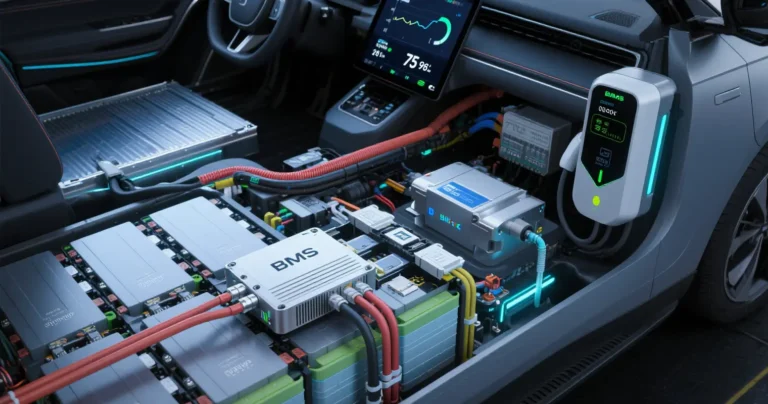
Lithium Battery for Petrol Stations: Backup Power for Pumps and Forecourts
Lithium Battery for Petrol Stations: Backup Power for Pumps and Forecourts
A forecourt that loses power stops selling fuel, but it also loses tank gauging, payment authorisation, and the lighting that keeps a night site safe. Even a brief outage creates queueing, reconciliation problems, and in some jurisdictions a reporting gap. A proven lithium battery manufacturer can deliver a cabinet-sized LiFePO4 system that carries the whole forecourt through an outage and recharges fast between events.
What Must Stay Live During an Outage
The essential loads are dispenser pumps and their control electronics, the point-of-sale and payment terminals, tank gauging and leak detection, canopy and forecourt lighting, and increasingly the DC fast chargers on the same site. Pumps dominate the power budget because a multi-product dispenser can draw several kilowatts while all hoses are in use.
Why LiFePO4 Suits Forecourt Duty
Forecourt backup sits idle for months, then has to deliver full power instantly. Lithium iron phosphate loses under 2% of charge per month in standby, accepts a rapid recharge once mains returns, and needs no watering or equalisation charge. Lead-acid banks left on float in a hot cabinet commonly lose a third of their capacity within three years, which is how sites discover the gap only during an actual outage.
Hazardous-Area Considerations
Dispensers and tank vents create classified zones, and any battery enclosure inside those zones needs certified protection. In practice the bank is sited outside the classified area and only certified cabling crosses the boundary, which is cheaper than certifying the enclosure itself. Confirm the zone drawings with the site’s safety officer before fixing the cabinet location. Keep the battery outside the classified distance from dispenser and tank vents, and record the agreed position on the site plan so that later civil works do not quietly compromise it.
Forecourt Backup Options Compared
| Attribute | LiFePO4 | Lead-Acid | Diesel Genset |
|---|---|---|---|
| Transfer time | <10 ms | <10 ms | 10–30 s |
| Standby losses | Very low | Moderate | Fuel degradation |
| Service burden | Annual inspection | Quarterly | Monthly run |
| Runtime per footprint | High | Low | Medium |
| Noise and emissions | None | None | Significant |
| 10-year cost | Low | Medium | High |
Sizing and Runtime
Decide first whether the goal is to finish the transactions in progress or to keep trading for hours. A graceful-shutdown spec might be 10 kWh; a full-trading spec for a six-pump site with canopy lighting is closer to 40–60 kWh. Size the inverter to the simultaneous pump load plus charger load, not to the building’s main breaker.
Integrating EV Charging
Where DC fast chargers share the site, the battery can do double duty: it backs up the forecourt and shaves the charger’s peak demand, which often pays for a meaningful share of the bank. This requires a controller that understands both the backup priority and the peak-shaving schedule, so specify it as a requirement rather than an afterthought.
What to Ask a Supplier
Request pump inrush test data, hazardous-area layout guidance, the standby self-discharge figure in writing, and a commissioning report that verifies a full-load transfer test on site.
People Also Ask
How long can a forecourt run on battery alone? With a purpose-sized LiFePO4 bank, most sites specify two to four hours of full trading, or thirty minutes of graceful shutdown plus continued tank monitoring.
Is lithium safe near fuel dispensers? Yes when the enclosure sits outside the classified zone. LiFePO4 chemistry and a certified BMS remove the ignition risk that uncertified installations would create.
Can the same battery support EV chargers? It can, provided the controller separates backup priority from peak shaving, and the inverter covers both loads simultaneously.
What maintenance does a forecourt battery need? An annual inspection of terminations, ventilation, and BMS logs, plus remote state-of-health monitoring. No watering or equalisation is required.
Written by Karl at China Battery Technology. Request a quote.