Semi Solid State Battery for Electric Snow Blower: Cordless Clearing
Semi Solid State Battery for Electric Snow Blower: Cordless Clearing
Clearing a driveway in a blizzard is exactly the duty cycle that punishes conventional cells: high cold-start current, sub-zero temperatures, and long storage between storms. A semi solid state battery — a composite-electrolyte cell bridging liquid lithium and full solid-state — gives an electric snow blower the cold tolerance, power density, and calendar life needed to start reliably on the coldest morning and still hold charge through a summer in the shed.

Why Snow Blowers Need a Tougher Cell
A two-stage blower pulls hard the instant the auger hits packed ice, then rests while you walk. That burst-and-pause profile rewards high discharge capability and fast recovery, not just capacity. Semi-solid cells deliver strong pulse current and tolerate partial-state-of-charge storage without the capacity fade that plagues liquid cells left at low charge for months. You get a tool that performs like new at the start of every season instead of one that creeps weaker each year.
Cold-Weather Performance
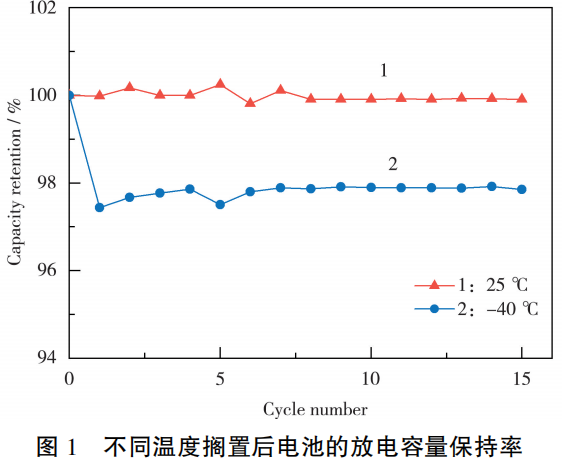
Below −10 °C, liquid-electrolyte lithium loses both power and usable capacity because ionic mobility drops. Semi-solid formulations keep far more of their rated output in the cold, so the auger keeps spinning instead of stalling. Pair the pack with a thin self-heating layer only if you operate below −25 °C; most residential users will not need it, and skipping it saves weight and cost.
Snow-Blower Battery Comparison
| Attribute | Semi-Solid | Liquid Li-ion | NiCd |
|---|---|---|---|
| Cold power (−15°C) | High | Medium | Low |
| Energy density | High | Medium | Low |
| Storage life (off-season) | Excellent | Good | Poor |
| Weight per Wh | Low | Medium | High |
| Safety (leak/swell) | High | Medium | Medium |
Shelf Life and Off-Season Storage
Snow blowers sit idle for most of the year, so calendar life matters as much as cycle life. Semi-solid cells lose capacity slowly in storage and resist the swelling that can deform a plastic pack left in a hot shed. Store the pack at roughly 50% state of charge in a cool, dry place, top it up every three months, and avoid leaving it fully discharged through summer. A battery treated this way will still deliver near-full runtime when the first storm arrives.
Choosing the Right Pack
Match voltage and amp-hour to the auger motor — most cordless blowers use 40–80 V platforms — and confirm the BMS supports high pulse discharge and low-temperature charge lockout to protect the cells. Store the pack at ~50% state of charge in a cool, dry place over summer, and top it up every three months. Work with a supplier that documents cycle life at cold temperatures rather than only at lab-standard 25 °C, because that cold rating is what your driveway actually sees in January.
People Also Ask
Can a semi-solid pack replace my old NiCd blower battery? Yes, with a voltage-matched pack and charger; you gain lower weight and no memory effect, so the tool performs like new each season.
Are these cells available now? Yes. Semi-solid battery packs are shipping in premium cordless outdoor power equipment as of 2025–2026, with full solid-state still scaling toward higher volume.
Should I worry about charging in the cold? Charge at room temperature when possible; a low-temperature lockout in the BMS prevents damage if you must top up right after use outdoors.
Written by Karl at China Battery Technology. Request a quote.
Related reading: Semi-Solid State Battery for VR Headsets: Lighter, Safer Immersion