Battery Solutions for Mobile Car Detailing Vans
Battery Solutions for Mobile Car Detailing Vans
Mobile detailing has quietly become one of the toughest small-business power problems on the road. The van must run a pressure washer, a wet-dry vacuum, a water heater, polishers, and lighting — often in an underground car park or a residential street where a petrol generator is either banned or a guaranteed complaint. Purpose-built battery application solutions now replace the generator entirely, and the operators who switch usually report both lower running costs and access to jobs they previously had to refuse.
Mapping the Detailing Load
The two big consumers are the pressure washer and the water heater. An electric pressure washer at 1800–2200 W runs perhaps 25 minutes across a full detail. A 3 kW inline water heater, if fitted, is the single largest draw and should be evaluated hard — many operators find a propane heater a better use of the energy budget. Vacuums add 1200 W for 20 minutes, polishers 700 W intermittently, and work lighting 100 W. A typical three-car day consumes 4–7 kWh electrically, rising to 12 kWh if water heating is electric.
System Architecture That Works
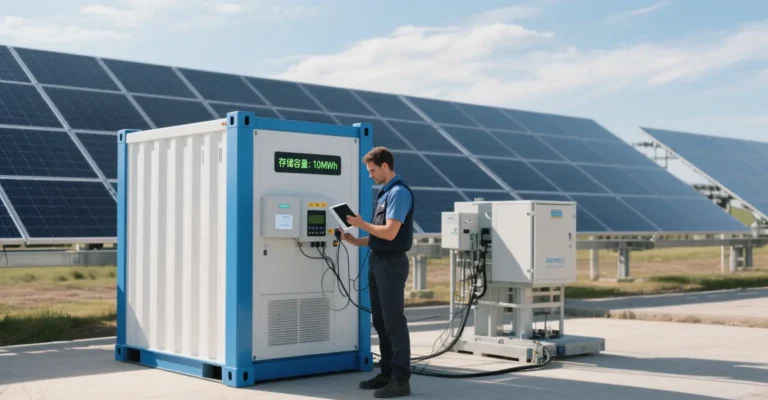
The proven layout is a 48 V LiFePO4 house bank of 10–15 kWh, a 3–5 kW pure sine inverter, and a DC-DC charger drawing from the van alternator while driving between jobs. The 48 V bus keeps cable sizes sane; a 12 V system trying to feed a 3 kW inverter needs 250 A cabling and will cost more in copper than it saves on components. Add a shore-power inlet so the bank charges overnight at the depot or at home.
Power Source Comparison
| Approach | Underground parks | Noise | Daily fuel/energy cost | Maintenance | Job access |
|---|---|---|---|---|---|
| 48 V LiFePO4 bank | Yes | Silent | Low | None | Widest |
| Petrol generator | No | 70 dB+ | Medium | Oil, plugs, filters | Restricted |
| Customer’s socket | Sometimes | Silent | Awkward | None | Unreliable |
| Lead-acid leisure bank | Yes | Silent | Low | Frequent replacement | Limited runtime |
Recharging Between Jobs
Driving time is charging time. A 60 A DC-DC charger on a 48 V bus recovers roughly 1.4 kWh per hour of driving, so a day with two hours of travel between appointments recovers nearly half a job’s consumption without stopping. Roof solar of 400–600 W adds another 1.5–2.5 kWh on a clear day and, more usefully, keeps the bank topped while the van sits over a weekend.
Cut the Load Before Buying More Battery
The cheapest kilowatt-hour is the one you never use. Switching from an electric to a propane water heater removes the largest single load. A variable-speed pressure washer with a trigger-off idle saves 30% of washer energy. Brushless polishers and LED lighting shave another few hundred watt-hours. Operators who do this first often find a 10 kWh bank does what they assumed required 20 kWh.
Installation and Safety in a Working Van
Mount the battery low and forward of the rear axle, bolted to the chassis rather than the floor panel, so a hard stop does not turn 90 kg into a projectile. Fuse at the battery terminal, not just at the inverter. Keep water lines and electrical runs on opposite sides of the van and use IP-rated enclosures for anything below waist height. Fit an accessible battery isolator near the side door for emergency use and for insurance inspection.
Cost Case Over Five Years
A generator-based van typically spends a meaningful sum each year on fuel, servicing, and replacement units, plus lost revenue from jobs it cannot take. A battery van’s operating cost is grid electricity at overnight rates plus effectively zero maintenance. Most operators reach breakeven in two to three years, and the silent operation frequently converts into premium pricing for apartment-block and office-park contracts.
People Also Ask
Can a battery run a hot-water pressure washer? Electrically, only with a large bank — a 3 kW element is punishing. Most successful setups heat water with propane and use the battery for pumps, vacuums and tools.
How many cars per charge? With a 12 kWh bank and propane heating, three to five full details per charge is realistic, plus alternator recovery between sites.
Will the van alternator cope? A standard alternator supports a 40–60 A DC-DC charger, but verify the manufacturer’s continuous rating and fit a smart charger that backs off at idle.
Written by Karl at China Battery Technology. Request a quote.
Related reading: Battery Solutions for Self-Service Kiosks: Reliable Unattended Power