Lithium Battery for Museum Emergency Power and Climate Control
Lithium Battery for Museum Emergency Power and Climate Control
When the power fails in a museum, two clocks start running. The first is life safety — emergency lighting and exit signage must hold for the mandated period while visitors leave. The second is slower but far more expensive: without climate control, humidity in a gallery can drift far enough within hours to cause irreversible damage to paper, textiles, panel paintings, and organic artefacts. A specialist lithium battery manufacturer can supply a backup system that covers both clocks in the same footprint that a legacy lead-acid UPS occupied.
Two Different Backup Missions
Emergency lighting is a short, well-defined load: typically 1–3 kW for a mandated 90 to 180 minutes, and it is usually already covered by code-compliant central battery systems. Collection preservation is different. Dehumidifiers, air handling, and display-case microclimate units may total 15–60 kW in a mid-sized institution, and the useful backup window is measured in hours or days, not minutes. Treating these as one system leads to either an over-priced UPS or an under-protected collection.
Why Lithium Replaced VRLA in Gallery Plant Rooms
Museum plant rooms are frequently in basements shared with storage, which makes hydrogen gassing from vented lead-acid a ventilation and fire-code headache. LiFePO4 emits no gas in normal operation, occupies roughly a third of the volume for the same usable energy, and does not need the temperature-controlled battery room that VRLA banks demand to hit their rated life. Because lithium tolerates partial cycling, the same bank can also do daily peak shaving rather than sitting idle for a decade — turning a pure cost centre into a partial revenue offset.
Backup Options Compared
| Attribute | LiFePO4 system | VRLA UPS | Diesel generator |
|---|---|---|---|
| Transfer time | <20 ms | <20 ms | 10–60 s |
| Footprint per 100 kWh | ~1.5 m² | ~5 m² | Plant + fuel store |
| Gassing / ventilation | None | Required | Exhaust flue |
| Design life | 10–15 years | 4–6 years | 20 years |
| Daily peak shaving | Yes | No | No |
Sizing for Collection Survival
Start with the psychrometric reality rather than the equipment nameplate. A well-sealed gallery with thermal mass may hold acceptable relative humidity for six to twelve hours with no active plant, so full HVAC backup is rarely necessary. The efficient approach is a prioritised load schedule: keep case-level and store-room dehumidification running continuously, cycle main air handling at reduced duty, and shed public-space comfort cooling entirely. That strategy commonly cuts the required backup power by 60–70% and brings a multi-day battery within budget.
Integration With Generators and BMS Monitoring
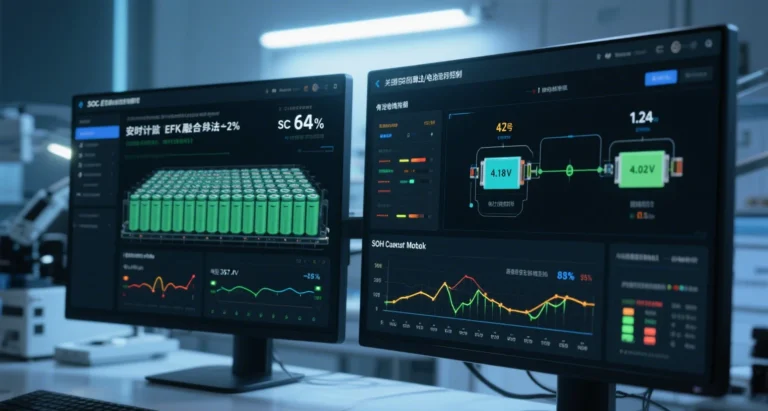
Most large institutions keep a diesel generator for extended outages. The best architecture uses lithium for instantaneous, silent bridging and for the first two to four hours, with the generator starting only if the outage persists — which avoids the fuel burn, noise and vibration of a generator running for a twenty-minute fault. Integrate the battery BMS with the building management system so curators see remaining runtime in the same dashboard as gallery humidity, and set alarm thresholds that give conservation staff time to deploy passive measures.
Fire Strategy and Approvals
Heritage buildings attract stricter scrutiny. Specify LiFePO4 rather than high-nickel chemistry, request UL 9540A or equivalent cell and module test data, and locate the cabinet in a fire-rated enclosure with detection tied to the main panel. Provide the conservation and insurance teams with the thermal test documentation early — approvals, not engineering, are usually the long pole in these projects.
Commissioning and Ongoing Testing
Run a full discharge test at handover with the prioritised load schedule actually in force, and record gallery humidity throughout so the conservation team has evidence of real performance rather than a calculation. Repeat annually. Log capacity fade from the BMS so replacement is planned rather than discovered during an incident.
People Also Ask
How long should museum backup last? Life-safety lighting follows local code, typically 90–180 minutes. Collection climate backup is a risk decision; four to twenty-four hours covers the vast majority of grid outages.
Can lithium be installed in a historic building? Yes, with a fire-rated enclosure, LiFePO4 chemistry and documented module-level test data. Its compact footprint often suits constrained heritage plant rooms better than lead-acid.
Does the battery pay for itself? Partly. Peak shaving and demand-charge reduction offset a portion of the cost, while the main return remains avoided damage to irreplaceable collections.
Written by Karl at China Battery Technology. Request a quote.
Related reading: Lithium Battery for Electric Winch: Cranking Power Without the Voltage Drop