Sodium Ion Battery for Smart Bus Shelter: Buyer’s Guide for City Projects
Sodium Ion Battery for Smart Bus Shelter: Buyer’s Guide for City Projects
Smart bus shelters combine e-paper timetables, LED lighting, USB charging and 4G routers, usually fed by a rooftop solar panel with no grid connection. After supplying packs for transit-furniture integrators in Northern Europe and Canada, we now recommend a sodium ion battery for most of these tenders. The reason is simple: shelters sit outdoors year-round, and sodium cells keep charging at temperatures where LFP must shut down. This guide shares the sizing numbers, winter test data and tender checkpoints we give municipal buyers.
Why Shelters Are a Cold-Climate Problem First
A shelter battery is not cycled hard — typical daily throughput is only 15–40% of capacity. The killer is winter. The pack must accept solar charge at dawn when the enclosure is at ‒20°C or colder. LFP packs need a heating film and a charge-inhibit circuit below 0°C, which steals 8–12% of scarce winter solar yield. Our sodium ion cells charge at 0.2C down to ‒25°C and discharge to ‒35°C with about 88% usable capacity, so the heater can be deleted entirely in most climates.
Sizing the Pack for a Typical Smart Shelter
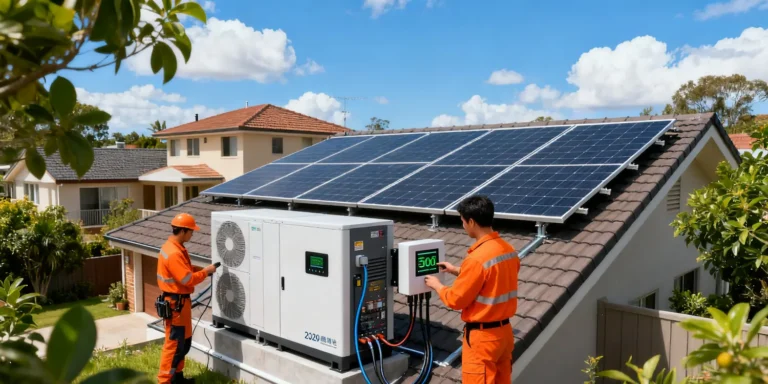
A representative load budget: e-paper display 2 W average, LED strip 10 W for 10 h/night, router and sensors 4 W continuous. That is roughly 250–300 Wh per day. For three days of autonomy under snow-covered panels, specify a 25.6 V / 40 Ah (about 1 kWh) sodium pack. We build these in IP65 steel cases with M8 terminals, CAN or RS485 telemetry, and a 30 A solar charge input matched to a 200–300 W panel.
Sodium vs LFP for Street Furniture: The Numbers
| Criterion | Sodium-Ion (Na-ion) | LFP |
|---|---|---|
| Charge floor without heater | −25°C | 0°C |
| Usable capacity at −20°C | ~88% | ~65% |
| Cycle life @ 80% DoD | 3,000–4,500 | 4,000–6,000 |
| Heater / thermal BOM | Not required | Film + controller (+$25–40) |
| Fire risk in public space | Very low, no thermal runaway propagation in our UN38.3 tests | Low |
| Pack price (1 kWh, 2026) | ~$95–115 | ~$85–100 |
On paper LFP is slightly cheaper per kWh, but once you add the heater, its controller, and the winter energy penalty, sodium wins the total-cost comparison in any city with sub-zero winters. Cycle life is a non-issue: at 30% daily DoD, 3,500 cycles means 15+ calendar years, longer than the shelter’s electronics.
Procurement Checkpoints for Municipal Tenders
First, demand cell-level low-temperature charge curves, not just discharge curves — several vendors quote discharge specs and hide a 0°C charge cutoff. Second, require UN38.3 and IEC 62619 reports under the exact pack part number. Third, specify telemetry: cities want state-of-charge visible in their street-furniture dashboard, so a Modbus or CAN BMS output should be a line item, not an afterthought. Fourth, ask for a 5-year performance warranty at 70% end-of-life capacity; serious sodium suppliers will sign it. Our MOQ for custom shelter packs is 50 units with a 4-week lead time, and we supply DDP to EU and North American ports.
People Also Ask
Can a sodium ion battery survive summer heat inside a shelter cabinet? Yes. Our cells are rated to 60°C storage and 55°C operation; in a ventilated street cabinet the pack typically stays under 50°C even in southern Spain, with no measurable calendar-fade penalty versus LFP.
What size solar panel pairs with a 1 kWh shelter battery? A 200–300 W panel is the sweet spot. It recovers a full winter day’s load in about two hours of weak sun and keeps the pack between 40% and 90% state of charge, which is the gentlest window for cycle life.
Is sodium-ion approved for public-space installations? There is no separate approval category; the pack needs the same UN38.3 transport test and IEC 62619 safety certification as lithium. Sodium’s better abuse tolerance usually makes the fire-safety review with city engineers faster.
Written by Karl at China Battery Technology. Request a quote.
Related reading: Sodium-Ion Battery for Offshore Platforms: Safer Remote Power