Sodium-Ion Battery for Eco Village: Shared Community Storage
Sodium-Ion Battery for Eco Village: Shared Community Storage
Eco villages and co-housing communities generate their own power and share it, which makes storage the deciding factor between exporting surplus cheaply and actually using it after dark. A sodium ion battery suits this duty well: the chemistry is built from abundant materials, tolerates cold sheds and unheated plant rooms, and carries a lower fire-suppression burden than a large lithium bank sitting close to family homes.
Why Shared Storage Fits Sodium
Community-scale storage is measured in hundreds of kilowatt-hours, where the priority is cost per cycle and safety rather than energy density. Sodium-ion cells use iron, manganese, and hard carbon instead of lithium, nickel, and cobalt, so both material cost and supply risk fall. For a community that expects to expand in phases over a decade, that price predictability matters more than squeezing the footprint into a smaller room.
Designing the Community Bank
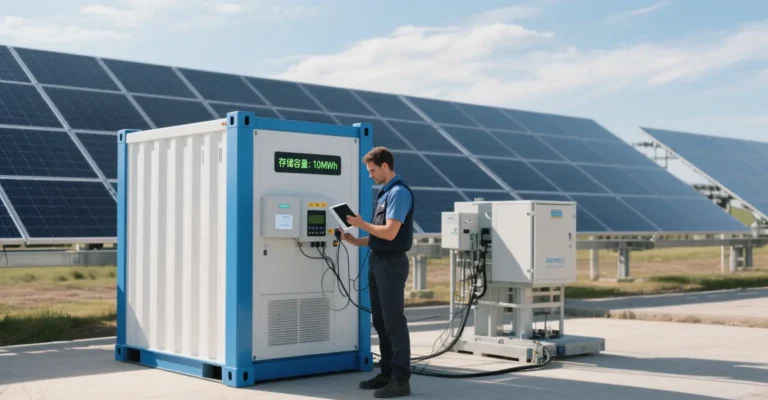
Most eco villages run a single DC-coupled bank behind a shared inverter, with sub-metering that allocates each household’s share of the discharge. Design for a daily full cycle at 80–90% depth, and place the bank in a purpose-built plant room or container with passive ventilation. Because sodium-ion retains over 90% capacity at −20 °C, unheated northern sites avoid the auxiliary heater load that a lithium bank would otherwise need all winter. Leave room in the plant room for the second phase from day one, because retrofitting cabling and switchgear later costs far more than the empty floor space does.
Community Storage Comparison
| Attribute | Sodium-Ion | LFP | Lead-Acid |
|---|---|---|---|
| Material cost | Lower | Medium | Low |
| Cycle life | 3000–6000 | 4000–7000 | 300–500 |
| Cold performance | Excellent | Needs heating | Poor |
| Fire suppression need | Low | Medium | Medium |
| Supply-chain risk | Low | Medium | Low |
Billing and Governance
Technology is rarely the hard part; allocation is. Agree before commissioning whether the bank serves resilience first — holding a reserve for outages — or arbitrage first, shifting cheap solar into the evening peak. Write the reserve floor into the BMS setpoints rather than into a community agreement, and meter every dwelling so the shared energy budget stays transparent at the annual meeting.
Grid Connection and Export Limits
Most communities stay grid-connected even when their ambition is near-autonomy, and the export rule shapes the whole business case. Where the utility pays little for exported solar, self-consumption through the shared bank is worth far more than feeding the grid, so size capacity to absorb the midday surplus rather than to cover the whole night. Where export is capped or metered unfavourably, configure the inverter to limit export and divert the remainder into the bank until it is full, then curtail.
What to Ask a Supplier
Ask for a cycle-life warranty stated at the depth of discharge you will actually use, not at a flattering 50% figure. Confirm the BMS accepts external control so the reserve floor can change seasonally, and check that the supplier can still deliver matching modules in three to five years when the community adds its next phase of housing.
People Also Ask
Is sodium-ion cheaper than lithium for a village? Per kilowatt-hour of usable capacity it is usually lower, and the gap widens in cold climates where lithium requires auxiliary heating.
How long does a community bank last? Expect 10–15 years with daily cycling, provided the bank stays within its specified temperature and depth-of-discharge window.
Can we start small and expand later? Yes, if you standardise on one module voltage and reserve physical space; mixing chemistries or vintages inside the same string should be avoided.
Does it need sprinklers? Sodium-ion’s higher thermal stability often lowers the suppression requirement, but the local authority still decides — confirm the classification before you build the plant room.
Written by Karl at China Battery Technology. Request a quote.