Semi-Solid State Battery for Wireless Earbuds: Smaller Cells, Longer Listening
Wireless earbuds are the tightest battery brief in consumer electronics: a cell the size of a lentil that must survive heat, sweat, drops and several hundred partial charges a year. A semi solid state battery changes the arithmetic by freeing internal volume rather than by a headline chemistry revolution. Here is where the extra capacity actually comes from, what it costs, and the mechanical constraints that decide whether a programme succeeds.
Why Earbuds Are the Hardest Battery Brief in Consumer Electronics
A true wireless earbud cell is roughly the size of a lentil. It has to deliver audio bursts, handle a Bluetooth radio, survive being dropped in a pocket, sit in a warm ear canal, and then be recharged several hundred times a year inside a case that is itself tiny. There is no room for a protection circuit of any size and no room for thermal mass to soak up heat. Conventional lithium-polymer cells have hit a practical ceiling here. Energy density improves a couple of percent a year, and every gain tends to come with a thinner separator and a shorter cycle life. Brand managers asking for six-hour playback from a bud that weighs four grams are asking for more than the incumbent chemistry can comfortably give.
What Semi-Solid Construction Actually Changes
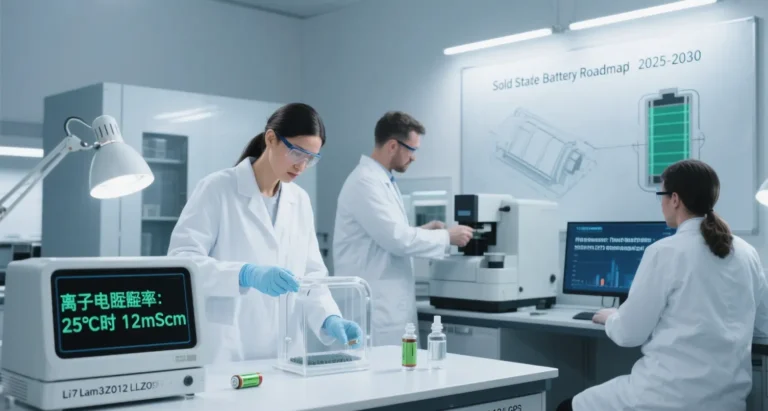
A semi solid state battery replaces most of the liquid electrolyte with a gel or polymer-rich layer. The practical consequence is a thinner, more mechanically stable separator, which frees internal volume for active material and allows a lithium-metal or high-silicon anode that would be unstable against a fully liquid electrolyte. For an earbud designer the payoff is volumetric: roughly 20 to 40 % more capacity in the same cell footprint, or the same capacity in a cell thin enough to let the housing shrink. That is the difference between a bud that sits proud of the ear and one that disappears.
Where the Gains Show Up
| Metric | Standard Li-Po | Semi-solid | What it means |
|---|---|---|---|
| Volumetric density | Baseline | +20 to 40 % | Longer playback or smaller bud |
| Charge rate | 1C typical | 1–2C with thermal care | Faster top-up in the case |
| Swelling after 300 cycles | Noticeable | Lower | Housing seams stay closed |
| Unit cost | Low | Considerably higher | Only viable in premium tiers |
| Supply maturity | Commodity | Limited qualified lines | Lead times need planning |
The Engineering Constraints Nobody Advertises
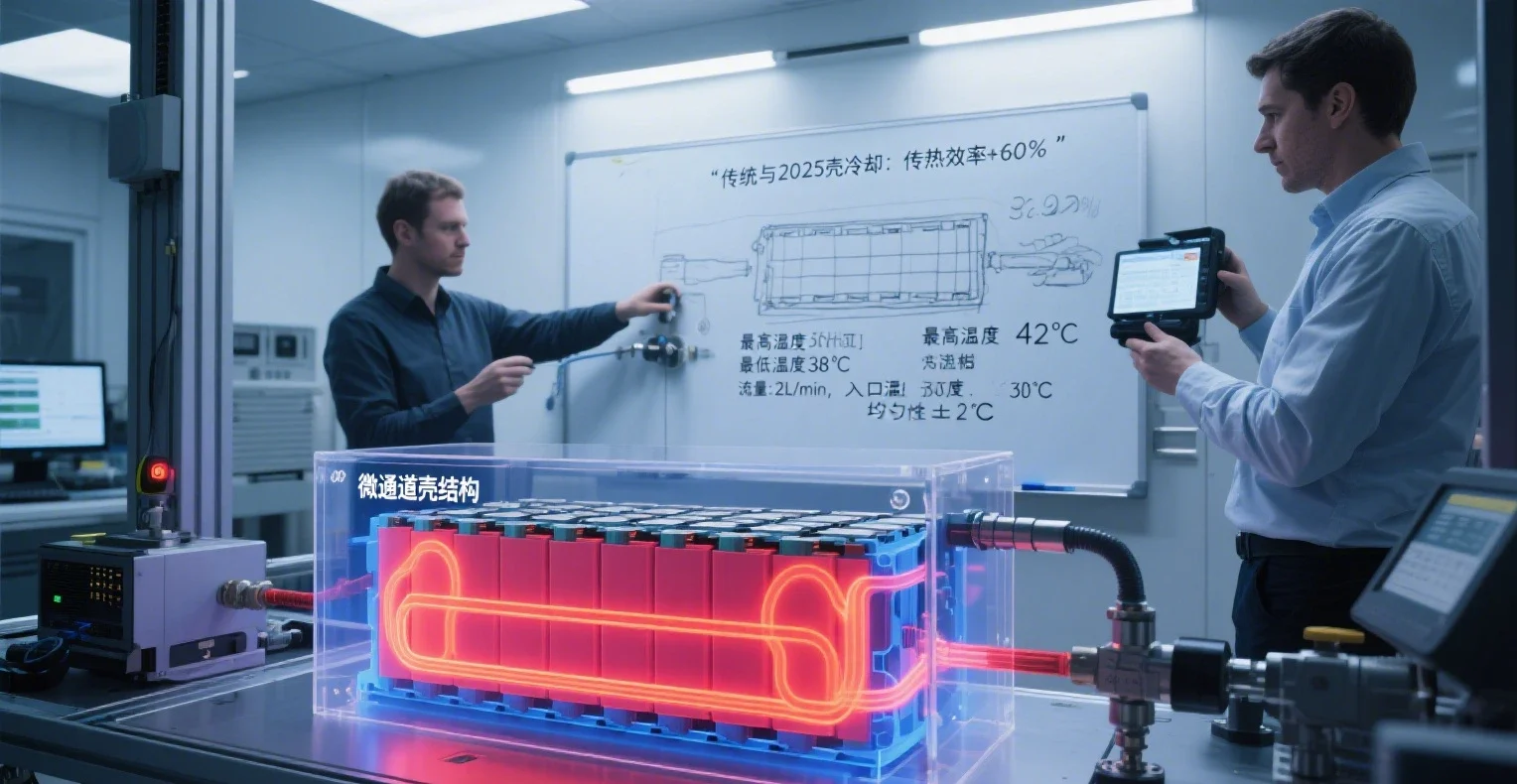
Semi-solid cells are more sensitive to pressure. Earbud housings clamp the cell, and an uneven clamp can create local dry spots in the electrolyte layer, which shows up as capacity fade that looks like a bad batch but is really a mechanical problem. Tool the housing with a defined compression, not a tolerance stack that squeezes whatever it catches. Low-temperature performance also needs checking on the bench. The polymer-rich layer is more viscous than a liquid electrolyte, so a bud used for a winter run will show a sharper capacity drop than the datasheet suggests. Test at 0 °C before you commit.
Cycle Life and the Two-Year Reality
Earbuds are not charged on a daily schedule the way a phone is. They go through several partial cycles a day and spend long stretches in a charged case at elevated temperature. That combination — high state of charge plus warmth — ages any lithium cell faster than cycle count alone implies. Qualify on a storage-and-top-up profile, not just a pure cycle test. Hold cells at 100 % and 40 °C for 500 hours and measure the capacity loss. That number predicts field returns far better than a 500-cycle datasheet claim.
Safety and Certification
The reduced liquid content genuinely improves abuse tolerance: nail penetration and overcharge behaviour are usually better than an equivalent Li-Po cell. But ‘better’ is not ‘exempt’. The cell still needs UN 38.3 transport test data, IEC 62133 certification, and a protection module sized for the bud’s actual peak current.
What to Ask Before You Commit
Request cell-level cycle data at your real charge profile, a mechanical drawing with the allowed compression range, and a statement of which production line the cells come from. Ask how many qualified lines the supplier runs: single-line supply is the biggest schedule risk in this chemistry today.
People Also Ask
Will semi-solid cells make earbuds cheaper? Not in the near term. The benefit is capacity and form factor, not price. Expect a premium bill of materials for at least the next few product generations.
Can existing earbud designs drop in a semi-solid cell? Sometimes, if the cell footprint is standard. The compression requirement is the usual blocker, so budget for a housing revision rather than assuming a swap.
How much extra playback time is realistic? Plan on 20 to 35 % at the same cell size. Marketing claims above that usually assume a larger cell or a lower audio output level.
Are they safe in a device worn in the ear? The chemistry is at least as tolerant as Li-Po and often better, provided the pack carries proper protection and passes IEC 62133 and UN 38.3.
Written by Karl at China Battery Technology. Request a quote.
Related Reading
- semi-solid-state battery guide
- Semi-Solid-State Battery for Electric Toothbrush: Safer Cells in a Wet Room
- Semi-Solid-State Battery for Electric Shaver: Longer Runtime, Smaller Shell