Semi Solid State Battery for Electric Delivery Vans: Fleet Duty Reality
Semi Solid State Battery for Electric Delivery Vans: Fleet Duty Reality
Delivery vans are the first commercial vehicles where battery weight, charge time and cycle life collide in the same business case. A driver does 120–180 stops a shift, needs the vehicle back on the road at 7 a.m., and cannot afford a 40-minute charge in the middle of it. Traditional liquid electrolyte packs deliver the range but add mass that eats payload, and fast charging wears them faster than the duty cycle assumes. A semi solid state battery intermediate between conventional lithium-ion and full all-solid-state — a partially solidified electrolyte with a lithium-metal or high-nickel anode — targets exactly those three constraints. Fleet operators evaluating a semi solid state battery should look at cycle life, peak charge acceptance and thermal behaviour under repeated DC fast charging rather than headline energy density.

Why Last-Mile Duty Is the Hardest Case
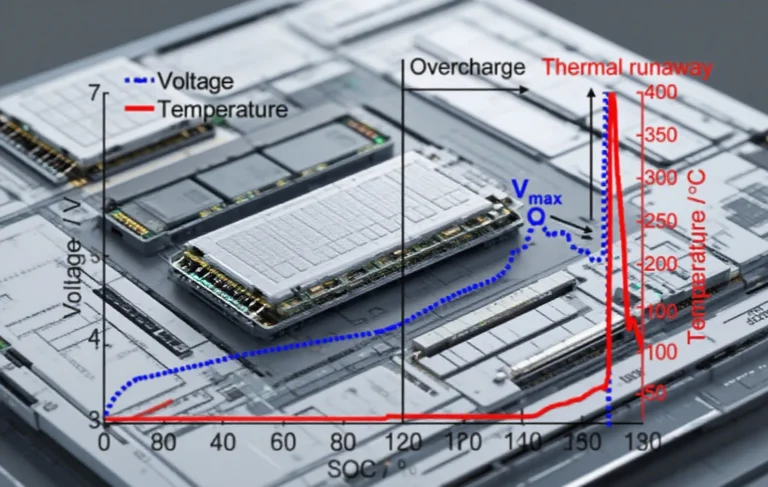
A van does not drive steadily. It accelerates hard from every stop, regen-brakes, idles, then sits charging for 30 minutes at 150 kW. That pattern drives high C-rates, deep-ish cycles every day and a calendar clock measured in years rather than the six or seven years a passenger EV gets. Packs that survive this are usually large, heavy and expensive; packs that are light and cheap do not survive it. Semi-solid designs reduce the liquid fraction, which cuts the runaway chain length in a thermal event and permits higher charge currents with less electrolyte degradation.
What Semi-Solid Actually Changes
The defining trait is a partially solid ion-conducting medium separating the anode from the cathode. Removing most of the free liquid suppresses dendrite growth that forces conventional cells to run a conservative charge ceiling, and it improves safety margin in the crumple-zone scenario where a liquid pack would be a hazard. The practical gains fleets care about: sustained fast charging without aggressive cooling, a more stable capacity plateau over the service life, and a modest weight saving through the anode change. Do not expect the doubling of range that press releases imply for full solid-state — semi-solid is a step forward, not the destination.
Semi-Solid vs Conventional Van Pack
| Attribute | Semi Solid State | LiFePO4 Pack | NMC Pack |
|---|---|---|---|
| Gravimetric energy density | 260–330 Wh/kg | 140–160 Wh/kg | 200–250 Wh/kg |
| Sustained fast charge | Better, less electrolyte loss | Good but heat-limited | Good, needs cooling |
| Thermal runaway propagation | Lower risk | Medium | Higher |
| Cycle life at 1C | 1500–3000 | 3000–6000 | 1200–2500 |
| Availability for fleet orders | Pilot volumes | Wide | Wide |
Operating a Mixed Fleet
The realistic near-term pattern is a mixed fleet: semi-solid packs on the routes with the highest daily kilometres and the hardest charge windows, conventional packs elsewhere. Telematics should track per-pack state-of-health so the replacement decision is made on measured degradation rather than a calendar guess. Because these packs are still in pilot volumes, plan on a longer lead time for spares and a firmware path that keeps the charger profile aligned with the pack’s actual chemistry.
People Also Ask
Can semi solid state batteries charge as fast as an operator needs? Yes, in principle — the reduced liquid phase tolerates higher current with less degradation. In fleet practice the charge rate is then capped by the depot’s infrastructure and the vehicle’s thermal budget, not by the cell.
Is semi-solid worth it for a van that only does local routes? Only where fast turnaround or payload matters. For a low-kilometre city route with overnight charging, LiFePO4 remains the lower total-cost answer.
How should fleets budget these packs? Treat semi-solid as a premium pilot line: expect a higher per-kWh price today, offset by a longer usable service window and less capacity fade on the routes that would otherwise need early replacement.
Written by Karl at China Battery Technology. Request a quote.