Semi-Solid Battery for Humanoid Robot: Runtime, Power and Safety
Semi-Solid Battery for Humanoid Robot: Runtime, Power and Safety
Humanoid robots are the hardest battery problem in robotics today. They carry their own mass on two legs, so every extra gram of pack cuts the payload and shortens the walk time, and every balance correction pulls a current spike no phone cell was designed for. A semi solid state battery answers both constraints at once: it raises usable energy per kilogram while replacing most of the free liquid electrolyte, which matters when the machine works beside people.
Why Humanoids Break Conventional Pack Rules
A wheeled AGV can carry a heavy lead or LFP pack because the floor takes the weight. A biped cannot. Roughly 20–30% of a humanoid’s total mass ends up in the battery, and that mass sits in the torso where it drives the inertia the ankles must fight. Adding capacity therefore has diminishing returns — past a point, the extra kilograms consume the extra kilowatt-hours. Higher cell-level energy density is the only way out of that loop, which is why semi-solid chemistry is drawing attention from developers who have already exhausted mechanical weight savings.
Energy Density Decides Runtime
Current-generation humanoids run 2–4 hours on 1.5–2.5 kWh. Moving from a 250 Wh/kg liquid cell to a 320–400 Wh/kg semi-solid cell buys either 30–50% more walking time in the same envelope or the same runtime with several kilograms removed from the torso. For a warehouse or inspection deployment measured in shifts rather than demos, that difference decides whether one robot covers a shift or you buy two.
Peak Power for Dynamic Balance
Runtime is only half the specification. A stumble recovery or a sudden lift commands every leg actuator at once, and the pack may be asked for 5–10C for a few hundred milliseconds. If internal resistance is too high, the bus voltage sags, the motor controllers de-rate, and the robot falls — a failure that reads as a control bug but is really a battery limit. Specify continuous and pulse discharge separately, and confirm the pulse rating at the low state of charge where sag is worst, not just at 100%.
Safety in Shared Human Spaces
Humanoids are sold on working next to people, which changes the safety case. Reducing free electrolyte raises the thermal-runaway threshold and limits how much flammable material is available if a fall punctures a cell. Semi-solid cells also tolerate the repeated mechanical shock of a machine that occasionally hits the floor. None of this removes the need for a redundant BMS, cell-level fusing, and a crash-tolerant enclosure — it makes those measures easier to certify.
Humanoid Robot Battery Comparison
| Attribute | Semi-Solid | Liquid NMC | LiFePO4 |
|---|---|---|---|
| Energy density | 320–400 Wh/kg | 220–280 Wh/kg | 140–180 Wh/kg |
| Pulse discharge | High | Very high | Medium |
| Puncture / impact safety | High | Medium | High |
| Cycle life | 1000–2000 | 800–1500 | 3000–6000 |
| Cost today | High | Medium | Low |
| Best fit | Mobile bipeds | Prototypes | Fixed / wheeled |
Pack Architecture and Form Factor
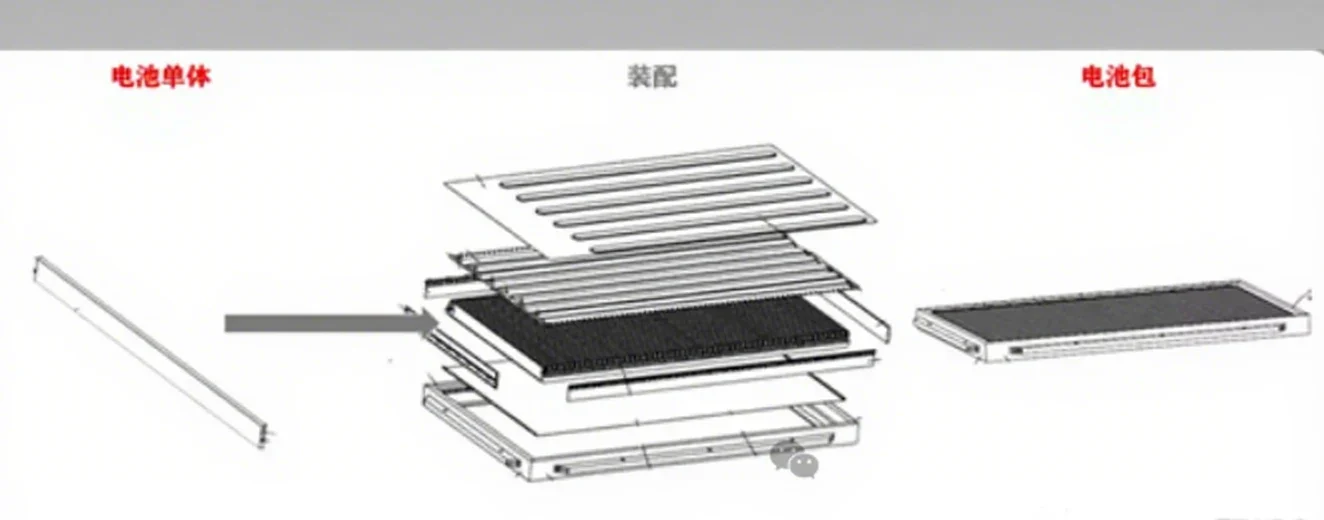
Torso volume is irregular, so custom prismatic or pouch modules almost always beat standard cylindrical bricks on packing efficiency. Keep the pack low and centered to reduce the balance controller’s workload, and design for hot-swap: a robot that swaps a module in 60 seconds delivers far more useful hours per day than one tethered to a charger. Route the high-current bus away from the joint harness to keep motor noise out of the encoder and IMU signals.
Charging Strategy and Fleet Uptime
Two swappable modules per robot with a shared bank of chargers is the pattern that works in production. Charge at 0.5–1C rather than the maximum the cell tolerates; the runtime penalty is nil once swapping is in place, and calendar life improves noticeably. Hold the resting state of charge near 60–70% for stored spares instead of full, and log throughput per module so packs retire on data rather than guesswork.
Thermal and Lifetime Management
Semi-solid cells prefer a warm, narrow window — typically 15–35 °C. In a sealed torso, actuator waste heat rises fast, so plan forced air or a cold plate from the start and place sensors on the hottest cells, not on the case. Expect useful pack life of 1000–2000 cycles to 80% capacity; at one deep cycle per shift that is roughly three to five years of service, which should be written into the maintenance budget rather than discovered later.
People Also Ask
Can I buy semi-solid cells for a humanoid today? Yes, in sample and low-volume programs. Several Chinese and Japanese suppliers ship semi-solid cells for premium mobility and robotics pilots, though pricing still carries a development premium over liquid NMC.
Why not full solid-state? Full solid-state promises more but is still limited by interface resistance and manufacturing yield. Semi-solid is the step you can actually order and integrate this year.
How much runtime should I design for? Size for one full work shift plus 20% reserve, then verify under real duty — walking, lifting, and standby draw very different currents, and datasheet averages flatter the pack.
Does a humanoid need a custom BMS? Effectively yes. Off-the-shelf e-bike boards cannot handle the pulse profile or report fast enough for a balance controller that needs voltage headroom data every few milliseconds.
Written by Karl at China Battery Technology. Request a quote.
Related reading: Semi-Solid State Battery for VR Headsets: Lighter, Safer Immersion