Semi Solid State Battery for Seismic Survey Node: Long-Duration Field Power
Semi Solid State Battery for Seismic Survey Node: Long-Duration Field Power
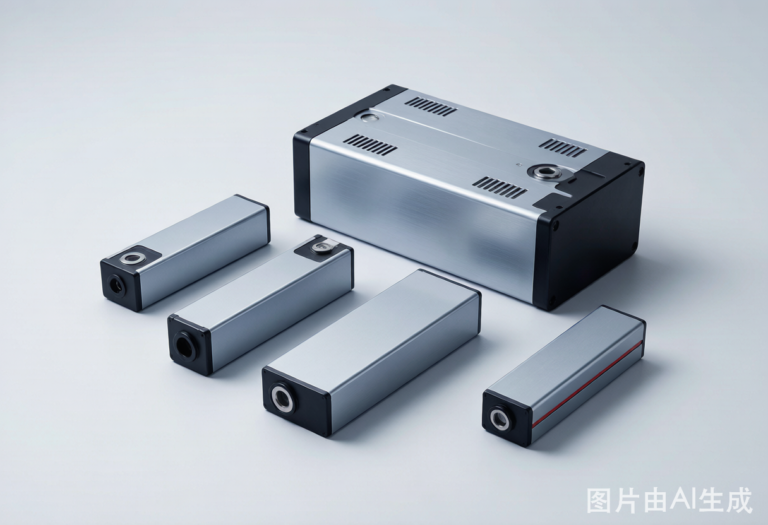
A modern seismic crew drops thousands of autonomous nodes across a survey line, then walks away for three to six weeks. Every node has to keep its geophone and recorder alive the whole time, in heat, frost, and dust, without a single service visit. That makes the cell the real limiting component, and it is why crews are testing a semi solid state battery in place of the conventional pouch packs that have shipped with nodes for a decade.

Why Node Autonomy Is a Battery Problem
An autonomous node draws very little — typically 60 to 150 mW while recording, with brief spikes during GPS sync and data flush. The load is trivial, but the duration is not. A 30-day deployment at 100 mW needs roughly 72 Wh of usable energy before any derating for temperature or ageing. Crews then add margin, because a node that dies on day 26 loses four days of traces and can force a reshoot of that patch.
Weight matters just as much. A two-person team may plant 400 nodes a day, carrying them across sand, scrub, or snow. Every 200 g saved per node is 80 kg less carried per crew per day.
What Semi-Solid Chemistry Changes
A semi-solid cell replaces most of the free liquid electrolyte with a gel or slurry that holds the electrode structure together. Two consequences matter for seismic work. First, the cell tolerates thicker electrodes, so you gain 15 to 30 percent more energy in the same volume than a comparable liquid-electrolyte cell. Second, with far less mobile electrolyte, a punctured or crushed cell is much less likely to vent and ignite — a real concern when nodes are buried, driven over by vehicles, or flown to site in bulk.
The trade-off is peak power. Semi-solid cells have higher internal resistance, so they are poor choices for high-current tools. A seismic node, with its low continuous draw and modest pulses, sits exactly where the chemistry is strongest.
Comparing Node Battery Options
| Criterion | Semi-Solid | Standard Li-ion | Primary Lithium (Non-Rechargeable) |
|---|---|---|---|
| Usable energy per kg | High | Medium | Very high |
| Rechargeable | Yes, 800+ cycles | Yes, 500-800 cycles | No |
| Cost per deployment | Low after year one | Low after year one | High, recurring |
| Thermal runaway risk | Low | Moderate | Moderate |
| Cold-weather retention | Good | Fair | Good |
| Air-freight paperwork | Simpler | Standard UN38.3 | Often restricted |
Sizing a Node Pack Properly
Start from the recorder’s datasheet current at the sample rate you actually use, not the idle figure. Multiply by the planned deployment days, add the GPS and radio duty cycle, then apply a 25 percent derate for end-of-life capacity and a further 10 to 15 percent if night-time lows fall below −10 °C. For a 45-day winter survey, most crews land on 100 to 140 Wh per node.
Choose a nominal voltage that lets the node’s DC-DC converter run in its efficient band. Many recorders prefer 7.2 V or 10.8 V; bucking down from a much higher pack voltage wastes energy you paid weight to carry.
Temperature, Sealing, and Field Reality
Nodes are buried shallow or spiked into the ground, so the cell sees a damped version of ambient. That helps in the desert, where surface temperatures far exceed what any cell should be charged at, and it helps at night in high latitudes. Still, specify a cell rated for discharge from −20 °C to 60 °C and insist on IP67 or better at the pack level, with a potted connector rather than a rubber boot.
Charging is the step crews get wrong. Nodes come back warm from the field and go straight onto a rack charger. Let them equalise to room temperature first; charging a hot pack repeatedly is the fastest way to lose the cycle life you specified.
Fleet Economics Over Three Seasons
Assume a 1,000-node fleet and three surveys a year. Primary lithium cells look cheap per unit but are consumed every deployment, so the recurring spend dominates. A rechargeable semi-solid pack costs more up front and pays back inside the first year on cell purchases alone. Budget for roughly 5 percent annual attrition from crush damage and lost nodes.
Procurement Checklist
Ask for cycle-life data at your actual discharge rate, not at 1C. Request self-discharge figures after 60 days of storage, since nodes often wait in a warehouse between jobs. Confirm UN38.3 reports and require batch traceability, so a bad lot can be pulled from one survey rather than the whole fleet. Then run a 20-node pilot before committing to a fleet retrofit.
People Also Ask
How long can a seismic node run on a semi-solid pack? With 120 Wh usable and a 100 mW average load, roughly 45 to 50 days including temperature derating — comfortably covering most survey windows.
Is a semi-solid cell safe to air-freight in bulk? It still ships under lithium battery rules, but the reduced free electrolyte and better abuse tolerance make approvals and packaging arrangements simpler in practice.
Can I retrofit existing nodes? Usually yes, if the mechanical envelope and nominal voltage match. Confirm the charger profile and the node’s low-voltage cut-off before swapping chemistry.
Does the higher internal resistance hurt data quality? No. Node loads are low and steady, so pack sag stays well inside the recorder’s supply tolerance and the noise floor is unaffected.
Written by Karl at China Battery Technology. Request a quote.
Related reading: Semi-Solid State Battery for VR Headsets: Lighter, Safer Immersion