Semi-Solid Battery for Delivery Vans: More Route, Less Downtime for Last-Mile Fleets
Semi-Solid Battery for Delivery Vans: More Route, Less Downtime for Last-Mile Fleets
Last-mile fleet managers live inside a narrow triangle: payload, route length, and charging downtime. Every kilogram of battery steals cargo capacity, every kilowatt-hour short of the route means a midday charge, and every midday charge costs a driver-hour. This is exactly the problem set where the semi solid state battery earns its price premium, and after fielding packs in light commercial trials we can put real numbers on it. Here is what fleet buyers should know before their next vehicle or retrofit tender.

Why Energy Density Is a Payload Question
A typical 3.5-tonne electric van carries a 60–90 kWh LFP pack weighing 450–650 kg — weight that comes straight out of the legal payload. Semi-solid NMC cells at 280–320 Wh/kg pack the same energy into roughly 60–70% of the mass. On a van rated for 1,000 kg of cargo, saving 180 kg of battery is an 18% payload increase, which for parcel work translates directly into fewer trips per day. Alternatively, keep the mass budget and fit 30–40% more energy for rural or cold-climate routes.
Route Math: Where the Extra kWh Goes
Urban parcel routes average 0.35–0.45 kWh/km including HVAC and hundreds of stop-start events. A 75 kWh usable pack yields 170–210 km — adequate in summer, marginal in winter when heating and cold-cell derating cut range 20–30%. A semi-solid pack of equal weight carrying 105 kWh removes the winter cliff entirely: drivers finish the route with reserve, and the fleet skips opportunity charging plus the queueing it causes at depot chargers.
Semi-Solid vs LFP for Last-Mile Duty
| Criterion | Semi-Solid (NMC) | LFP (conventional) |
|---|---|---|
| Pack-level energy density | 220–260 Wh/kg | 140–170 Wh/kg |
| Winter range penalty | Moderate, better low-T retention | Larger without pack heating |
| Cycle life (80% DoD) | 2,000–3,000 | 4,000–6,000 |
| Abuse tolerance | High — gel electrolyte resists leakage and thermal spread | High |
| Cost per kWh | 1.4–1.8x baseline | Baseline |
Cycle life looks like LFP’s win, but do the fleet arithmetic: 2,500 cycles at 200 km per cycle is 500,000 km — beyond the service life of the van itself. For duty cycles under 300 km/day, semi-solid cycle life is simply not the binding constraint.
Procurement Notes for Fleet Buyers
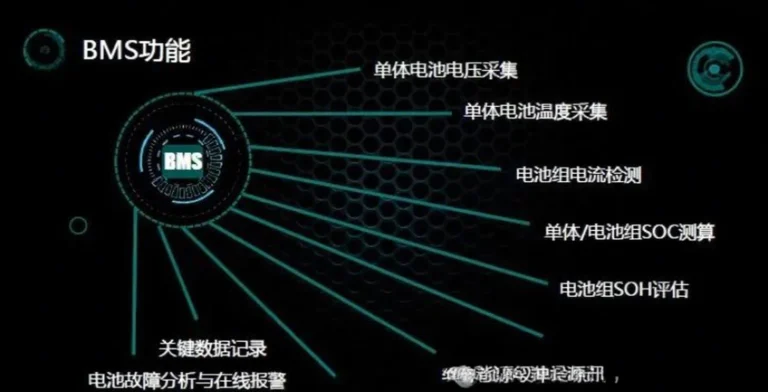
Ask suppliers for pack-level (not cell-level) density figures and for winter range data at −10°C with cabin heating included — the honest vendors have it. Verify the BMS supports fleet telematics integration over CAN so state-of-health flows into your route-planning software. And structure the warranty around energy throughput (total MWh delivered) rather than calendar years; it aligns the supplier’s incentive with how vans are actually used.
People Also Ask
Do semi-solid packs charge faster than LFP? Comparable in practice: 1–1.5C sustained. The operational win is needing fewer charge events at all, because the pack carries more energy per kilogram.
Are semi-solid batteries safe in a crash? The gelled electrolyte is far less prone to leakage and propagation than liquid NMC; packs in trials have passed nail-penetration and crush tests to the same standards as LFP systems.
When does the premium pay back? Fleets that eliminate one midday charging stop per van per day typically recover the pack premium in 2–3 years through driver-hours and extra deliveries alone.
Written by Karl at China Battery Technology. Request a quote.
Related reading: Semi-Solid State Battery for VR Headsets: Lighter, Safer Immersion