Lithium Battery for Vertical Farming: Keeping Lights, Pumps and Climate Alive
Lithium Battery for Vertical Farming: Keeping Lights, Pumps and Climate Alive
A vertical farm is a building-sized life-support machine: kill power for four hours and you lose not stock on a shelf but living inventory — and with it, six weeks of grow cycle. Farm operators approach us as a lithium battery manufacturer with two distinct asks that often get muddled together: backup power to survive outages, and load-shifting storage to make the enormous LED lighting bill survivable. This guide separates the two and shows how to size each properly.
Know Your Loads: Lighting Is Big, but Pumps Are Critical
LED grow lighting dominates consumption — 500–1,000 W per square metre of canopy across stacked layers, easily 60–70% of the facility’s energy. But in an outage the lights can go dark for hours without killing a crop. What cannot stop are the nutrient dosing and recirculation pumps, aeration in the reservoirs, and HVAC dehumidification: a stagnant hydroponic loop starves roots of oxygen within 2–4 hours, and humidity spikes invite mildew across every layer at once. Your backup tier is therefore small — typically 5–15% of facility load.
Two Batteries in One System
Design storage in two logical tiers on one bus. The critical tier backs pumps, aeration, controls and partial dehumidification — for a 500 m² farm, roughly 8–12 kW for at least six hours, so 60–80 kWh of LFP. The economic tier is sized to shift the lighting block into off-peak tariff windows: if 200 kW of lighting runs 16 hours, moving even the 4 most expensive hours to battery needs 800 kWh. Most operators phase it — install the critical tier at build-out, add arbitrage capacity once tariff data from the first season proves the case.
Backup Architecture Options
| Option | Bridge time | Covers lighting? | Relative cost |
|---|---|---|---|
| Diesel generator only | 30–90 s start gap | Yes, if sized | Low capex, high opex |
| LFP battery, critical loads | Instant, 6–12 h | No | Moderate |
| Battery + generator hybrid | Instant, indefinite | Yes | Moderate-high |
| Full battery incl. arbitrage | Instant, 4–8 h whole farm | Partially | High, earns daily |
The hybrid row is the sweet spot for most farms: the battery carries the first minutes and the pumps indefinitely, while the generator handles long outages and the lighting block. The battery also earns its keep every ordinary day through peak shaving — something the generator never does.
Specification Details That Matter Indoors
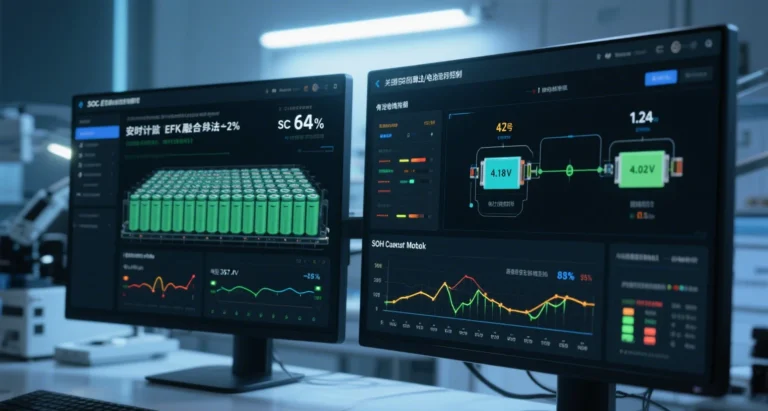
Choose LFP for indoor agricultural installs — thermal stability matters in a building full of organic material and plastic racking. Specify IP54 or better against humid, fertilizer-laden air, conformal-coated BMS boards, and cabinet placement outside the grow-room humidity envelope. Demand sub-20 ms transfer switching so dosing controllers and PLCs ride through without rebooting, and CAN or Modbus telemetry into the farm management system so battery state appears next to pH and EC on the same dashboard.
People Also Ask
How much battery does a small container farm need? A 40-ft container farm draws 12–20 kW total; a 20–30 kWh LFP pack backs its pumps and controls for a full day, or the whole unit for about 90 minutes.
Can the battery reduce a vertical farm’s electricity bill? Yes — lighting schedules are flexible by design, and shifting 4 hours of a 200 kW lighting load to off-peak rates saves $15,000–$40,000 per year on typical commercial tariff spreads.
What cycle life should operators expect? Daily-cycled LFP rated at 6,000 cycles runs 15+ years; the critical-backup tier, cycling rarely, is effectively calendar-limited and lasts as long.
Written by Karl at China Battery Technology. Request a quote.
Related reading: Lithium Battery for Electric Winch: Cranking Power Without the Voltage Drop