How to Calibrate Your Lithium Battery State of Charge
Calibrate Lithium Battery State of Charge: Practical Steps
State of charge (SoC) is the single number users trust most, yet it is also the easiest to get wrong. An uncalibrated pack may show 30% one moment and shut down the next. A reliable lithium battery manufacturer ships packs with a calibrated BMS, but field conditions still drift. Understanding SoC calibration helps distributors and integrators avoid warranty complaints and angry end users who lose trust in the product.

Why SoC Drifts in the Field
BMS estimators accumulate small current-measurement errors over charge and discharge cycles. Temperature, aging, and unbalanced cells widen the gap between reported and true SoC. Left unaddressed, the pack appears to “lie” about remaining capacity, eroding user confidence and triggering premature support calls that cost more than a simple recalibration visit or firmware reset.
Two Common Calibration Methods
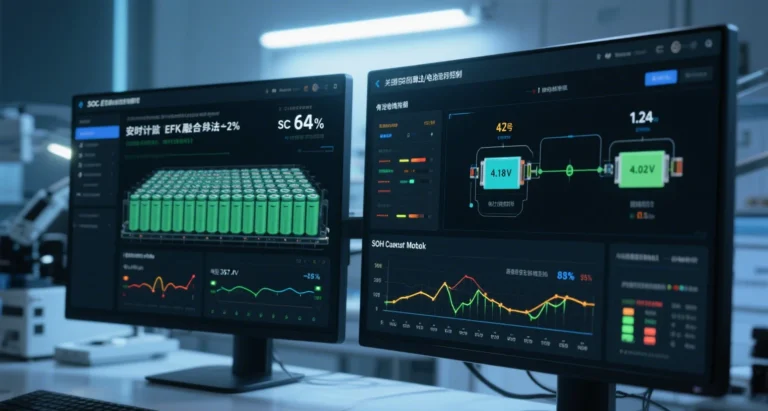
Coulomb counting integrates current over time. It is continuous but suffers from integrator drift. Voltage-based correction resets the estimate against the open-circuit voltage curve at rest. The best systems fuse both: coulomb counting for live tracking, voltage reference for periodic correction. Advanced packs also use impedance tracking to estimate available power, not just stored energy, which matters for high-current loads.
Step-by-Step Calibration
| Step | Action | Target |
|---|---|---|
| 1. Rest | Let pack sit idle 1–2 hours | Stable temperature |
| 2. Full charge | Charge to CV cutoff | 100% SoC lock |
| 3. Discharge test | Load at 0.2C to cutoff | Measured capacity |
| 4. Relearn | Write capacity to BMS | New zero/100 points |
Procurement and QA Implications
When sourcing packs, ask the lithium battery manufacturer for the factory SoC calibration procedure and whether capacity learn can run automatically in the field. Packs that self-calibrate during scheduled idle windows reduce service calls. For fleet operators, log each pack’s learned capacity so you can retire weak units before they falsify range data to drivers and damage your brand reputation.
Common SoC Specification Mistakes
Buyers often spec a BMS by price alone and discover later that the gauge drifts by 10% within a season. Insist on a documented accuracy band (typically +/-3% at 25C) and a self-learning capacity feature. Also confirm the BMS stores the learned value in non-volatile memory, so a power cycle does not reset the estimate and force a recalibration before the next shift.
People Also Ask: How Often Should SoC Be Calibrated?
For most stationary and light-duty packs, a full recalibration every 3–6 months is sufficient. High-cycle applications such as forklifts or golf carts benefit from a monthly capacity learn cycle. Modern BMS firmware can automate this during low-use periods without any operator intervention, keeping the estimate honest across seasons.
Frequently Asked Questions
Can I calibrate SoC without special tools?
A basic full charge followed by a controlled discharge and rest will correct most drift. Advanced packs expose calibration through the BMS communication port (CAN/RS485) for precise capacity writes and logging you can archive for warranty evidence.
Does cold weather affect SoC accuracy?
Yes. Internal resistance and open-circuit voltage shift with temperature, so always calibrate at the pack’s normal operating temperature band to keep the voltage reference valid and the gauge trustworthy.
Written by Karl at China Battery Technology. Request a quote.
Related reading: Lithium Battery for Electric Winch: Cranking Power Without the Voltage Drop