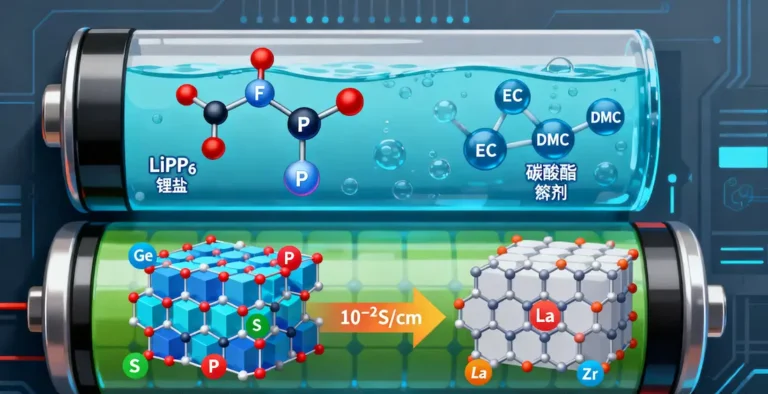
Sulfide vs Oxide Solid-State Electrolyte: Trade-offs
Sulfide vs Oxide Solid-State Electrolyte
The solid state electrolyte choice – sulfide or oxide – shapes manufacturability and performance. Sulfides conduct ions well but react with moisture; oxides are stable but harder to process.

Comparison
| Property | Sulfide | Oxide |
|---|---|---|
| Ionic conductivity | High | Moderate |
| Moisture sensitivity | High (H2S) | Low |
| Processability | Press/sinter | High temp |
Implication
- Sulfide suits layered, press-formed cells.
- Oxide fits thin-film and coated approaches.
Both feed the roadmap in our semi solid state battery guide. For volume today, a lithium battery manufacturer with LFP is the safe bet.
Frequently Asked Questions
Which is safer?
Oxides are more chemically stable; sulfides need strict dry-room handling.
Which conducts best?
Sulfides generally show the highest room-temperature ionic conductivity.
Written by Karl at China Battery Technology. Request a quote.