Semi-Solid Battery for Augmented Reality Glasses: Lightweight Power
Semi-Solid Battery for Augmented Reality Glasses: Lightweight Power
Augmented reality glasses are racing toward all-day, prescription-thin form factors, and the one component that refuses to shrink is the battery. A semi solid state battery gives headset makers the energy density of next-generation cells with the manufacturing maturity of today’s production lines — the pragmatic bridge while full solid-state chemistry scales up. For product teams counting every gram at the temple arm, semi-solid cells are quickly becoming the default answer for wearable computing.
The Power Problem in AR Glasses
A modern AR headset runs a micro-display, waveguides, a spatial sensor suite, and a companion SoC — easily 1.5–3 watts of continuous draw in a housing the size of a pair of spectacles. Users expect four to eight hours of use, which means the cell must deliver real capacity in a sliver of volume while staying cool against the skin. Traditional liquid-electrolyte pouch cells hit a wall here: they swell, they carry flammable solvent, and their energy density plateaus around 250–300 Wh/kg.
Why Semi-Solid Fits Wearables
Semi-solid cells replace a large share of the liquid electrolyte with a gel or composite separator, cutting free solvent and leakage risk while keeping the rolled and stacked electrode processes that factories already run. The result is 20–40% more energy in the same footprint, softer mechanical compliance for flex at the hinge, and a safer thermal profile for a device worn on the head. That combination is exactly what AR product managers need to hit weight and runtime targets.
Wearable Cell Comparison
| Attribute | Semi-Solid | Liquid Li-ion | Full Solid-State |
|---|---|---|---|
| Energy density | High (300–400 Wh/kg) | Medium (250–300) | Highest (400+) |
| Skin-contact safety | High | Medium | Very high |
| Flex / thin-form tolerance | Good | Poor | Excellent |
| Production maturity | Medium–High | Very high | Low |
| Cost at volume | Medium | Low | High |
Thermal and Safety Design
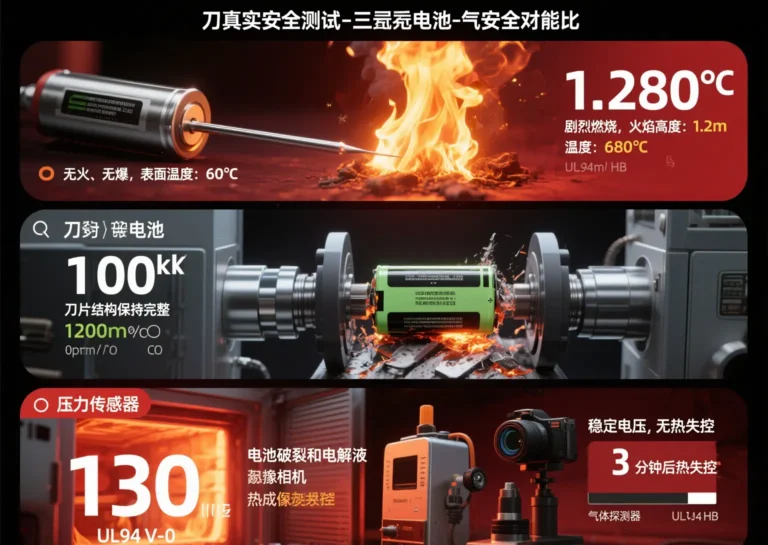
Against the face, free-electrolyte content is the enemy. Semi-solid chemistry lowers the vapor-pressure solvent load and raises the thermal-runaway threshold, so a single-cell fault is far less likely to propagate. Designers still add a thin thermal interface, a micro-BMS that caps charge rate during warm use, and a rigid-flex encapsulation so the cell survives daily folding into a case.
Sizing and Sourcing
Specify the cell in watt-hours tied to your worst-case display brightness and sensor duty cycle, not just runtime minutes. Validate cycle life at the shallow 20–80% window your firmware will actually use, and qualify the pack for the temperature band of real wearers (−10 °C to +40 °C). Work with a cell partner that can deliver thin custom formats, medical-grade traceability, and consistent impedance across batches.
People Also Ask
Are semi-solid batteries available for production now? Yes — several suppliers ship semi-solid cells for premium wearables and AR pilots as of 2025–2026, unlike full solid-state which is still scaling.
Will semi-solid add noticeable weight? No. Because energy density is higher, you need a smaller, lighter cell for the same runtime, typically saving 15–30% mass at the temple versus an equivalent liquid cell.
Integration and Charging
Because AR glasses trickle-charge between wears, semi-solid cells are happiest in a partial-state window. Specify a charge circuit capped at 0.5C with top-off balancing, and let the companion phone manage a slow overnight top-up. Avoid fast charging to 100% daily — holding the last 10% is where calendar aging accelerates. A well-tuned profile keeps 90% capacity after 800–1000 cycles of real wearable use.
Supply Chain and Cost Outlook
Semi-solid benefits from sharing cathode and electrode supply with mainstream lithium lines, so it avoids the exotic-material premium of early solid-state. As volume grows through 2026–2027, pack cost is expected to approach liquid-cell pricing within wearable form factors, making it the lowest-risk path to higher runtime until full solid-state matures.
Does semi-solid need special chargers? No — it uses the same CC-CV lithium charging as liquid cells, so existing wearable charge circuits work with only minor firmware tuning.
Written by Karl at China Battery Technology. Request a quote.
Related reading: Semi-Solid State Battery for VR Headsets: Lighter, Safer Immersion