Semi-Solid-State Battery for Rugged Tablets: Field Power Guide
Semi-Solid-State Battery for Rugged Tablets: Field Power Guide
Rugged tablets are specified for twelve-hour shifts in warehouses, on utility poles and in patrol vehicles, yet they are still limited by the same pouch cells used in consumer electronics. Field crews want brighter screens, integrated scanners and 5G radios without carrying a spare battery. A semi solid state battery raises the usable energy in the same enclosure while improving the safety margin of a device that gets dropped, baked on a dashboard and used in explosive atmospheres.
What Semi-Solid-State Changes
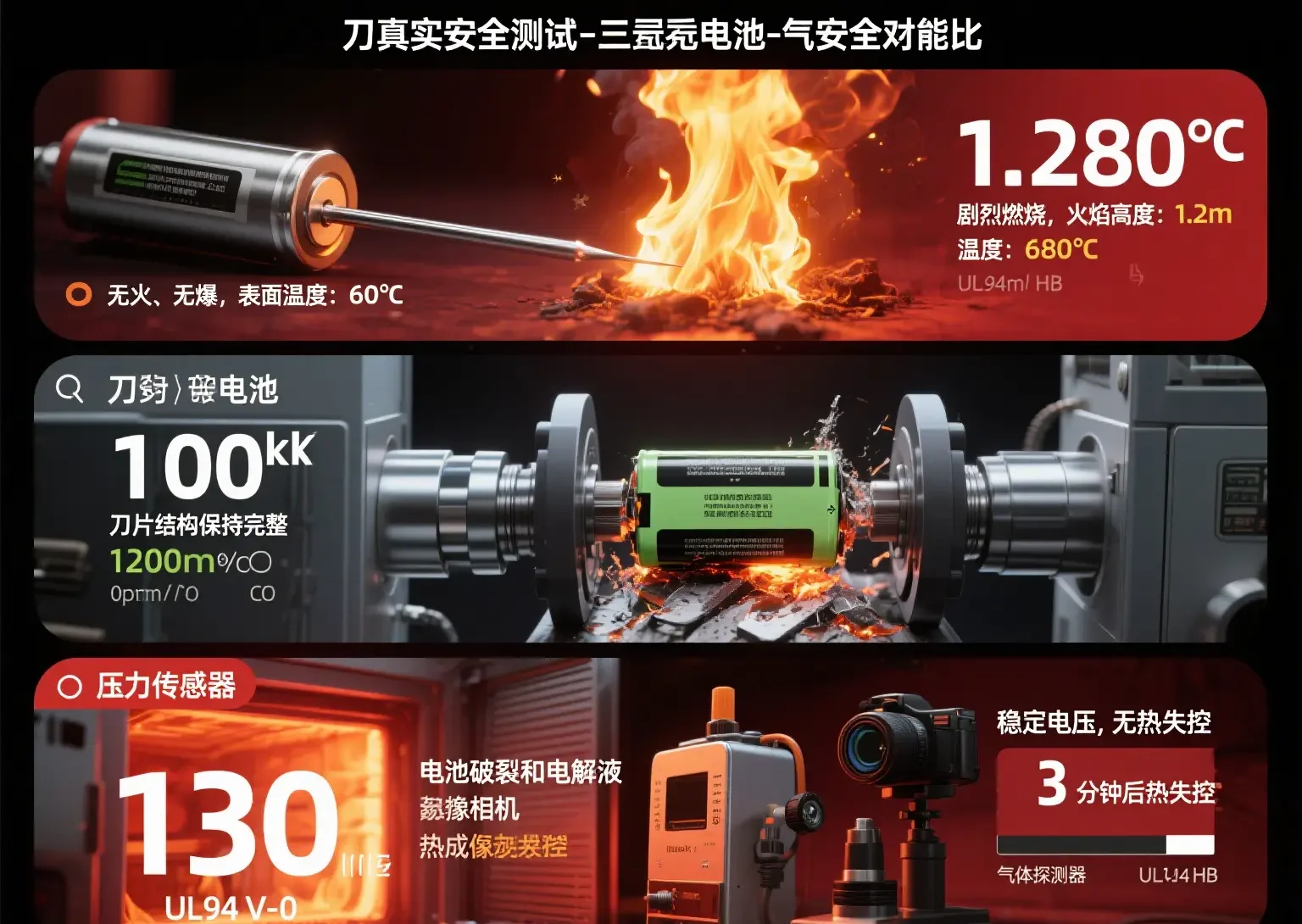
Semi-solid-state cells replace most of the flammable liquid electrolyte with a gel or semi-solid layer, which raises the thermal runaway onset temperature and reduces the amount of fuel available if a cell is punctured. The practical benefit in a field tablet is twofold: more energy per volume, because the cell stack can be packed more tightly, and a much wider safe operating window. For devices certified to hazardous-location standards, that second point is often the deciding one.
Field Duty Profile
A rugged tablet rarely discharges in one smooth curve. It draws short bursts for barcode scanning and radio transmission, runs the display at high brightness outdoors, and sits idle in a vehicle dock for hours. Charge acceptance matters as much as capacity: a device docked during a lunch break should recover enough energy to finish the shift. Semi-solid-state chemistry accepts higher charge rates than conventional lithium polymer at the same temperature, which shortens dock time.
Rugged Tablet Battery Comparison
| Attribute | Semi-Solid-State | Li-Polymer | Standard Li-Ion |
|---|---|---|---|
| Energy density | High | Medium | Medium |
| Puncture tolerance | High | Low | Low |
| Fast-charge window | Wide | Narrow | Medium |
| High-temp storage | Good | Poor | Fair |
| Cycle life | 800–1200 | 500–800 | 500–1000 |
What to Specify
Define the operating range honestly — a tablet left on a dashboard reaches 70 °C internally — and require cell certification for both high-temperature storage and charge cut-off at 0 °C. Hot-swappable designs should include a small internal bridge cell so the device stays alive during battery exchange. For hazardous locations, confirm the pack carries the relevant ATEX or IECEx rating rather than relying on the cell chemistry alone.
Choosing the Right Supplier
Ask for puncture and crush test data, not just a cycle-life curve. A credible supplier will publish the thermal runaway onset temperature, provide UN38.3 documentation, and offer custom pack dimensions so the battery can be shaped to the device rather than forcing the device around a catalogue cell. Confirm firmware support for accurate state-of-charge reporting, because field crews plan around the fuel gauge.
People Also Ask
Does semi-solid-state add runtime to a rugged tablet? Typically 15–30% more usable energy in the same volume, depending on enclosure tolerances and the discharge profile.
Is it safe for hazardous locations? The chemistry improves the margin substantially, but the pack still needs its own ATEX or IECEx certification for use in classified areas.
Can existing tablet designs be retrofitted? Often yes, if the pack footprint is retained. Custom semi-solid-state packs are usually built to the existing mechanical envelope.
Total Cost in Fleet Deployments
Procurement usually compares battery unit prices, but the larger cost in a field fleet is the swap: a technician driving to a vehicle, a device out of service, and a spare inventory sitting in a depot. Extending usable shift life by 25% can eliminate the mid-shift battery swap entirely for most crews, which removes both the spare inventory and the truck roll. Semi-solid-state packs also hold capacity better after two years of daily fast charging, so the refresh cycle stretches from eighteen months to closer to three years.
What to Put in the Enquiry
Specify the mechanical envelope, the operating and storage temperature range, the peak radio-transmit current, and whether the device supports hot swap. Those four inputs determine whether a custom semi-solid-state pack can be built into the existing housing or whether a bridge cell is needed to keep the device alive during battery exchange.
How should field crews store spare packs? Store at roughly 40–60% state of charge in a cool, dry place. Semi-solid-state cells tolerate high-temperature storage better than lithium polymer, but long storage at full charge still accelerates capacity loss.
Written by Karl at China Battery Technology. Request a quote.