Semi Solid State Battery for Search and Rescue Drones: Longer Flights in Cold Weather
Semi Solid State Battery for Search and Rescue Drones: Longer Flights in Cold Weather
Drones deployed by mountain rescue teams rarely fail because of the airframe. They fail because the pack voltage sags in the first cold minutes of the flight and the mission is cut short before the last ridge line is covered. A semi solid state battery replaces the liquid electrolyte with a composite that keeps ionic conductivity low but stable at sub-zero temperatures, which is exactly the condition that ends winter missions. Rescue units that switched to this construction reported noticeably steadier voltage sag in minus 15 degrees Celsius conditions, longer useful flight windows and fewer aborted searches.
Why SAR Flights Deplete Packs Faster Than the Numbers Show
A search pattern is not a hover. The aircraft climbs, descends, turns hard at the ridge and accelerates against wind, and each of those phases spikes current draw far above the cruise figure. Add a payload of a thermal camera and a spotlight, plus cold air that raises internal resistance, and the usable capacity of a conventional pack falls well below its rated figure. Teams routinely see 25% to 35% less flight time in winter than the manufacturer’s sea-level, 25 degree test. Compounding this, rescue crews often run a pack to the hard low-voltage cutoff to squeeze one more pass, which shortens the pack’s cycle life and accelerates voltage sag.
What the Semi-Solid Construction Actually Changes
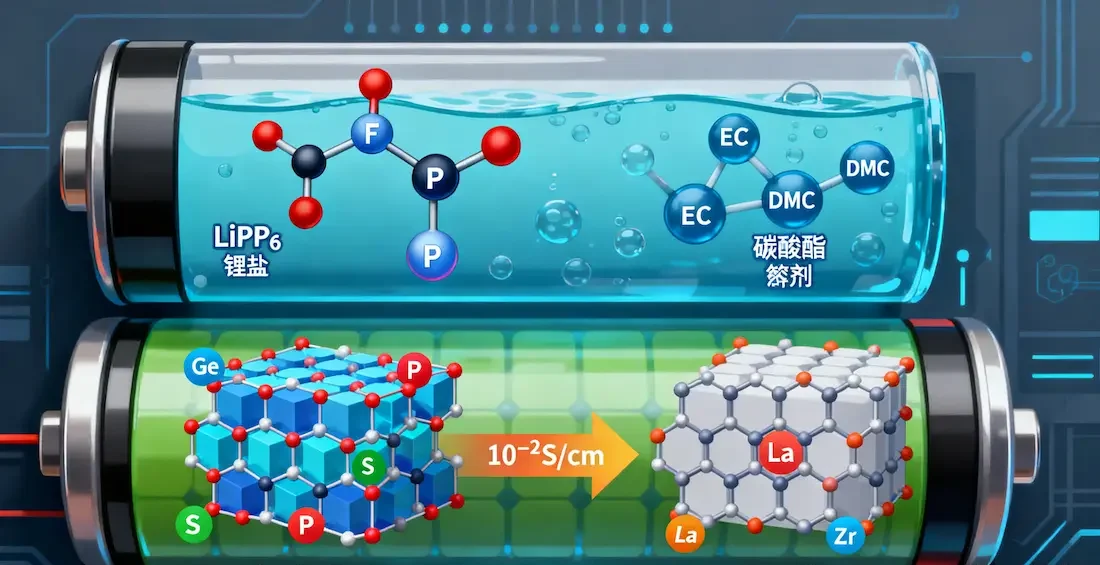
In a conventional lithium cell the electrolyte is a liquid organic solvent. A semi solid state cell keeps a small amount of polymer or oxide additives within a more rigid matrix, so the cell is less prone to the internal shorting and gas generation that occur when the separator shrinks or the liquid dries out. In flight terms the benefit is a flatter voltage curve under load and less capacity loss as the pack cools. Because the cells resist dendrite penetration better, the pack can be charged to a higher state of charge and held there for longer between missions, which matters for a rescue unit that must be ready at a moment’s notice.
Energy Density and the Flight-Time Gain
Semi-solid cells currently land in a practical range of roughly 280 to 350 Wh/kg at the cell level, against 200 to 260 Wh/kg for conventional lithium iron phosphate and 240 to 300 Wh/kg for typical high-discharge cylindrical cells. On a six-inch airframe carrying a thermal sensor, moving from a 250 Wh/kg pack to a 320 Wh/kg pack at the same mass buys roughly 20% additional endurance, which on a 35 minute mission is seven extra minutes of search. The real gain appears in cold weather, where the retention gap widens: at minus 15 degrees a conventional pack may give back 55% of its rated capacity while a semi-solid pack gives back closer to 75%.
Thermal Behaviour in Winter Rescue Conditions
Cold raises electrolyte viscosity, slows ion transport and thickens the protective film on the negative electrode, all of which show up as voltage droop under a 40 A draw. Semi-solid packs recover faster because the composite matrix conducts ionic transport more consistently as temperature drops, so the controller does not have to throttle the motors to protect the battery. Practically, that means the aircraft flies at full commanded thrust instead of backing off. Crews should still pre-warm the pack to around 10 degrees before launch and store spares in an insulated crate, because a pack that begins a mission at minus 20 degrees will spend its first five minutes at reduced power regardless of chemistry.
Pack Architecture for Hot-Swap Crew Workflows
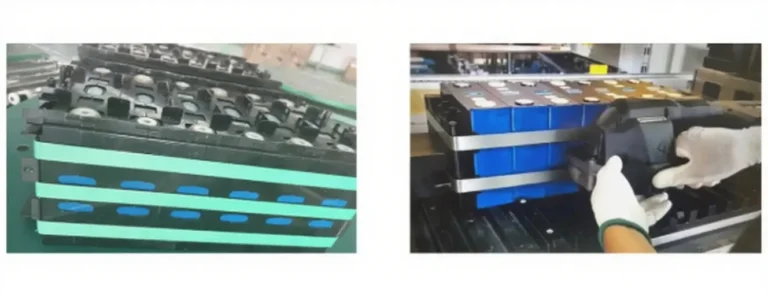
Rescue teams change packs on a flat surface in under thirty seconds, often with gloves on, so the pack interface matters as much as the cell. Specify a keyed connector that cannot be plugged in backwards, balanced leads crimped and heat-shrunk rather than soldered, and a pack housing that vents upward away from the pilot’s head. Mount the pack where the centre of gravity stays stable through the swap. A qualified supplier will provide the discharge curve at minus 20 degrees, the internal resistance in milliohms, the maximum sustained discharge current, and the charge temperature window, because charging a sub-zero pack directly is the fastest way to plate it and destroy the cells.
Testing, Certification and Airframe Integration
Pack-level work must satisfy UN38.3 for transport, and if the drone is sold into the United States the airframe may need an FAA remote pilot certificate context and Part 107 compliance that assumes predictable electrical behaviour. Flight controller firmware should see a clean LiHV or LiPo-style curve; semi-solid packs often need the low-voltage cutoff raised to about 3.3 V per cell to protect cycle life, so the ESC settings and the battery warning thresholds must be re-tuned together. IP55 or better ingress protection is normal for rescue airframes, and the pack’s own insulation should be tested for vibration per IEC 62133-style mechanical stresses.
Semi-Solid Compared With Conventional Packs
| Parameter | Semi-Solid Pack | Conventional LiPo | LiFePO4 Pack |
|---|---|---|---|
| Cell energy density | 280–350 Wh/kg | 240–300 Wh/kg | 140–170 Wh/kg |
| Capacity retained at −15 °C | 70–78% | 60–68% | 55–65% |
| Voltage sag under 40 A | Moderate | High | Low |
| Cycle life to 80% | 600–1200 | 300–500 | 2000–4000 |
| Charge window | 0–45 °C | 0–40 °C | 0–55 °C |
| Weight penalty | None | None | Heavy for same Wh |
Fleet Operations, Maintenance and Lifecycle Cost
For a rescue service running fifty flights a season, the economics are dominated by cycle life and by the cost of an aborted search rather than by cell price. A conventional pack replaced twice a season costs less up front but forces a swap backlog; a semi-solid pack replaced once over the same period is cheaper per flight hour and steadier in performance. Record each pack’s charge count, peak discharge temperature and lowest per-cell voltage after every mission. The IEEE publishes guidance on lithium battery lifecycle testing and failure investigation that supports a defensible maintenance record, and the International Energy Agency tracks the broader transition toward higher-density cells in electric aircraft. Replace any pack showing a per-cell spread above 50 mV after a full charge, and retire units that cannot hold 80% of rated capacity through a cold soak test.
People Also Ask
Will a semi-solid pack work in a standard quadcopter? Usually yes, provided the pack voltage matches the charger’s profile and the low-voltage cutoff is raised. The cells behave like a high-discharge lithium pack electrically, so existing controllers and ESCs work without hardware changes.
Is semi-solid technology mature enough for rescue duty? Yes for flight use. The construction has proved out in aviation and electric performance vehicles, and cell-level safety advantages are documented. What still matters operationally is pack certification, thermal pre-warming and a disciplined charge log.
How should spare packs be stored between missions? At 30% to 50% charge in a temperature-controlled cabinet between 5 and 20 degrees, charged to full only the night before a deployment. Avoid leaving rescue spares at 100% for weeks.
Written by Karl at China Battery Technology. Request a quote.