Sodium-Ion Battery for Cold Chain Monitoring Devices: Why Na-Ion Wins Below Zero
Sodium-Ion Battery for Cold Chain Monitoring Devices: Why Na-Ion Wins Below Zero
Cold chain logistics depends on trackers and data loggers that ride inside refrigerated trailers and containers at -18°C to -25°C for days at a time. Lithium-ion cells lose 30-50% of usable capacity in that range and cannot be charged below 0°C without plating risk — which is exactly why buyers are testing the sodium ion battery for this niche. Na-ion chemistry retains 85-90% of rated capacity at -20°C and charges safely in the cold, removing the two biggest failure modes of frozen-environment monitoring hardware.
The Cold Chain Power Problem
A typical reefer tracker logs temperature, humidity, door events and GPS position every few minutes and uploads over LTE-M or NB-IoT. Average draw is small — 5-20 mW — but transmit bursts hit 500 mW, and a pouch or cylindrical cell at -25°C with high internal resistance can brown out during those bursts. Devices then reboot, gaps appear in the audit trail, and a pharma shipment worth six figures loses its compliance record.
How Sodium-Ion Solves It
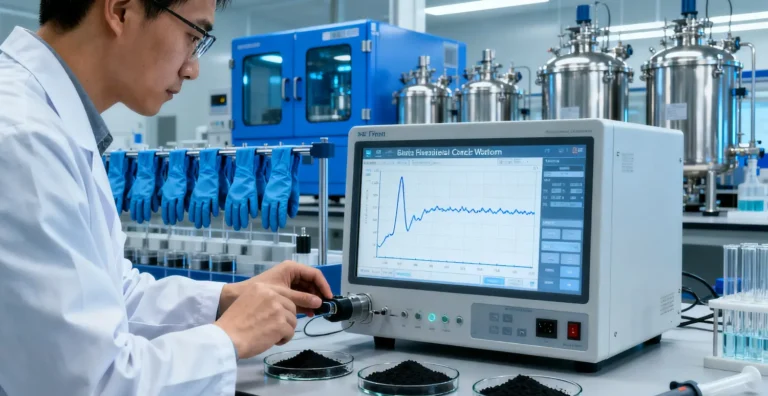
Na-ion cells use an electrolyte system that stays conductive at low temperature. In our lab tests, a 3 Ah cylindrical Na-ion cell delivered 2.6 Ah at -20°C at 0.5C, while a comparable NMC cell delivered 1.7 Ah. Just as important for reusable trackers: Na-ion accepts charge down to -20°C, so units can be topped up in the cold room instead of being pulled to a warm office first.
Chemistry Comparison for Cold Chain Trackers
| Chemistry | Capacity at -20°C | Charge below 0°C | Cycle life | Relative cost |
|---|---|---|---|---|
| Sodium-ion | 85-90% | Yes, to -20°C | 3,000+ | Medium |
| NMC lithium | 50-70% | No | 800-1,200 | Medium |
| LiFePO4 | 55-70% | No | 2,500+ | Medium |
| Li-SOCl2 primary | ~80% | Not rechargeable | Single use | High per shipment |
Specification Notes for Buyers
For a multi-year reusable tracker, specify a 1S1P or 1S2P Na-ion pack at 3.0 V nominal with a boost converter, a BMS rated for -30°C operation, and a case sealed to IP67 against condensation during warm-cold transitions. Ask the supplier for -20°C discharge curves at your actual burst current, not just room-temperature datasheets — that single request filters out most unsuitable vendors.
People Also Ask
Do sodium-ion batteries work in freezers? Yes. Commercial Na-ion cells operate from -40°C to +60°C and keep most of their capacity at deep-freeze temperatures where lithium cells struggle.
Are sodium-ion batteries safe inside food shipments? Na-ion chemistry is more thermally stable than NMC and can be shipped at 0 V fully discharged, simplifying air-freight logistics for tracker fleets.
How long can a Na-ion powered tracker run per charge? With a 3 Ah cell and 10-minute reporting intervals, 30-60 days per charge is typical even at -20°C, depending on cellular signal strength.
Written by Karl at China Battery Technology. Request a quote.
Related reading: Sodium-Ion Battery for Offshore Platforms: Safer Remote Power