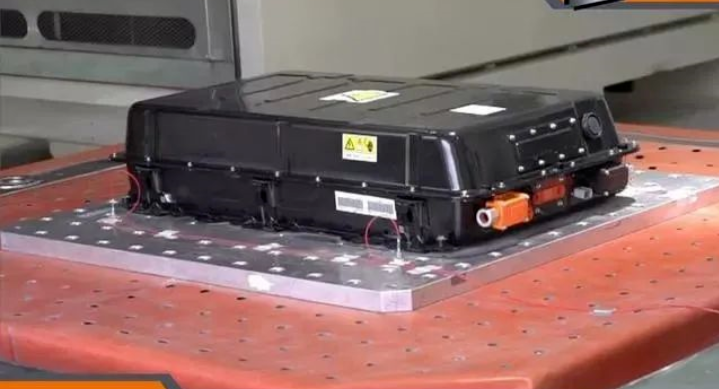
How to Size a Forklift Battery: Throughput-Based Method
How to Size a Forklift Battery: Throughput-Based Method
Forklift batteries are usually sized by the wrong number. Buyers match amp-hour label to the old lead-acid they are replacing and wonder why the new pack dies mid-shift. The right method is throughput-based: size to the energy the truck actually consumes per shift, including the inefficiency of opportunity charging and the degradation from deep daily cycles. This guide gives a procurement-grade sizing method for lithium forklift packs, where a miscalculation means a truck parked on the floor at 3 p.m. A lithium battery manufacturer can build the pack once you know the real duty, and the duty is what this method extracts from a week of shift data rather than a guess at the old pack’s label.
Why throughput, not just amp-hours
A forklift does not draw a steady current; it spikes on lift, creeps on travel, and idles with the hydraulic pump. The energy consumed per shift—throughput in kWh—captures that reality better than a nameplate Ah guess. Two trucks with identical 600 Ah labels can differ 40% in shift energy if one lifts heavier loads or runs a colder warehouse. Size to measured shift throughput and you size to the job, not the sticker. A battery application solutions study that logs a week of real duty beats any catalog cross-reference, because the cross-reference assumes your truck works like the last one, and trucks never do.
Measure shift energy consumption
Fit a battery monitor or pull data from the truck’s CAN bus for a representative week. A typical 3-ton electric forklift on an 8-hour shift with moderate lifting consumes 18–30 kWh; a reach truck in a busy distribution center can hit 35 kWh. Record the worst shift, not the average, because the worst shift is the one that strands the operator. Multiply by the number of shifts per day and the desired reserve, and you have the bank’s required daily throughput. This measured number is the single most valuable input in the whole sizing exercise, and it is the figure a serious supplier will ask for before quoting, because without it any pack size is a guess wearing the clothing of a specification.
Convert throughput to pack capacity
Take worst-shift throughput, add a 15–20% reserve for cold and aging, then divide by usable DoD. A 28 kWh worst shift with 20% reserve is 33.6 kWh; at 90% DoD that is 37.3 kWh nameplate, about a 600–700 Ah 48 V or 80 V pack depending on truck voltage. Lead-acid would need roughly double the nameplate for the same usable energy because it is capped at 50% DoD, which is why lithium forklift conversions shrink the battery compartment even as they extend runtime. A home energy storage system shares the same LFP cells, just packaged for motive duty and a higher C-rate, and the cells that sit in a stationary rack all day are the same chemistry asked to deliver bursts on a truck.
Voltage and C-rate for motive power
| Truck class | Pack voltage | Shift throughput | Typical C-rate | Lithium benefit |
|---|---|---|---|---|
| Walkie pallet | 24 V | 4–8 kWh | 0.5–1C | Fast charge, light |
| 3-ton counterbalance | 48–80 V | 18–30 kWh | 0.5–1C | One pack, all shift |
| Reach truck | 48 V | 25–35 kWh | 1–2C | Opportunity charge |
The table ties voltage and C-rate to the duty. Forklift packs run 0.5–2C continuously, so the cells and BMS must be rated for that sustained rate, not just a catalog max. Confirm the discharge curve at your shift C-rate, because capacity at 1C is less than at 0.2C, and the truck that lifts a heavy pallet while traveling is exactly the load that pushes the pack toward its rated limit where capacity quietly falls.
Opportunity charging changes the math
Lithium’s fast-charge tolerance enables opportunity charging—top up during breaks instead of swapping a lead-acid pack at lunch. This can shrink the required capacity because you no longer size for a full uninterrupted shift; a 20 kWh pack topped at breaks may cover a 30 kWh day. But fast charging adds heat and C-rate stress, so the BMS and thermal path must handle it, and you need chargers sized for the rate. A semi-solid-state battery is not needed here—weight savings are minor in a heavy truck—but its density could help in space-constrained compartments; plain LFP remains the cost-effective default for motive power, and the dollars saved on cells are better spent on a properly rated charger and BMS than on a premium chemistry the truck cannot feel.
Cold warehouse derating
Refrigerated and frozen warehouses cut both capacity and charge acceptance. LFP below 0 °C must limit charge to avoid plating, which conflicts with opportunity charging in a cold dock. Either warm the battery compartment or specify cells rated for low-temperature charge. A sodium-ion battery tolerates cold charging better and could suit freezer-duty fleets, though its lower density means a larger pack—acceptable in a truck with spare volume. Size cold-duty packs with a 20–30% winter derate rather than the standard 15%, because a frozen dock at -20 °C is where LFP’s charge-limiting bites hardest and where the opportunity-charging strategy you designed around quietly stops working.
BMS and fleet telemetry
In a fleet, the BMS is your maintenance department. Require state-of-health, per-cell voltage and temperature over CAN bus so a weakening pack is flagged before it strands a shift. Active balancing matters on large series strings (80 V is 24–25 cells) because imbalance quietly caps usable capacity. Specify the BMS shunt and contactor for peak lift current plus the continuous travel rate, and confirm it disconnects on fault without welding. The BMS that reports is the one that keeps trucks running; the silent one turns a small fault into a floor breakdown that costs a shift of throughput and a service call nobody scheduled, which across a fleet of thirty trucks is a visible, recurring tax on uptime.
Total cost of ownership versus lead-acid
Lead-acid forklift packs need watering, equalizing, venting and a spare pack for swap, plus they lose capacity fast past 50% DoD. Lithium removes watering and swapping, runs the full shift from one pack, and lasts 2–3× the cycles. Even at a higher sticker, the per-shift cost is usually lower once labor, downtime and the second lead-acid pack are counted. Run the comparison at your cycle count—a truck cycling 2×/day over five years is ~3,600 cycles, squarely in LFP’s strength—and lithium wins on the numbers, not the slogan, because the lead-acid pack you replace every eighteen months plus its watering labor is a recurring cost the lithium pack simply does not incur.
Procurement scorecard for forklift packs
Score suppliers on: measured shift-throughput match, C-rate at your duty, cycle life at 80% DoD, BMS telemetry (CAN, SoH), low-temperature rating for your dock, and charger compatibility. Reject any bid that quotes only amp-hours without asking your shift energy. The scorecard converts “a 600 Ah pack” into a comparable, enforceable specification and exposes vendors who are guessing. A disciplined buyer pays for delivered cycles and shift coverage, not a label that looked right in the catalog but parks the truck at 3 p.m., and the scorecard is the document that makes that discipline repeatable across every truck in the fleet.
Field validation and re-rating
After deployment, log the first month of actual shift throughput against the prediction and re-rate the pack. Real duty—heavier pallets in peak season, a colder dock than modeled—rarely matches the estimate, and the gap tells you whether to add a second pack or trust the model. Treat the first seasonal cycle as calibration, then set your replacement schedule from measured data. This closes the loop between the spec and the floor, and it is the difference between a forklift battery you can schedule around and one that fails unpredictably in the middle of a shipment you promised the customer.
Frequently asked questions
Why not just match the old lead-acid Ah? Lead-acid is capped at 50% DoD; lithium delivers ~90%, so amp-hour labels are not comparable across chemistries.
What is the right reserve? 15–20% for normal warehouses, 20–30% for cold docks where capacity and charge both fall.
Is opportunity charging safe? Yes with lithium and a BMS/thermal path rated for the fast-charge C-rate and proper chargers.
Does sodium fit forklifts? It can in cold freezer fleets where its cold-charge tolerance helps, at the cost of a larger pack.
Written by Karl at China Battery Technology. Share your shift-throughput log and we will size the pack—request a quote for a throughput-matched forklift battery.
Related Reading
- battery application solutions hub
- How to Choose a Home Energy Storage Size: Load Analysis
- C-Rating Selection: Matching Pack to Motor Demand