Lithium Battery for Material Handling: Beyond the Forklift
Lithium Battery for Material Handling: Beyond the Forklift
When procurement teams think material handling battery, they picture a forklift. But the category is far wider: tow tractors, order pickers, stackers, AGVs, conveyor buffers, floor scrubbers and burden carriers all run on batteries, and each has a different duty profile. Specifying them all as if they were forklifts wastes money and uptime. This guide covers the non-forklift material-handling fleet, how to size and choose lithium packs for each, and where a lithium battery manufacturer with motive-power experience saves you from rookie errors. We will work through duty cycles, charging, chemistry and a total-cost model.

What material handling covers beyond the forklift
The non-forklift fleet is large and varied. Tow tractors move carts of parts across a plant or airport. Order pickers and walkie stackers lift operators and loads in narrow aisles. AGVs run fixed routes under software control. Burden carriers shuttle people and tools. Each runs 1 to 8 hours per shift with different peak currents, idle patterns and opportunity-charge needs. Treating them as one forklift battery problem hides the fact that a tow tractor wants sustained moderate draw while an order picker wants short bursts with long standby. Match the pack to the vehicle, not the department.
Why lithium replaced lead-acid here
Lead-acid ruled warehouses for decades because it was cheap and familiar, but it carries hidden costs: watering, equalization, acid handling, a 20 to 30 percent energy loss in charging, and a strict 80 percent DoD limit that kills usable capacity. Lithium, mostly LFP in this sector, removes watering, charges faster, and tolerates partial states of charge without memory. The practical gain is opportunity charging, a tow tractor tops up during a break instead of swapping a 500 kg lead block. A battery application solutions design that exploits opportunity charging shrinks the fleet battery count and the charger footprint.
Common non-forklift vehicles and their loads
| Vehicle | Typical pack (V / kWh) | Peak current | Duty pattern |
|---|---|---|---|
| Tow tractor | 48 to 80 V / 10 to 20 kWh | 150 to 300 A | Sustained, multi-shift |
| Order picker | 24 to 48 V / 2 to 5 kWh | 100 to 200 A | Burst plus long idle |
| AGV | 24 to 48 V / 1 to 4 kWh | 80 to 150 A | Fixed route, frequent |
| Burden carrier | 36 to 48 V / 4 to 8 kWh | 120 to 220 A | Variable, outdoor |
The table shows why one pack shape does not fit all. The AGV wants a small, fast-charging pack with telemetry; the tow tractor wants a large pack sized for a full multi-shift run or a robust opportunity-charge setup. Mixing the two specs is the most common mistake in fleet rollouts.
Energy and duty cycle by vehicle
Duty cycle drives everything. A tow tractor pulling 4 tonnes of carts on a flat floor draws maybe 8 to 15 kW, so a 15 kWh pack gives 1 to 2 hours of hard pulling and more at lighter loads. An order picker spends most of its shift parked while the operator walks, so its pack sees shallow cycles and long standby, deep-cycle life matters less than self-discharge and BMS quiescent draw. AGVs cycle constantly on short loops and benefit most from opportunity charging at their docking stations. Size each pack to its own load profile, then total the fleet, rather than averaging across vehicles.
Charging strategy: opportunity vs full
Opportunity charging, plug in during breaks, coffee, and shift changes, keeps packs small and vehicles moving. It needs chargers distributed across the site and a BMS that tolerates partial states without balance drift. Full shift charging needs fewer chargers but larger packs and a battery room. For multi-shift operations, opportunity charging with LFP is usually cheaper overall despite more chargers, because you buy fewer amp-hours of pack. A home energy storage system shares the same LFP DNA, so the same cell knowledge applies, just in a stationary frame.
Battery management and fleet telemetry
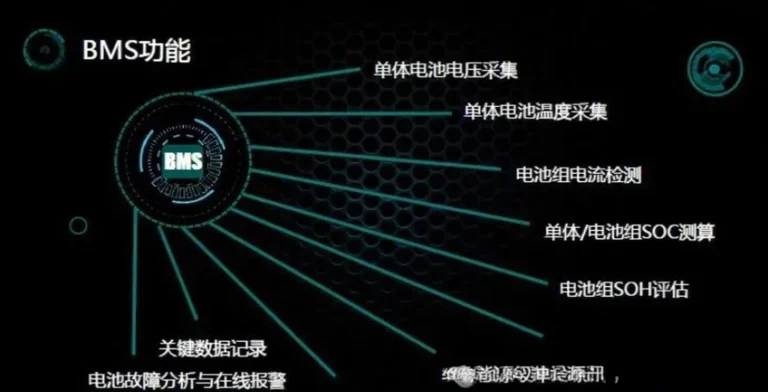
Fleet managers who track state-of-charge and cycle count across vehicles stop guessing. Telemetry tells you which tow tractor is quietly losing capacity, which AGV is over-cycling on a broken route, and when to rotate packs out at 80 percent rather than after a failure strands a line. A BMS with CAN or RS485 reporting feeding a simple dashboard pays for itself in avoided downtime. The alternative, reactive replacement, costs a line stoppage every time a pack dies mid-shift, which in a lean plant is the expensive way to learn.
Chemistry choices: LFP standard, sodium emerging
LFP is the default for motive power: safe, long-lived, and cheap enough at scale. A sodium-ion battery is worth watching for large stationary charging buffers and very cost-sensitive fleets where weight is irrelevant, but it is not yet the pick for weight-bearing vehicles. A semi-solid-state battery could shrink pack size where space is tight, but its premium rarely pays in a floor-bound vehicle where weight is free. The rational call for most non-forklift fleets is LFP today, with sodium evaluated for the charging infrastructure.
Sizing a pack for a tow tractor
Take a tow tractor pulling 4 tonnes of carts at 10 km/h on flat ground: rolling and accessory load about 9 kW. For a full 8-hour shift that is 72 kWh, impractical; instead size for 2 to 3 hours and opportunity-charge, so a 20 to 25 kWh pack with a 30-minute top-up covers the day. Add 20 percent margin for grade, starts and aging, and confirm the BMS continuous and peak ratings clear the motor’s inrush. Undersize and the vehicle limps home; oversize and you paid for capacity you never use. The sizing worksheet is a half-hour task that prevents a five-figure mistake.
Cold storage and outdoor duty
Food and pharma warehouses run cold, and lithium behaves differently below zero Celsius: charging must be limited to avoid plating, and capacity dips. Spec low-temperature charge approval in the BMS and keep packs at ambient before charging if the vehicle moves between freezer and dock. Outdoor burden carriers face heat and vibration instead; choose cells rated for the temperature range and mount the pack with isolation to survive potholes. The environment, not the catalogue, decides the enclosure and the charge profile.
Procurement scorecard
- Per-vehicle duty cycle: continuous and peak current, shift length.
- Charge strategy: opportunity vs full, and charger count that results.
- Telemetry: CAN or RS485 with SoH reporting, not a bare fuel gauge.
- Chemistry: LFP for vehicles, sodium evaluated for buffers.
- Warranty: cycles at stated DoD, not just months.
Total cost of ownership
Compare bids by dollars per delivered cycle, not sticker. A 20 kWh LFP pack at 6,000 dollars with 3,000 cycles at 80 percent DoD costs about 0.0025 dollars per delivered kWh-cycle; a cheaper 4,500 dollar pack that only manages 1,500 cycles costs 0.0040 dollars. Over a 200-vehicle fleet that gap is six figures. Add labour saved by dropping lead-acid watering and equalization, and the lithium case strengthens. The TCO model is the only honest way to rank suppliers, because the sticker inverts the real ranking more often than not.
Safety and compliance
Lithium in a busy warehouse needs respect: secure mounting, ventilation for the rare fault, and staff trained to react to a hot or swollen pack. Keep UN38.3 test summaries for the exact models, label packs correctly for transport between sites, and isolate charging from flammable storage. A BMS that logs faults gives you the evidence to prove compliant use if an incident is investigated. None of this is exotic, but skipping it turns a safe technology into an avoidable liability.
AGV charging docks and floor layout
AGVs need charging docks built into the floor or wall at their loop endpoints, and the dock must deliver the right voltage and current to the pack’s BMS without confusing it. A common failure is a dock that charges at the wrong profile and slowly unbalances the fleet; specify the dock’s charge curve to match the pack, not just its connector. Floor layout matters too: place docks where the AGV can park without blocking the aisle, and size the circuit so several docks on one panel do not trip it during a simultaneous top-up. Get this right and the AGV fleet runs all shift; get it wrong and you have expensive robots queuing at dead docks.
Spares, rotation and second-life
Keep a spare pool of 5 to 10 percent of fleet size rather than one spare per vehicle, because lithium failure rates are low and a shared pool covers them cheaply. Rotate packs across vehicles of the same class so wear is even, and retire them into a stationary buffer role at 80 percent capacity rather than scrapping them. A pack that finished a hard tow-tractor life still has years left as a slow-charge depot buffer, which recovers part of the cost. Track this in the same telemetry dashboard you use for warranty, and the second-life value becomes a line item you can defend to finance instead of a mystery loss.
Frequently asked questions
Do I need different packs for each vehicle? Yes, size to each duty cycle; averaging across the fleet hides mismatch.
Is opportunity charging safe for LFP? Yes with a BMS that balances at partial state and limits low-temperature charge.
Should I use sodium in vehicles? Not yet for weight-bearing vehicles; reserve sodium for fixed charging buffers.
How do I compare supplier bids? By dollars per delivered cycle at your DoD, not sticker price.
Written by Karl at China Battery Technology. Send us your vehicle list and shift patterns and we will size the fleet, request a quote for a TCO-based rollout.
Related Reading
- custom lithium battery manufacturer
- Lithium Battery for Pallet Jack: Quiet, Clean Aisles
- Lithium Battery for Sweeper: Municipal and Industrial