Lithium Battery for Electric Tractor: Field Duty Cycles
Lithium Battery for Electric Tractor: Field Duty Cycles
An agricultural or orchard tractor does short, brutal work: PTO loads, hydraulics, drawbar pulls and loader lifts, often at full power for minutes at a time with long idle gaps. That duty is nothing like a car’s steady cruise, and it punishes a battery pack that was sized for the wrong cycle. This guide explains how to match a lithium pack to real field duty, why LFP dominates, and what to specify so the tractor actually finishes a day’s work. For a lithium battery manufacturer building farm packs, the engineering is about peak current and dust, not range per se.
What a tractor duty cycle actually looks like
A typical small tractor might draw 10 to 30 kW continuously while mowing or loading, spike to 60 to 100 kW for a few seconds when the loader bites or the PTO hits a hard spot, and sit idle for long stretches between tasks. Energy per day is modest—often 30 to 80 kWh—but the peaks are steep and frequent. A pack sized only on average power will sag or trip on the spikes, so you must size to the peak and the thermal load it creates, not the daily kWh. The BMS and busbars have to carry the spike current without excessive voltage drop, and the cells must deliver it without cooking. A battery application solutions study should log a real day on a similar machine before committing pack size.
Daily energy and pack sizing
| Task | Power | Duration/day | Energy |
|---|---|---|---|
| Mowing | 15 kW | 3 h | 45 kWh |
| Loader work | 25 kW avg, 80 kW peak | 1.5 h | 38 kWh |
| PTO / implements | 12 kW | 1 h | 12 kWh |
| Idle and aux | 1 kW | 3 h | 3 kWh |
| Total | — | — | ~98 kWh |
The table shows a ~100 kWh day built from moderate average power but real peaks. Sizing to the 25 kW average would undersize the peaks badly; you need cells and a BMS rated for the 80 kW surges, and a pack sized so 100 kWh sits within 80% depth-of-discharge, putting the usable pack near 125 kWh. Add margin for cold mornings when power demand and pack resistance both rise, and the practical pack lands around 130 to 150 kWh. The peak, not the total, drives the design.
Why LFP wins on the farm
LFP is the default for tractors because the duty is peaky and the environment is harsh, and LFP shrugs off both better than NMC. It handles moderate C-rates, resists thermal runaway, and delivers the 3,000 to 6,000 cycles a working machine needs over a decade. Energy density matters less because a tractor has frame space and no range anxiety—it works within a few miles of the barn. A sodium-ion battery could eventually undercut LFP on material cost for this stationary-ish, weight-irrelevant duty, and its cold tolerance helps early-morning winter work, but sodium’s lower density means a bigger box and it is not yet a farm-volume product. For now, LFP is the sane choice.
Thermal and dust management
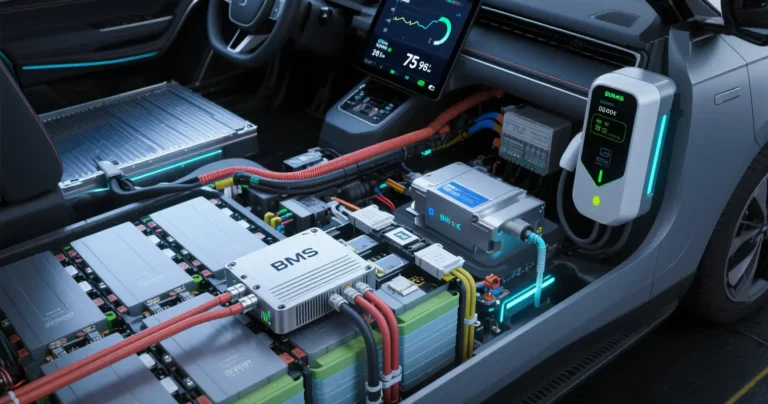
The pack lives in dust, vibration, moisture and temperature swings, so the enclosure is as important as the cells. IP67 sealing keeps dust and washdown water out; a sturdy frame takes the vibration without cracking welds; and the thermal path must shed the heat of sustained PTO work without letting cells cook. Liquid cooling is overkill for most tractors, but forced air or a conductive baseplate helps on high-duty machines. The BMS must read cell temperature in several spots because a hot cell in one corner can fail while the average looks fine. A home energy storage system shares the same sealing and thermal discipline, and the same supplier engineering that builds a rugged stationary box transfers directly to a tractor pack.
Charging between tasks and overnight
Most tractors charge overnight in the barn on a 20 to 60 kW charger, which easily replenishes a 100 to 150 kWh pack in the idle hours. Some operations add a midday top-up during the lunch break using a portable charger. Because the duty is low-C and the pack is large, charging is gentle and cheap, and a barn solar array can cover much of it. The key is to avoid deep discharge—parking the tractor at 100% DoD overnight shortens life—so set the BMS low-voltage disconnect with margin and charge before the bank is empty. A simple scheduled charge that finishes an hour before first start also lets the pack cool before work.
Cold-weather starting
Winter farm work is exactly when the tractor is needed most, and lithium hates cold charging. Below 0 °C the BMS must limit charge current to avoid plating, which can surprise an operator who plugs in a frozen pack and gets a trickle. The fix is a pack heating function or simply discharging (which is fine when cold) and charging only when warmed. Pre-conditioning the pack from grid or barn heat before a cold charge keeps the morning productive. This is a real operational detail that separates a pack that works on the farm from one that looks good in a brochure, and it is why the BMS charge profile matters more than the headline capacity.
Power take-off and hydraulic loads
Electrifying the PTO and hydraulics moves the load onto the battery directly, which is efficient but peaky. An electric PTO motor can pull tens of kW in surges that the pack must supply without sagging the bus below the inverter’s cutoff. Size the DC bus and the BMS shunt for the combined peak of PTO plus loader plus drive, not the sum of averages. A semi-solid-state battery could help here by packing more energy per kilogram and easing the peak heating, but for a weight-tolerant tractor the density gain is marginal and the cost premium is hard to justify, so LFP remains the practical pick unless a specific weight limit forces the issue.
Safety and field service
A tractor pack sits where fuel and grease live, and it is serviced by people who are mechanics, not battery engineers. The pack must fail safe, isolate on fault, and be readable by a simple diagnostic tool so a dealer can tell a real fault from a loose connector. Lockout-tagout provisions let the mechanic disable the high-voltage bus before wrenching. Specifying a pack with clear fault codes and a documented service procedure prevents a small issue from becoming a stranded machine during planting or harvest, when downtime is measured in lost crop, not lost minutes.
Procurement scorecard
Score the tractor pack on peak-current capability at your real surge, delivered cycles at 80% depth-of-discharge, enclosure rating (IP67 or better), vibration qualification, BMS fault reporting, and cold-charge behaviour. Divide price by expected cycles for a true $/cycle and compare bidders on that, because a cheaper pack that ages in five years costs more than a dearer one that lasts a decade of seasons. Ask for a reference deployment on a similar machine and climate, and insist the warranty names cycles at depth-of-discharge, not just years. The buyer who specifies the peak and the environment, not just the kWh, gets a tractor that works every season.
Wiring, voltage class and connectors
Tractors use a range of pack voltages, commonly 48 V, 80 V or 96 V, and the choice sets the current for a given power. A 96 V pack carrying 100 kW pulls about 1,040 A; an 80 V pack pulls 1,250 A, which needs heavier cables and better cooling. Pick the voltage class with the rest of the driveline, then size the busbars, contactors and connectors for the peak current with margin, because the loader surge is what melts a marginal connection. Use crimped or bolted lugs sized by the peak ampacity, torque them to spec, and verify one sample during incoming inspection. The battery is only as reliable as the last connector in the string, and on a vibrating tractor that interface is the common failure point.
Second-life and resale value
A tractor pack that reaches end-of-rated-life often still holds 70 to 80% capacity, enough for a stationary solar buffer or a lighter-duty machine. Planning this at purchase turns a future disposal cost into residual value and strengthens any sustainability requirement from the farm’s buyers. Keep the BMS log and a documented state-of-health so the pack has a credible second owner, and choose a supplier who will take packs back into a managed stream. Over a decade the small premium for a documented, resellable pack usually pays back in avoided disposal cost and smoother regulatory compliance, and it keeps the farm’s battery waste out of landfill.
Frequently asked questions
How big a pack does a tractor need? Size to the daily energy within 80% depth-of-discharge, typically 130 to 150 kWh for a working small tractor, but size the peaks first.
Why LFP and not NMC? The duty is peaky and harsh; LFP’s safety, cycle life and tolerance to abuse beat NMC’s density where weight is free.
Can I charge in the cold? Discharge is fine; charging below 0 °C needs a heated pack or warmed charge to avoid cell damage.
How long does it last? 3,000 to 6,000 cycles at 80% depth-of-discharge, which is roughly a decade of seasonal work if treated well.
Written by Karl at China Battery Technology. Tell us your tasks, peaks and climate and we will size the field pack—request a quote for a tractor battery built for duty.
Related Reading
- custom lithium battery manufacturer
- Lithium Battery for Mining Equipment: Ruggedized Packs
- Lithium Battery for Wheelchair: Lightweight Mobility