Sodium Ion Battery for Water Booster Stations: Unattended Pressure That Holds
Sodium Ion Battery for Water Booster Stations: Unattended Pressure That Holds
A municipal booster station is a small building with a big duty. A five to twenty kilowatt pump set lifts water from a district reservoir to a service reservoir, holds four to six bar of line pressure, and does it twenty-four hours a day for twenty years with almost nobody inside. There is no operator to check state of charge, no maintenance window that anyone funds, and a contractual penalty the moment pressure collapses during a storm. That service profile is a good match for a sodium ion battery, not a bad one. Sodium-ion costs less per kilowatt-hour than lithium iron phosphate, tolerates sub-zero ambient without a heater, and accepts a slow shallow daily cycle for a thirty-year service life. This article covers what the station actually draws, how to size the pack, the controller integration, the cabinet fire separation and the real payback math.
What a Booster Station Actually Draws
Most district booster sets are an eleven to thirty-seven kilowatt pump on a variable frequency drive behind a 400 or 480 volt three-phase supply. The drive modulates to hold pressure, so the electrical load tracks demand rather than slamming between full and zero, which is exactly the gentle profile batteries like. A small neighbourhood station moving two to six thousand cubic metres a day will see a flat 60 to 75 percent load factor with short peaks during morning and evening transfer windows. The failure mode that matters is not the average; it is the transfer window. When the upstream reservoir runs low for an hour or two, the station runs flat out on a grid feed that may itself be degraded. The battery’s job is to carry the last hour of that window and to ride through the ninety seconds between grid loss and generator start.
Why Sodium-Ion Suits an Unattended Municipal Site
Sodium-ion chemistry is frequently pitched as a cold-climate lithium alternative, and for this application that framing undersells it. Three properties matter here. First, the cell uses an aluminium current collector at the anode instead of copper, so the pack is lighter, cheaper and far less exposed to a copper-price spike and to hot-spot shadowing. Second, sodium-ion holds above 85 percent of room-temperature capacity down to minus twenty degrees Celsius, which removes the heater blanket and the parasitic draw that a lithium pack needs in an unheated rural cabinet. Third, the chemistry tolerates partial-state shallow cycling better than the cost premium it carries, so a pack cycled daily over a narrow band for two decades degrades slowly. There is no cobalt and no nickel in the mainstream compositions, which also simplifies supply due diligence filings for a public utility.
Cold Weather and the Low-Temperature Case
Rural booster cabinets sit outdoors in many jurisdictions, in enclosures that drop below minus fifteen Celsius for weeks. A lithium iron phosphate pack at that temperature loses usable capacity and will plate lithium on charge below about zero degrees, so the design either keeps a thermostat heater running continuously, burning 40 to 90 watts around the clock, or accepts derated winter output. Neither option is attractive on an unattended site where a failed heater is discovered months later. Sodium-ion does not have that plating threshold in the same form; the sodium ion’s larger radius moves more slowly but the electrode host tolerates low-temperature charge far better, and commercial cells are specified for charge down to minus twenty Celsius. The practical result is a cabinet with no heater, no condensation loop and roughly a third fewer parts that can silently fail.
Sizing for the Peak Transfer Window
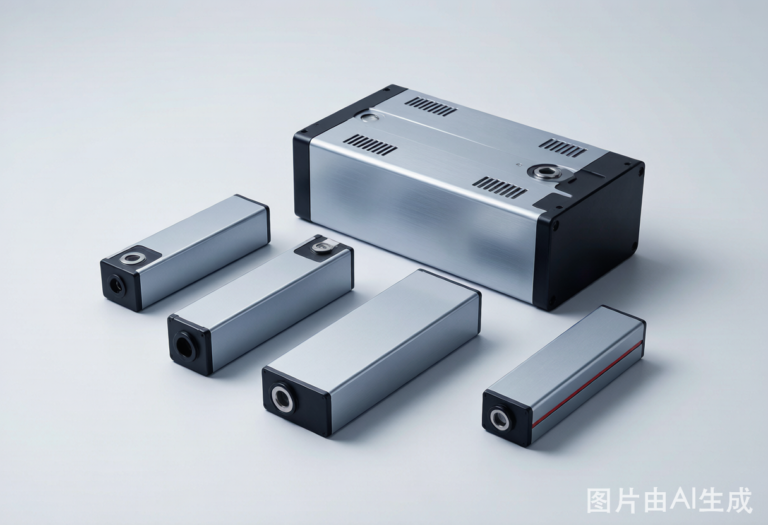
Size from the transfer window, not from the outage insurance case. Suppose a thirty kilowatt pump set runs flat for ninety minutes during an evening peak, drawing 27 kilowatts average once drive losses are included, and the grid is unavailable for the whole window. That is 40.5 kilowatt-hours needed to carry the station. If the site also carries the ninety-second generator handshake ride-through at 37 kilowatts, add another 0.6 kilowatt-hours, which is noise. A real design would provide 40 kilowatt-hours of nameplate with a usable band of 80 percent, so a nominal 50 kilowatt-hour sodium-ion pack, running from 10 to 90 percent state of charge daily. That is roughly 160 cells in series and parallel at a 32700-class 32 amp-hour format, which fits in a floor-standing cabinet of about 900 by 600 by 1,900 millimetres. Add 20 percent margin for cell-to-cell variance and for the winter capacity dip, and the order quantity is a 60 kilowatt-hour pack.
Controller and Variable Frequency Drive Integration
The integration trap is the drive. A VFD expects a smooth DC bus and will trip on a battery that sags, so the pack connects to the DC link through a bidirectional inverter rather than directly across the terminals. The controller talks to the inverter over Modbus TCP or a plain CANopen trunk and must be programmed to prefer battery when the state of charge sits above 30 percent and the grid is down, then hand to generator at 20 percent. Keep the state-of-charge floor set above the manufacturer’s recommendation for the cells; a sodium-ion pack discharged to 5 percent repeatedly loses the cycle-life advantage that justified the purchase. Log the deep-discharge events: a station that unexpectedly hits its floor is telling you the transfer window grew, and the fix is a bigger pack or a second pump, not a bigger generator.
Cabinet Fire Code, Venting and Separation
Stationary sodium-ion packs are normally installed under UL 1970 or IEC 62619, with the installation following the local fire code for energy storage systems. In the United States that usually means a listed cabinet, thermal management by natural convection, and a separation distance to combustible structure that shrinks considerably compared with a lithium installation of the same energy because sodium-ion releases less energy in a runaway event and does not sustain thermal propagation between cells. That does not mean no separation: most utilities still specify a one-hour fire-rated wall to the adjacent pump hall and a spill containment tray. Venting is less demanding than lithium, but the cabinet should still be gasketed to IP54 with a conditioned air path, because the real enemy of a rural pack is humidity-borne corrosion on the aluminium collector terminations.
Lifecycle, Replacement and Total Cost
Budget for a pack that outlives two generations of pump controllers. Sodium-ion cells in shallow daily cycl
e are rated 6,000 to 10,000 cycles, which at half a cycle a day is over twenty years, and the pack will likely be superseded by the drive it talks to long before the cells wear out. On cost, a sodium-ion stationary pack typically lands 15 to 30 percent below an equivalent LFP pack per kilowatt-hour, driven by the eliminated nickel, cobalt and copper content. The installation still needs a bidirectional inverter, which is the dominant cost line and identical either way, so the headline saving is real but smaller than the cell-level delta suggests. NREL tracks the storage cost curves and performance data that most municipal business cases cite, and BloombergNEF publishes the annual energy storage price survey that anchors the capital cost assumption in your own model.
| Option | Capital cost | Usable energy | Cold-weather charge | Cycling life | Heater needed |
|---|---|---|---|---|---|
| Sodium-ion 60 kWh cabinet | Lowest | 48 kWh at 20 °C | Minus 20 °C | 6,000-10,000 | No |
| LFP 60 kWh cabinet | Middle | 54 kWh at 25 °C | Minus 5 °C derated | 6,000-8,000 | Yes |
| Lead-acid 60 kWh bank | Lowest installed | 18 kWh usable | Minus 20 °C | 400-800 | No |
| LFP 60 kWh with heater | Middle plus heater | 52 kWh | Minus 20 °C | 6,000 | Yes, 60-90 W |
| Generator only, no storage | Low | Unlimited fuel | Unlimited | N/A | No |
| Sodium-ion 100 kWh long-window | Highest | 80 kWh | Minus 20 °C | 6,000-10,000 | No |
People Also Ask
Will sodium-ion work in a saltwater-treated or chloraminated water site? Yes, and that is worth knowing. The cabinet is sealed and the pack sits dry on a steel skid, so the water chemistry outside the enclosure is irrelevant to the cells. The corrosion risk is at the pipework and the VFD heat sink, which is a plumbing and drives question rather than a battery one.
Can the pack carry the pump through a full multi-hour outage on its own? Only if you size it that way. Sixty kilowatt-hours at an average 27 kilowatts buys under two hours. Municipal designs nearly always treat storage as a transfer-window buffer plus ride-through, with the generator as the long-duration asset, because a pack sized for a six-hour winter outage is a very large cabinet in a small building.
How do I justify sodium-ion over LFP to a utility procurement committee? Lead with the removed nickel and cobalt in the bill of materials and the elimination of the standby heater, then with the cold-weather charge capability. Both are defensible, verifiable from the cell datasheet, and both show up as an operating cost line in a twenty-year model rather than as a headline capital delta.
Written by Karl at China Battery Technology. Request a quote.