Sodium Ion Battery for Data Center Backup: A Cost-Sensitive Alternative
Sodium Ion Battery for Data Center Backup: A Cost-Sensitive Alternative
Data centers are the fastest-growing power load on the grid, and their backup tier — traditionally valve-regulated lead-acid (VRLA) — is a maintenance headache that fails exactly when you need it. Operators are testing alternatives that last longer and need less babysitting. A sodium ion battery brings abundant, non-critical materials and strong cold performance to stationary backup, where weight and volume matter far less than total cost of ownership and fire safety.
Why Reconsider Stationary Backup
VRLA in a raised-floor battery room typically lasts 3–5 years and degrades quietly until a grid event exposes the weak string. Lithium (LFP) fixed that for many operators but ties backup spend to lithium and cobalt supply. Sodium-ion offers a third path: chemistries built from sodium, iron, and manganese that are cheap, geographically secure, and intrinsically safer, with cycle life suited to occasional discharge plus float standby.
Where Sodium Fits the Tier
Backup duty is mostly standby with rare deep discharge, so round-trip efficiency matters less than calendar life, safety margin, and predictable capacity at the moment of need. Sodium-ion’s higher thermal-runaway threshold simplifies fire suppression, and its cold tolerance keeps strings healthy in lightly conditioned rooms — a real plus for edge and modular data centers.
Backup Battery Comparison
| Attribute | Sodium-Ion | LFP | VRLA |
|---|---|---|---|
| Calendar life | Long | Long | Short (3–5 yr) |
| Material cost | Lower | Medium | Low (but frequent replace) |
| Cold performance | Excellent | Good | Poor |
| Fire safety margin | High | High | Medium |
| Energy density | Low–Medium | Medium | Low |
Deployment Notes
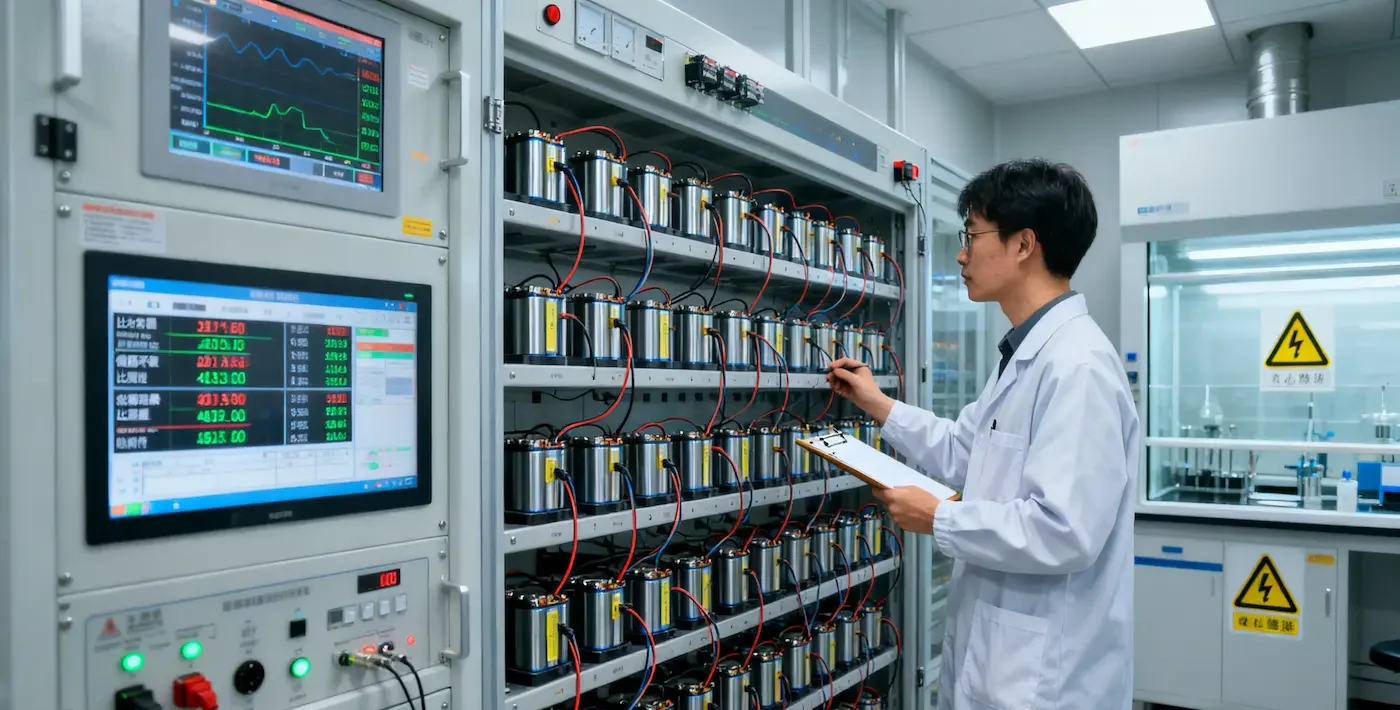
Treat sodium-ion like any rack-mounted backup: size to the UPS runtime target, keep strings at a stable temperature, and use the BMS for remote health polling so a weak module is flagged before an outage. Because sodium packs are larger per kWh, plan floor space and racking early — edge sites with spare room benefit most.
People Also Ask
Is sodium-ion ready for live backup? Pilot and early commercial deployments are running in 2025–2026; many operators qualify it on non-critical or edge loads first.
Should I still buy LFP? If floor space is tight or you need maximum density, LFP remains the compact choice; sodium wins on material cost and supply security where space is available.
Written by Karl at China Battery Technology. Request a quote.