Home Energy Storage for Fire Lookout Tower
Home Energy Storage for Fire Lookout Tower
A lookout tower is remote by definition, usually several hours from the nearest road and often fed by nothing but its own panels and a small generator. A home energy storage system built for that duty turns an intermittent supply into something a duty officer can rely on through a week of cloud, and removes the fuel that has to be carried up to the site.
Autonomy Measured in Days, Not Hours
Everything about the sizing follows from remoteness. A grid-connected house is designed around a few hours of backup; a tower has to survive a run of poor weather that may last a week, because no one is coming to refuel on a day’s notice. That pushes the design towards larger capacity and a conservative depth of discharge rather than a tightly optimised bank.
What Actually Draws Power Up There
The load list is short and specific: the radio repeater and its link, the weather instruments, the observation and mapping terminal, lighting, and a small refrigerator or heater depending on the season. Individually these are modest, but they run continuously, and the communications equipment is the reason the site exists. It should be on a protected circuit with its own stated autonomy.
Winter Is the Design Case
Summer on a remote tower is easy: long days, plenty of sun, mild nights. Winter is the problem, with short charging windows, cloud, snow on the panels and heating demand at the same time. Size to the worst month rather than the annual average, and remember that a bank sitting at low temperature delivers less than its nameplate figure.
Getting It Up the Mountain
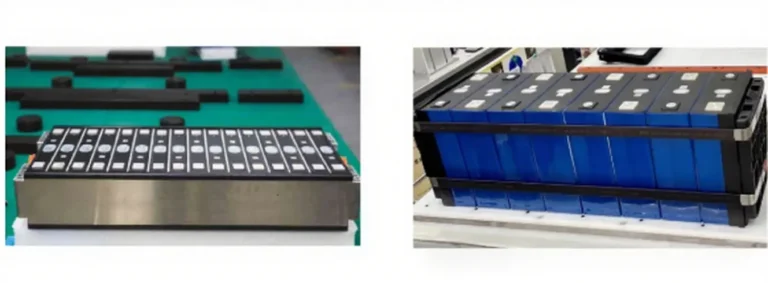
Access decides the architecture. If the only route is a steep track or a helicopter lift, every cabinet has to be movable in pieces that two or three people can handle, and the installation has to be commissionable in a single visit. Modular banks that can be carried and connected in sections are usually the only realistic option, and the enclosure needs a rating that suits a site nobody visits in bad weather.
Maintenance on a Long Interval
Nobody wants to climb to a tower to check a battery. Remote monitoring that reports state of charge, temperature and any fault over the same radio or satellite link already on site is the difference between a system that works and one that silently degrades. Specify it with the bank, and keep the firmware update path simple.
| Attribute | Home energy storage | Lead-acid bank | Diesel genset |
|---|---|---|---|
| Autonomy in poor weather | Days, sized to suit | Hours | Limited by fuel |
| Fuel to be carried to site | None | None | Required |
| Remote monitoring | Standard | Rare | Limited |
| Tolerance of cold | Moderate, site dependent | Poor | Good |
| Service interval | Long | Short | Short |
What to Ask a Supplier
Ask for the autonomy calculation in days at your measured winter load, not a kilowatt-hour headline. Ask what capacity remains at your lowest site temperature. Ask how the system reports faults remotely, and ask how a failed module is swapped on a site with no road access.
People Also Ask
How much storage does a remote tower need? Enough for the longest realistic run of poor weather at the measured winter load. That usually means several days, not the few hours a grid-connected house would accept.
Does the radio stay up during an outage? It should, on a protected circuit with its own defined autonomy. That is the first requirement to state in the design.
Can it be carried up in sections? Modular banks generally can. Confirm the weight of the heaviest single piece against how many people will be on the lift.
Is a generator still worth keeping? As a long-outage backstop in winter, often yes, but it should run rarely. Storage carries the daily cycle and keeps fuel consumption minimal.
Written by Karl at China Battery Technology. Request a quote.