Sodium-Ion Battery for Tidal Energy: Smoothing Coastal Generation
Sodium-Ion Battery for Tidal Energy: Smoothing Coastal Generation
Tidal stream and tidal range schemes have one advantage no other renewable can claim: the output is predictable decades ahead. What they do not have is a smooth output. Generation swings with the flood and ebb, typically on a 6 hour 25 minute cycle, which leaves a grid connection that ramps hard twice a day and then idles. A sodium ion battery buffer absorbs the ramp and releases it on a flatter schedule, and its cost profile suits a duty cycle built on daily full cycles rather than occasional standby.
The Tidal Buffering Problem
A tidal array produces a power curve shaped like a sine wave, peaking at maximum flow and falling to near zero at slack water. The grid operator sees a generator that disappears for an hour every six hours. Buffering with storage lets the array present a contracted, dispatchable output instead, which is worth far more per megawatt-hour than raw intermittent generation.
Why Sodium-Ion Fits the Duty Cycle
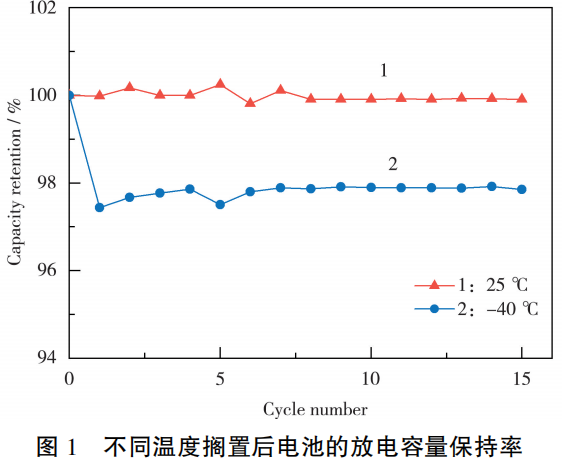
This duty is almost pure cycling: one deep charge and one deep discharge per tide, roughly 700 full cycles a year. Sodium-ion trades some energy density for a low-cost, abundant cathode supply chain and strong performance at low temperature, which matters on exposed coastal sites where winter air sits near freezing. Because the chemistry charges down to −20 °C without a heater, the parasitic load that would otherwise eat into a lithium bank’s round-trip efficiency largely disappears.
Coastal Installation Realities
Salt-laden air attacks terminals, cabinet seams and heat-sink fins faster than almost any other environment. Specify IP66 or better, marine-grade coatings on all external metalwork, stainless fasteners, and a sealed coolant loop rather than filtered ambient air. Place the buffer inland or in a sealed container with dehumidification wherever the cable run allows it; the cost of the extra cable is usually less than the maintenance saved.
Tidal Buffer Technology Comparison
| Attribute | Sodium-Ion | LiFePO4 | NMC | Lead-Acid |
|---|---|---|---|---|
| Cost per cycle | Low | Medium | Medium | High |
| Cold charge capability | −20 °C | 0 °C (needs heat) | 0 °C (needs heat) | Poor |
| Energy density | Medium | Medium | High | Low |
| Cycle life | 3000–6000 | 3000–6000 | 2000–4000 | 300–500 |
| Supply-chain risk | Low (no lithium/cobalt) | Medium | High | Low |
Sizing for the Tidal Cycle
Size the buffer to the energy you need to shift, not to the array rating. A common approach is to cover the slack-water trough: calculate the megawatt-hours generated during the two peak hours and specify enough usable capacity to carry the grid through the low-flow window. Model the full spring-neap range over a month, because a buffer sized for springs will be oversized and uneconomic for most of the lunar cycle.
What to Ask a Supplier
Request cycle-life data at the actual depth of discharge you plan to run, not at a shallow 80% figure. Ask for salt-fog test results to IEC 60068-2-52, a stated round-trip efficiency at −10 °C, and a warranty that counts cycles rather than years, since tidal duty accrues cycle counts quickly.
People Also Ask
Is tidal energy predictable enough to contract? Yes. Tidal output is driven by astronomy and can be forecast years ahead with high accuracy, which is why buffering it into a firm output is commercially attractive.
Does salt air shorten battery life? It shortens enclosure and connector life rather than cell life, if the cabinet is correctly sealed. Specify IP66 and marine-grade coatings, and inspect seals on a fixed schedule.
How many cycles per year does a tidal buffer see? Roughly 700 full equivalents, two per tidal cycle. That is far more than a solar-plus-storage home system, so cycle-life warranty terms matter more than calendar warranty.
Can sodium-ion charge in freezing conditions? Most current sodium-ion cells charge at −20 °C or below without preheating, which removes the heater load a lithium bank would need on a cold coastal site.
Written by Karl at China Battery Technology. Request a quote.