Sodium Ion Battery for Avalanche Control Stations: Reliable Power Above the Snow Line
Sodium Ion Battery for Avalanche Control Stations: Reliable Power Above the Snow Line
Remote avalanche control installations — gas exploders, compressed-air launchers, and the sensor masts that trigger them — sit exactly where power is hardest to deliver. They are buried in snow for months, they must fire on command during a storm, and nobody can walk up to reset a controller mid-season. A sodium ion battery has become the practical answer for these stations because it charges in the cold without a heater and tolerates the deep, irregular discharges that storm-cycle duty produces.
The Duty Cycle Is Nothing Like a Solar Home
Most of the time an avalanche control station draws almost nothing: a controller, a radio link, a few sensors, perhaps 5 W to 15 W continuous. Then a storm arrives, the site wakes up, valves actuate, heaters on the gas line run, the radio transmits continuously, and demand jumps by an order of magnitude for a few hours. Solar input during that same window is effectively zero because the panels are covered in rime.
So the design case is a low baseline plus repeated high-current bursts under zero recharge — the opposite of the smooth daily cycle a residential system sees. Batteries that sag under pulse load or refuse to charge cold will strand the station precisely when it is needed.
Why Cold Charge Acceptance Decides the Chemistry
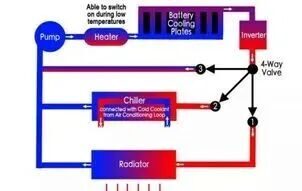
Between storms there may be a two-day clear window at minus fifteen degrees Celsius. That is the only chance the bank has to refill. A lithium iron phosphate pack in that condition will have its charge path blocked by the BMS unless a heater warms the cells first, and that heater consumes part of the very energy you are trying to recover. Sodium ion cells accept charge at those temperatures directly, so the clear window is fully usable.
The second factor is recovery after a long outage. Sodium ion handles a deep, prolonged discharge and even zero-volt rest far better than lead-acid or lithium, which matters when a station is inaccessible until the spring melt.
Comparison for Alpine Control Sites
| Requirement | Sodium Ion | LiFePO4 with heater | Gel Lead-Acid |
|---|---|---|---|
| Usable clear-window charging at -15 C | Full | Partial, heater tax | Poor |
| Pulse current tolerance | Good | Excellent | Moderate, high sag |
| Recovery from deep discharge | Excellent | Fair | Poor |
| Auxiliary heating needed | No | Yes | Recommended |
| Expected alpine service life | 8-12 years | 8-10 years | 3-4 years |
Sizing the Bank for Storm Autonomy
Work out the energy of one full firing sequence including valve actuation and line heating, multiply by the number of sequences you expect in the worst storm cycle, then add the baseline load for the number of days the site may see no solar. For a typical exploder site that arithmetic lands between 8 kWh and 20 kWh at 48 V. Hold design depth of discharge at 70 to 80 percent so a longer-than-planned storm does not take the pack to the floor.
Split large banks into modules that two people can carry on a snowmobile sled. Field replaceability beats packing density on sites like these.
Installation Details That Prevent Callouts
Seal the enclosure against spindrift, which finds gaps that rain never will. Route BMS communications to the site controller so pack voltage, temperature and state of charge appear in the same telemetry stream as the sensor data. Fit a manual disconnect that a technician can operate wearing gloves. Label polarity in a way that survives being read by headlamp in a whiteout — small details, but they are what keep a spring service visit from becoming an emergency one.
People Also Ask
Does an avalanche control station need a heated battery box? Not with sodium ion. Removing the heater cuts parasitic load and one common winter failure point.
How much autonomy should I design for? Plan for five to seven days of no solar plus the worst expected storm firing sequence. Alpine weather regularly exceeds a three-day assumption.
Can the same bank power the sensor mast and the launcher? Yes, if the bank is sized for the pulse load and the wiring is arranged so a launcher fault cannot pull the controller rail down.
What maintenance does the bank need? An annual check of terminals, telemetry calibration and enclosure seals during the summer access window.
Written by Karl at China Battery Technology. Request a quote.
Related reading: Sodium-Ion Battery for Offshore Platforms: Safer Remote Power