Sodium Ion Battery for Mountain Radio Repeater Sites: Cold-Weather Backup That Survives Winter
Sodium Ion Battery for Mountain Radio Repeater Sites: Cold-Weather Backup That Survives Winter
A mountain-top repeater is the least forgiving site in the whole radio network. It sits above the snow line, it is reachable only by snowcat or helicopter for four months of the year, and the moment its battery bank fails the coverage hole shows up in every dispatch log below it. That combination is why we keep getting asked about the sodium ion battery for repeater backup: operators want a chemistry that charges when the cabinet is at minus twenty and does not need a heater to do it. A sodium ion battery tolerates that duty in a way lead-acid never has.
Why Repeater Sites Punish Ordinary Batteries
The load itself is modest — a 25 W to 60 W transceiver, a controller, sometimes a microwave link, drawing a fairly flat 2 A to 5 A at 48 V. The problem is the environment around it. Solar yield collapses in December when panels ice over, so the bank has to ride through three to five days of near-zero recharge. Cabinet temperature tracks ambient because there is no grid to power a heater. Lead-acid loses roughly half its usable capacity at minus twenty and sulphates permanently if it sits partially charged in the cold, which is exactly what happens every winter.
Field data from our own installs is blunt about it: valve-regulated lead-acid banks on unheated ridge sites average two to three winters. The failure is almost never the radio. It is the battery, and every replacement is a helicopter hour.
What Sodium Ion Changes on a Ridge Top
Sodium ion cells accept charge down to about minus twenty degrees Celsius without the lithium plating risk that forces a lithium BMS to lock out charging below zero. For an unheated repeater cabinet that single property removes the heater, the heater’s parasitic draw, and the oversized solar array that used to feed it. Cold-temperature capacity retention sits around 85 to 90 percent at minus twenty, so a bank sized for summer still has meaningful autonomy in January.
The second advantage is abuse tolerance. Sodium ion can be shipped and stored at zero volts, which matters when a pack sits in a valley depot for a season before the weather window opens. It also means a deeply discharged bank after a long outage usually recovers instead of being scrap.
Chemistry Comparison for Unheated Backup Cabinets
| Criterion | Sodium Ion | LiFePO4 | AGM Lead-Acid |
|---|---|---|---|
| Charge at -20 C | Yes, no heater | Blocked by BMS | Very slow, damaging |
| Usable capacity at -20 C | 85-90% | 60-70% (if warmed) | 45-55% |
| Cycle life to 80% | 3,000-4,000 | 4,000-6,000 | 400-600 |
| Zero-volt storage | Safe | Damaging | Damaging |
| Site visits per 10 years | 1 | 1-2 plus heater service | 3-4 |
Sizing and Cabinet Layout
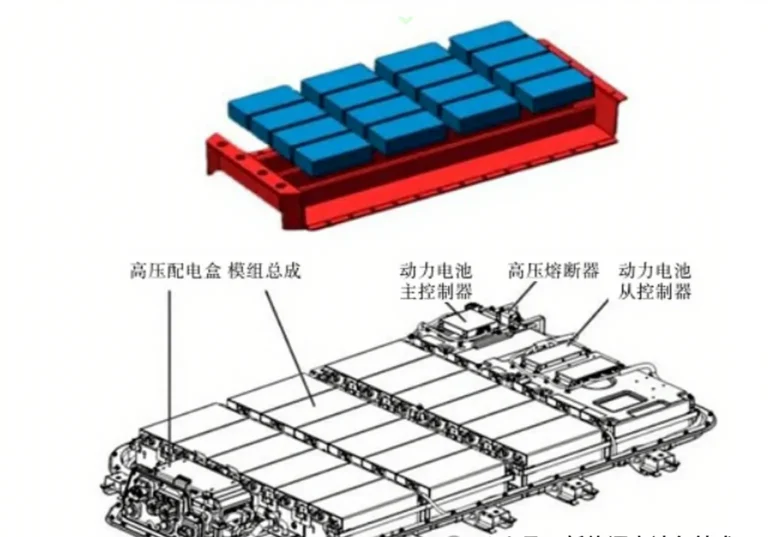
Start from the winter, not the average. Take the transceiver duty cycle at its busiest hour, add the controller and link, and multiply the daily energy by five days of autonomy. A typical 48 V repeater drawing 3 A average needs about 3.5 kWh per day, so a 15 kWh to 18 kWh sodium ion bank gives a real five-day reserve at cold-derated capacity. Keep depth of discharge under 80 percent in the design so the last winter storm still has headroom.
Mount the bank low in the cabinet, keep the BMS communication on RS485 or CAN back to the site controller, and log pack temperature separately from ambient. On ridge sites the delta between the two tells you when a cabinet seal has failed long before the radio reports anything.
Service Intervals and What to Check
One visit per season is enough on a properly sized sodium ion bank. Check torque on the busbars after the first freeze-thaw cycle, confirm state-of-charge calibration against the controller log, inspect the solar array for delamination, and clear the cabinet vents. Because there is no heater in the loop, there is one fewer failure mode to inspect and one fewer load stealing your winter solar budget.
People Also Ask
Can a sodium ion battery run a repeater without any heating? Yes. That is the main reason operators specify it for unheated ridge cabinets — charge acceptance holds down to roughly minus twenty degrees Celsius.
How long will a sodium ion bank last on a repeater site? Expect eight to twelve years of service at repeater duty, where cycling is shallow and the bank spends most of its life float-charged.
Is sodium ion heavier than lithium for the same energy? Yes, roughly 20 to 30 percent heavier per kWh. On a fixed cabinet that rarely matters; on airlifted installs we size the pack in two liftable modules instead of one.
What voltage should I specify? 48 V nominal matches most repeater power systems and keeps cable losses low over the short cabinet runs.
Written by Karl at China Battery Technology. Request a quote.
Related reading: Sodium-Ion Battery for Offshore Platforms: Safer Remote Power