Home Energy Storage for Mobile Home: Compact Backup That Fits
Home Energy Storage for Mobile Home: Compact Backup That Fits
Manufactured and mobile homes are among the most exposed housing types during a power cut. Electric heating is common, insulation is thinner than in site-built homes, and the well pump or septic pump often stops with the grid. Yet most battery quotes assume a garage wall and a 200 A panel, neither of which exists here. Sizing a home energy storage system for a mobile home is really an exercise in fitting real backup into a 100 A service and a few square feet of protected space.
Understanding the Service Limitation
Most manufactured homes are fed by a 100 A service, sometimes 60 A in older parks, through a pedestal outside the unit. That ceiling shapes everything: a whole-home battery inverter rated above the service adds no value, and any backup design must live inside the existing breaker count. The practical answer is a partial-home critical-loads subpanel rather than a whole-home transfer. Move the refrigerator, well pump, furnace blower, a lighting circuit, and two receptacle circuits to the subpanel, and leave the electric range and dryer on the grid side.
Right-Sizing the Battery
Once the critical loads are isolated, the energy math gets small and manageable. A refrigerator uses roughly 1.2–1.8 kWh per day, a furnace blower 0.6–1.2 kWh in winter, a well pump 0.3–0.8 kWh, and lighting plus devices about 1 kWh. That totals 3–5 kWh daily. A 5 kWh LiFePO4 unit therefore covers a full day of essentials, and 10 kWh covers a two-day winter storm with margin. Compare that to a 20 kWh whole-home proposal that will not fit the wall and cannot be supported by the service anyway.
Where the Battery Physically Goes
Space is the binding constraint. Three placements work in practice: a weather-rated wall-mount cabinet on the exterior skirting wall under the awning; a utility or laundry closet interior mount, provided the wall studs are reinforced for a 50–70 kg unit; or a purpose-built insulated ground enclosure on a small slab beside the pedestal. Avoid unvented crawl spaces and avoid mounting to unreinforced panelling — mobile home walls are typically 2×3 or 2×4 at 400 mm centres with thin sheathing, so a plywood backing plate spanning at least three studs is standard practice.
Battery Options for Manufactured Homes
| Attribute | 5 kWh LiFePO4 | 10 kWh LiFePO4 | Portable Power Station |
|---|---|---|---|
| Backup duration (essentials) | ~24 hours | ~48 hours | 4–10 hours |
| Weight | 45–55 kg | 90–110 kg | 12–25 kg |
| Wall space needed | ~0.4 m² | ~0.7 m² | Floor, portable |
| Runs well pump / blower | Yes, with 3 kW inverter | Yes | Usually not |
| Permit / electrician needed | Yes | Yes | No |
| Daily bill savings possible | Yes | Yes | Minimal |
Solar Pairing on a Small Roof
A single-wide roof supports roughly 2–4 kW of panels once vents and the load rating of the trusses are respected; many older units cannot carry a rack at all. Where the roof is unsuitable, a ground-mount array beside the unit or on a carport structure is the better route and simplifies future roof work. Pair 3 kW of solar with a 10 kWh battery and a typical park resident covers most daytime load and evening essentials, with the grid handling the electric range and heavy winter heating.
Park Rules and Ownership Questions
In a leased-lot park, get written approval before installation and confirm two things: whether the battery is treated as a removable appliance or a lot improvement, and who owns it if the resident moves. Wall-mount units on a plywood backing plate are usually removable in an afternoon, which keeps the asset with the homeowner. Document that removability in the approval request — it is often the detail that gets the application signed.
People Also Ask
Can a mobile home battery run air conditioning? A 3 kW inverter will start most 9,000–12,000 BTU mini-splits but not a large central unit. Inverter-driven mini-splits are the practical pairing for battery backup.
Do I need to upgrade the electrical service first? Usually not, if you back up a critical-loads subpanel instead of the whole home. That approach keeps the design inside a 100 A service.
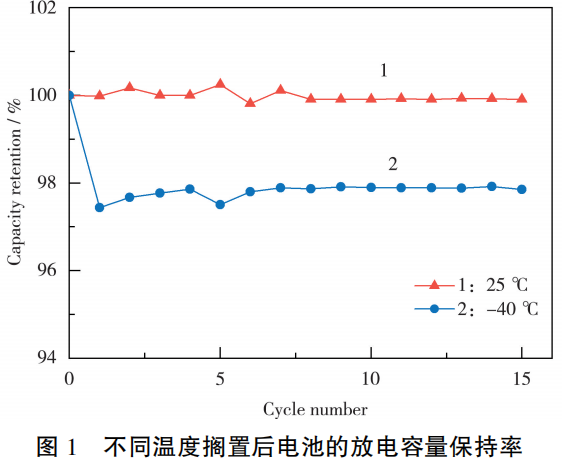
Will the battery survive an unheated exterior installation? Choose a unit with a self-heating LiFePO4 pack rated to −20 °C charge temperature, or place it in a conditioned closet. Standard cells will refuse to charge below freezing.
Written by Karl at China Battery Technology. Request a quote.
Related reading: Home Energy Storage for Island Communities: Reliable Off-Grid Power