Home Energy Storage for Car Wash Operators: Taming Peak Demand at Small Wash Sites
Home Energy Storage for Car Wash Operators: Taming Peak Demand at Small Wash Sites
A self-service or single-tunnel car wash is one of the spikiest small electrical loads on any distribution feeder: high-pressure pumps, blowers and water heaters all slam on together for a few minutes, then the site idles. Many owner-operated washes are billed on commercial tariffs where those spikes set the monthly demand charge. We build residential-class systems as a home energy storage system manufacturer, and increasingly they are being installed at exactly these sites — because a home energy storage for car wash duty is sized, priced and certified for the same 5-15 kW power band a small wash actually needs.
Understanding the Car Wash Load Profile
A typical two-bay self-service wash draws 1-2 kW at idle (lighting, vending, controls). When a customer starts a wash cycle, a 5.5 kW pump motor and a 3 kW blower engage; if two bays run simultaneously the site briefly pulls 15-18 kW. Under a demand-charge tariff of $12-20 per kW, those fifteen-minute peaks can add $150-250 per month even when total energy use is modest. The battery’s job is not backup — it is to supply the spike so the meter never sees it.
Why Residential-Class Hardware Fits
Purpose-built commercial peak-shaving systems start around 30 kW and are overkill for a small wash. A stacked residential system — two 5 kW hybrid inverters with 10-20 kWh of LiFePO4 — covers the differential between average and peak load at roughly half the installed cost per kWh. The hardware carries the same certifications (UL 9540 or IEC equivalent), and the modular format lets an operator start with 10 kWh and add modules if a third bay is built.
Sizing and Payback Comparison
| Configuration | Peak Shaved | Installed Cost | Monthly Saving | Simple Payback |
|---|---|---|---|---|
| 10 kWh / 5 kW single stack | ~5 kW | $4,500-6,000 | $60-100 | 5-7 years |
| 20 kWh / 10 kW dual stack | ~10 kW | $8,500-11,000 | $120-200 | 4.5-6 years |
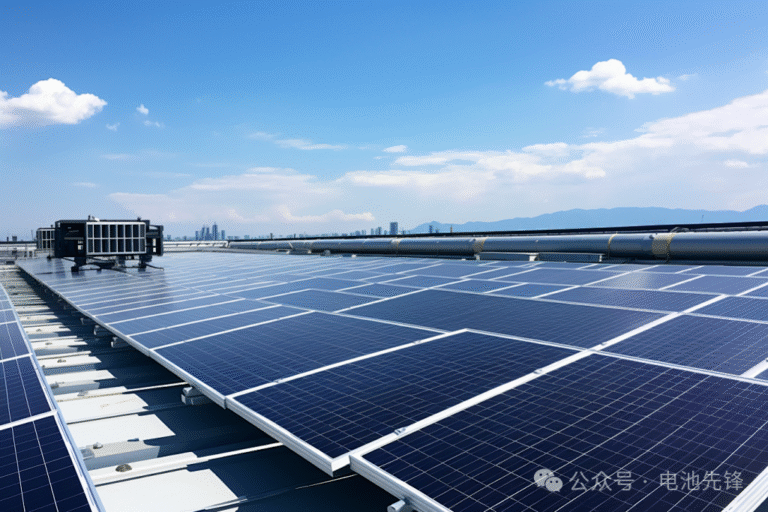
| 20 kWh + 12 kW solar canopy | ~10 kW + energy offset | $18,000-24,000 | $280-420 | 4-5.5 years |
Paybacks tighten further under time-of-use tariffs, since wash traffic peaks in late afternoon exactly when peak-rate windows open.
Installation Lessons from Wash Sites
Three points matter more at a car wash than in a house. First, enclosure rating: equipment rooms at wash sites are humid and chemically aggressive, so specify IP54 or better and mount batteries off the slab where rinse water collects. Second, inverter response speed: pump starts are near-instant, so the hybrid inverter must transition to discharge in under 20 milliseconds or the peak leaks through to the meter. Third, program the reserve floor at 20 percent so a late-evening rush never strands the system flat before the overnight recharge window.
People Also Ask
Can a home battery system legally be installed at a commercial car wash? Yes, provided the equipment carries the certifications your jurisdiction requires for commercial interconnection and a licensed electrician files the standard application. The “residential” label refers to the power class, not a legal restriction.
How much battery capacity does a two-bay self-service wash need? Most two-bay sites shave their peaks effectively with 10-20 kWh of storage and 5-10 kW of inverter power. Meter data over two billing cycles gives the exact differential worth shaving.
Will the battery also provide backup during outages? Yes. The same hybrid inverter can carry pumps and controls through short outages, keeping bays earning while neighboring washes are dark — a side benefit operators consistently rank higher than expected.
Written by Karl at China Battery Technology. Request a quote.
Related guide: Home Energy Storage System
Related reading: Home Energy Storage for Island Communities: Reliable Off-Grid Power