Home Energy Storage for Wine Cellar: Protecting a Collection from Outages
Home Energy Storage for Wine Cellar: Protecting a Collection from Outages
A serious cellar holds more value than the car in the driveway, and unlike the car it degrades quietly. Wine does not spoil the moment the power fails; it spoils over the following forty-eight hours as the room drifts toward ambient, corks expand, and a decade of careful cellaring turns into cooking wine. A home energy storage system solves this the same way it solves medical-equipment backup: by treating one modest, continuous load as non-negotiable and keeping it alive without anyone being home to notice.
How Fast a Cellar Really Warms Up
Owners consistently overestimate their thermal buffer. A well-insulated 15 square metre cellar with a full rack of bottles holds temperature for perhaps 12 to 18 hours in mild weather, because the wine itself is thermal mass. In a summer outage with the house above 30 degrees Celsius, the same room can climb past 18 degrees Celsius within a day and keep going. Sustained exposure above 21 degrees Celsius accelerates ageing measurably, and repeated temperature swings push wine past the cork faster than steady warmth does.
Sizing the Battery to the Cooling Unit
Cellar cooling units are small by household standards. A through-wall unit for a modest cellar draws 400 to 700 W while the compressor runs, and it does not run continuously. Duty cycle is the number that matters: in a properly insulated room, expect 25 to 40 percent, rising to 60 percent during a heatwave. At 600 W and a 35 percent duty cycle, daily consumption is around 5 kWh. A 10 kWh LiFePO4 battery therefore carries the cellar alone for roughly two days, or about 30 hours if you also want the fridge and a few lights.
Runtime by Battery Size
| Usable capacity | Cellar cooling only | Cellar + fridge + lights | Whole-home essentials |
|---|---|---|---|
| 5 kWh | ~24 h | ~14 h | ~5 h |
| 10 kWh | ~48 h | ~30 h | ~10 h |
| 15 kWh | ~72 h | ~44 h | ~15 h |
| 20 kWh | 4+ days | ~60 h | ~20 h |
Wire the Cellar as a Protected Circuit
The cheapest reliable design is not a whole-home backup. Put the cooling unit on a dedicated critical-loads subpanel fed by the inverter, so during an outage the battery is not simultaneously trying to run an electric oven someone left on. This lets a 10 kWh pack behave like a much larger one, and it keeps the automatic transfer simple. Specify an inverter with a transfer time under 20 milliseconds; compressors dislike brownout restarts, and a hard restart into a stalled compressor is how cooling units die.
Compressor Start Surge Is the Trap
A 600 W cooling unit can demand 1,800 to 2,500 W for the first half-second as the compressor breaks away, and units without a soft-start draw even more. Undersized inverters trip on that surge and the homeowner discovers it during the first real outage. Either specify continuous inverter output of at least 3 kW, or fit a soft-start module on the compressor, which typically cuts inrush by half and costs far less than the next inverter size up.
Pairing with Solar Changes the Economics
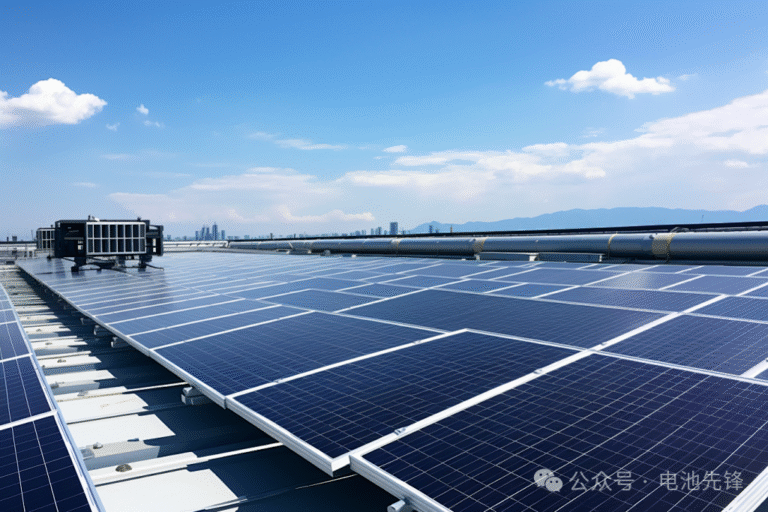
A cellar load is small, constant and runs hardest in summer daylight — almost the ideal solar match. Three or four kilowatts of panels typically cover cellar cooling outright during the day and recharge the battery for the night, so the system pays back through self-consumption rather than sitting idle waiting for a blackout. That reframes the purchase: insurance that also lowers the bill, instead of insurance alone.
Placement, Humidity and Noise
Do not install the battery inside the cellar. Humidity is deliberately held at 60 to 70 percent for cork health, which is far above what most battery enclosures are rated for, and the pack’s own heat fights the cooling unit you are trying to protect. A garage, utility room or ventilated basement corner outside the insulated envelope is the right place. LiFePO4 tolerates 0 to 45 degrees Celsius comfortably and runs silently, so noise is rarely an objection.
Monitoring Matters as Much as Runtime
The failure mode owners fear is discovering a problem a week later. Any cellar backup should include a wireless temperature sensor that alerts your phone when the room passes a threshold, plus battery state-of-charge alerts. Together they turn a silent catastrophe into a text message with hours of margin, which is often the difference between calling an electrician and calling an insurer.
People Also Ask
What temperature ruins wine? Sustained exposure above about 21 degrees Celsius accelerates ageing, and above 26 degrees Celsius damage becomes rapid. Repeated swings are more harmful than a stable temperature slightly above ideal.
Is a generator cheaper than a battery? Cheaper to buy, worse in practice. A generator needs someone present to start and refuel it, which is exactly what fails when an outage begins while the house is empty. Batteries switch over automatically.
Can I add a battery to an existing solar array? In most cases yes, using an AC-coupled battery inverter alongside the existing string inverter. No need to rewire the panels.
How long will the battery itself last? A LiFePO4 home pack rated for 6,000 cycles typically delivers 10 to 15 years of daily solar cycling, and considerably longer if used purely as standby backup.
Written by Karl at China Battery Technology. Request a quote.
Related reading: Home Energy Storage for Island Communities: Reliable Off-Grid Power