Sodium-Ion Battery for Rural Microgrid: Affordable Off-Grid Storage
Sodium-Ion Battery for Rural Microgrid: Affordable Off-Grid Storage
Villages, farms, and remote telecom sites that rely on solar and diesel need storage that is cheap to buy, safe to leave unattended, and tolerant of harsh weather. A sodium ion battery hits all three, using abundant, low-cost raw materials instead of lithium, nickel, and cobalt — making it a strong fit for rural microgrids where budget and durability outweigh compactness.

Why Sodium Suits Rural Sites
Off-grid storage sits outdoors for years with minimal service. Sodium-ion cells hold up well: they operate from roughly −20 °C to +45 °C, can be safely discharged to near zero volts for transport, and use non-flammable-friendly chemistry that lowers fire risk far from any fire brigade. Because a rural container is not space-constrained, sodium’s lower energy density is a non-issue.
Cost and Supply Advantages
Material cost drives the economics of any bulk storage project. Sodium is thousands of times more abundant than lithium and is sourced widely, insulating rural developers from price spikes and supply shocks. Combined with iron- and manganese-based cathodes, the delivered cost per usable kWh can undercut lithium for stationary duty, which matters most when a project must pencil out on a limited village budget.
Rural Storage Comparison
| Attribute | Sodium-Ion | LFP (LiFePO4) | Lead-Acid |
|---|---|---|---|
| Up-front cost | Low | Medium | Low |
| Cycle life | 3000–6000 | 4000–7000 | 300–800 |
| Cold tolerance | Excellent | Good (needs heat) | Poor |
| Maintenance | None | None | Frequent |
| Safe deep discharge | Yes (to 0V) | Limited | Harmful |
Designing a Village Microgrid
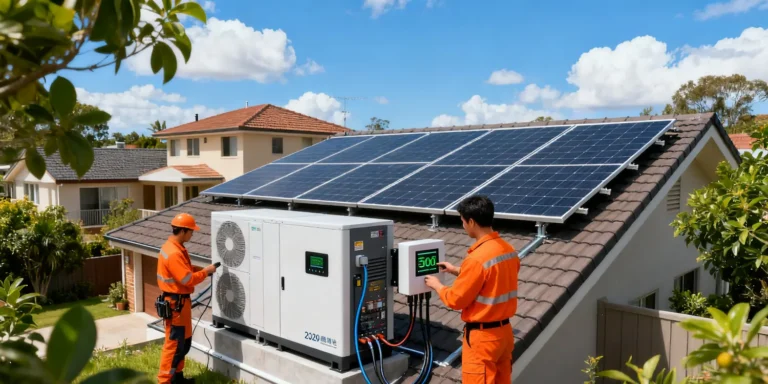
Size the battery to one to two days of critical load — lighting, pumping, refrigeration, and comms — with solar oversized to recharge after cloudy spells. Use a hybrid inverter that manages solar, battery, and a backup generator, and specify a BMS that reports state-of-charge remotely so a technician rarely needs to visit. Sodium’s forgiving nature means an occasional deep discharge during a bad week will not shorten the bank’s life.
People Also Ask
Is sodium-ion good for off-grid solar? Yes — its cold tolerance, safety, and low cost make it well suited to unattended off-grid and microgrid storage where weight does not matter.
How long will a sodium-ion microgrid battery last? With daily cycling, 3000–6000 cycles translates to roughly 10–15 years, comparable to LFP and far beyond lead-acid.
Written by Karl at China Battery Technology. Request a quote.
Related reading: Sodium-Ion Battery for Offshore Platforms: Safer Remote Power