Sodium Ion vs Lithium Ion Battery: Pros, Cons and Use Cases
Sodium Ion vs Lithium Ion Battery: Pros, Cons and Use Cases
Sodium-ion has moved from lab curiosity to a commercial option, and B2B buyers are asking the obvious question: should it replace lithium-ion in their products? The honest answer is “it depends on the application,” because sodium trades energy density for cost, abundance and cold-weather behaviour. This guide compares the two head-to-head so you can decide where sodium earns its place and where lithium still wins. For a lithium battery manufacturer building both chemistries, the right call is usually to match chemistry to duty, not to pick a winner.
What sodium-ion actually is
Sodium-ion uses sodium ions moving between electrodes instead of lithium ions. Because sodium is abundant and geographically widespread, the raw-material story is compelling—no exposure to lithium or cobalt supply politics. The cell works on the same broad principles as lithium-ion but with a harder, lower-energy cathode chemistry. The trade-off is energy density: today’s sodium cells store roughly 100–160 Wh/kg, below LFP’s 90–160 and well below NMC’s 150–250. That single number decides most use cases before any other factor.
Energy density: the core trade-off
| Property | Sodium-ion | LFP (lithium) | NMC (lithium) |
|---|---|---|---|
| Energy density | 100–160 Wh/kg | 90–160 Wh/kg | 150–250 Wh/kg |
| Raw-material risk | Very low | Low–moderate | Moderate (Co/Ni) |
| Cold performance | Strong | Needs low-temp care | Moderate |
| Maturity | Early commercial | Mature | Mature |
| Cost trend | Falling fast | Low, stable | Higher |
The table makes the positioning clear: sodium sits beside LFP on density but beats it on material security and cold behaviour, while trailing NMC on energy. For stationary and weight-irrelevant uses, that is a strong proposition; for anything carried or lifted, lithium remains the better kilogram.
Cold-temperature performance
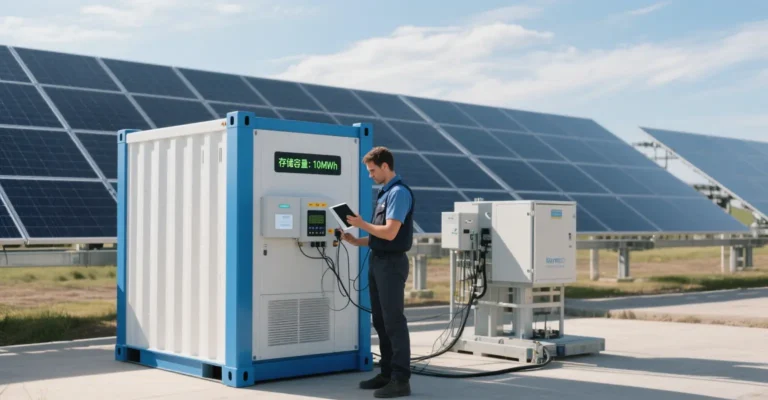
Sodium-ion’s standout property is graceful cold behaviour—it retains more capacity and charges more reliably at low temperatures than LFP, which needs low-temperature charge limiting below 0 °C to avoid plating. For unheated outbuildings, Nordic telecom sites or winter solar banks, sodium reduces the need for warmed enclosures and heater mats. A home energy storage system in a cold climate is a natural sodium candidate, where the energy-density penalty is irrelevant and the cold tolerance is a real operating advantage rather than a spec-sheet footnote.
Cost and material abundance
Sodium’s cathode avoids lithium, cobalt and nickel, so its material cost is structurally lower and less exposed to commodity spikes. As volume scales, sodium packs should undercut LFP on $/kWh for large stationary banks. The catch is scale: sodium’s supply chain is young, so today’s per-unit cost is not yet at LFP’s mature floor. Buyers should treat sodium as a cost-improvement trajectory, not an instant discount—quote it against LFP with a two-year view, not a spot comparison, and the trend favours sodium for big stationary deployments.
Safety and cycle life
Sodium-ion is intrinsically stable and hard to thermal-runaway, which simplifies enclosure and BMS margins. Cycle life is competitive with LFP in early data—several thousand cycles at moderate depth-of-discharge—but the chemistry is less proven over a decade of field service. When you specify sodium, ask for cycle-life test data at your duty cycle, not a brochure number, because the database is thinner than lithium’s. A conservative buyer pilots sodium on non-critical capacity first, confirms the aging curve, then expands—exactly the discipline that protects any new chemistry rollout.
Best use cases
- Large stationary banks where weight is irrelevant and cost dominates.
- Cold-climate storage and backups without heated enclosures.
- Grid and C&I storage where footprint is abundant.
- Price-sensitive applications with long dwell and low C-rate.
Where sodium does NOT fit
Sodium is the wrong call for anything weight- or volume-constrained: e-bikes, drones, portable medical gear, vehicles where every kilogram is paid for. Its lower density means a bigger, heavier pack for the same energy, which defeats portable and mobile designs. It is also premature for safety-critical medical where the field database is still thin. For those, LFP or NMC remain the mature, proven choice, and a battery application solutions program should keep lithium as the default until sodium’s track record deepens.
Comparison to semi-solid and the roadmap
Sodium is not the only new chemistry. A semi-solid-state battery targets the opposite corner—higher density than LFP with better safety than NMC—for weight-sensitive premium products. Sodium targets the low-cost, abundant corner for stationary. They are complementary, not rivals: a buyer can run sodium for the fixed bank and semi-solid for the portable line. The practical move is to track both, pilot each where it fits, and let the duty cycle—not the hype—decide. Expect sodium’s cost edge to widen as gigafactories come online over the next few years.
Procurement and certification notes
Sodium is a distinct chemistry and must be declared and tested under its own UN38.3 profile; do not assume lithium-ion paperwork covers it. Emergency responders train per chemistry, so the dangerous-goods declaration must name sodium-ion explicitly. Request the Test Summary naming your exact model and the IEC/UL-style safety reports as they become available. Because the standard set is still consolidating, confirm which marks your destination market actually requires before committing volume. Treat documentation as a first-class selection criterion, not an afterthought, because the paper is what lets the product move across borders.
Sodium in a mixed-chemistry strategy
Most buyers will not rip out lithium; they will run sodium beside it. A sodium-ion battery is best introduced as a fixed, weight-irrelevant bank—the solar buffer, the backup, the grid shifter—while lithium stays on anything that moves. The two chemistries share BMS principles, so your engineering team learns once. The risk is organizational: two SKUs, two datasheets, two cert sets. Manage it with a small pilot on non-critical capacity and a clear rule—sodium for fixed, lithium for mobile—so procurement does not re-litigate the choice on every project. This division also hedges material risk: if lithium or cobalt prices spike, your stationary capacity is insulated because it sits on abundant sodium, a hedge worth real money over a decade of deployments, which is exactly the horizon on which chemistry strategy should be judged.
Sizing a sodium bank for solar self-consumption
For a home or small site, size the sodium bank to cover two to three cloudy days of essential load rather than the full annual peak. Sodium’s lower density means the enclosure is larger, but in a utility room or outbuilding that footprint is free. Because sodium tolerates cold, you can place the bank in an unheated space without the heater mats an LFP bank needs in winter, removing a failure point and a parasitic load. Run the numbers on $/usable-kWh including the avoided heating, and sodium often wins for the stationary slice. Confirm the inverter’s charge profile includes a low-temperature charge limit so the BMS and chemistry agree—sodium still has a cold-charge ceiling, just a more forgiving one than LFP.
Red flags when sourcing sodium cells
Watch for suppliers quoting lithium-ion certs as if they covered sodium—they do not; demand a sodium-specific UN38.3 Test Summary. Be wary of density claims that rival NMC; today’s sodium is in the 100–160 Wh/kg band, and anything higher is mislabeled or mistaken. Avoid vendors who cannot name a shipped program or a reference site—the supply chain is young and track record is the differentiator. Finally, reject “cycle life” numbers without a stated DoD and temperature; a 4,000-cycle claim at 100% DoD is weaker than a 3,000-cycle claim at 80% DoD. The disciplined buyer quotes every sodium figure against the same conditions used for LFP, and only then compares $/kWh.
A practical sodium pilot plan
Start the sodium evaluation with a single non-critical, fixed bank—a garden outbuilding, a telecom site, or a solar buffer—where a capacity shortfall is embarrassing, not dangerous. Run it in parallel with an equivalent LFP bank so you can compare real delivered kWh, cold behaviour and aging side by side over a winter. Log everything through the BMS and review monthly; the goal is not to prove sodium is perfect but to learn its failure modes on a small scale before any volume commitment. Keep the procurement rule simple—sodium for fixed, lithium for mobile—so the pilot does not become a philosophy debate. After one full seasonal cycle, you will know whether sodium’s cost and cold advantages outweigh its density penalty for your specific duty, and you can scale the winning chemistry with confidence rather than hope.
Frequently asked questions
Will sodium replace lithium soon? Not broadly—only in stationary, weight-irrelevant, cost-first uses where its trade-offs pay off.
Is sodium safer? Intrinsically stable and hard to thermal-runaway, which simplifies enclosure and BMS margins, though field data is younger.
Does sodium work in the cold? Better than LFP—it keeps more capacity and charges more reliably at low temperature without as much heating.
Is it cheaper today? Trending lower on $/kWh for large banks, but its young supply chain means spot cost is not yet below mature LFP.
Written by Karl at China Battery Technology. Tell us your duty cycle and we will advise lithium vs sodium—request a quote for a chemistry recommendation.
Related Reading
- battery application solutions hub
- Semi Solid State Battery Explained for Industrial Buyers
- What Is a Battery Management System (BMS) and Why It Matters