Sodium-Ion Battery for School Energy Storage: Safe, Affordable Backup
Sodium-Ion Battery for School Energy Storage: Safe, Affordable Backup
Schools, colleges and training centers run servers, science labs, intercoms and lighting that cannot blink during a storm or a grid fault. sodium ion battery storage is becoming a practical choice for education campuses because sodium is cheap, abundant, and intrinsically safer — features that matter when the budget is tight and the site is full of people.
Why Schools Look at Sodium
District budgets reward lowest lifecycle cost, not maximum energy density, and a school battery sits in a plant room where weight and volume are not binding. Sodium-ion’s iron- and manganese-based cathode and aluminum collector strip out cobalt and lithium, cutting both cost and supply risk. For a 20-100 kWh campus bank, those savings compound across every building you equip.
Safety and Cold Performance
Sodium-ion has no metallic lithium to plate dendrites, so its thermal-runaway threshold is higher and its failure mode is gentler — reassuring in a building occupied by children. It also keeps most of its capacity at low temperatures without heaters, useful for unheated annexes and northern campuses where lithium would need active warming.
School Storage Comparison
| Attribute | Sodium-Ion | LFP (LiFePO4) |
|---|---|---|
| Material cost | Lower | Medium |
| Cold performance | Excellent | Good (needs heat) |
| Intrinsic safety | High | High |
| Energy density | Lower | Medium |
| Supply risk | Low | Medium |
Sizing a Campus Bank
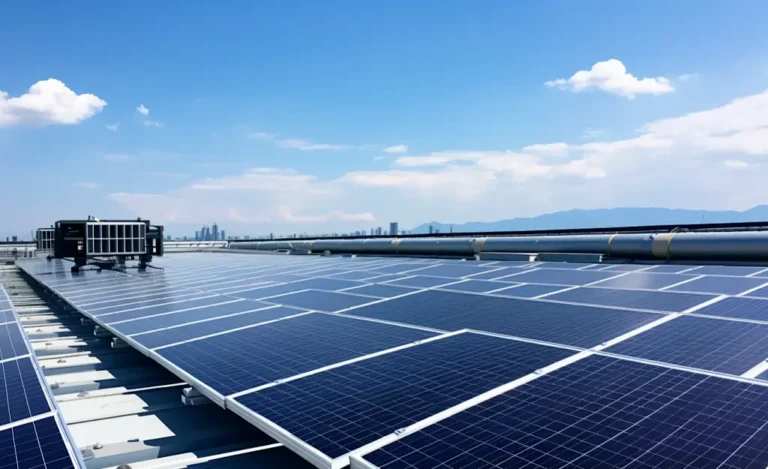
Put critical loads — server room, phone and PA system, emergency lighting, lab fridges — on a backed-up sub-panel and size the battery to carry them through the longest realistic outage (commonly 2-4 hours). Add solar if the rooftop is available, and choose an all-in-one unit with remote monitoring so facilities staff can see state-of-charge from a phone.
Funding and Procurement
Many districts pair the battery with a solar grant or a green-capital line, so the asset pays for itself through demand-charge savings and avoided outage losses. Ask suppliers for school references, a 10-year performance warranty, and documentation that meets local electrical code for occupied buildings.
Maintenance and Monitoring
Unlike lead-acid, sodium-ion needs no watering, equalizing, or acid handling — a real win for a busy facilities team. Set the all-in-one unit to email or text on fault, watch state-of-charge weekly during the first month, then monthly. Because sodium holds charge well in cold plant rooms, you avoid the winter capacity surprises that sometimes trouble lithium banks without heaters.
Regulatory and Insurance Notes
Confirm the installation meets local electrical code for a battery in an occupied building, and tell your insurer the bank is lithium-free chemistry if that lowers the fire-rating requirement. Keep the commissioning report and the 10-year warranty on file; many districts require them for capital-asset audits and for any grant that helped fund the system.
Resilience and Emergency Planning
A campus battery earns its keep on the days nothing goes wrong elsewhere. Map the circuits it backs up, run a quarterly discharge test to confirm capacity, and brief the front office on what stays lit during an outage so staff can reassure students and parents. That visibility turns a hidden asset into a visible safety benefit the community values.
People Also Ask
Is sodium-ion safe in a school? Yes — its higher thermal-runaway threshold and no-dendrite chemistry make it a conservative choice for occupied buildings.
When would I still pick lithium? When space is severely limited or you need the densest pack per cubic meter; otherwise sodium’s lower cost favors campus-scale banks.
Can it run the whole school? Usually not the entire load; it is sized for critical circuits and short outages, with solar offsetting daytime energy cost.
Written by Karl at China Battery Technology. Request a quote.
Related reading: Sodium-Ion Battery for Offshore Platforms: Safer Remote Power